Reverse Dobos with Chocolate Cake and Vanilla Cream
I originally published this cake in 2018 as a rebel to my mom’s famous Dobos cake. She was a baker, and Dobos was by far her most popular cake.
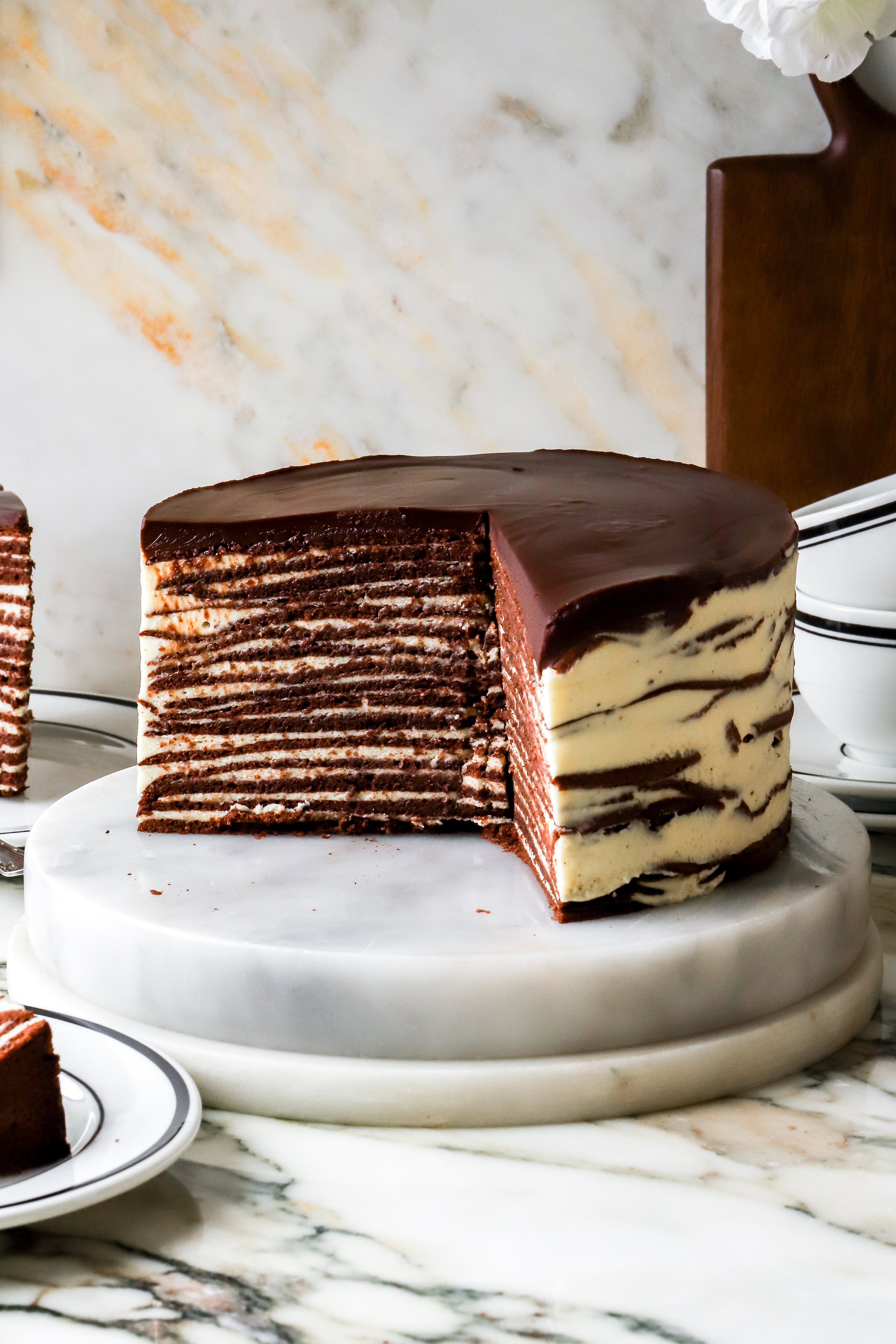
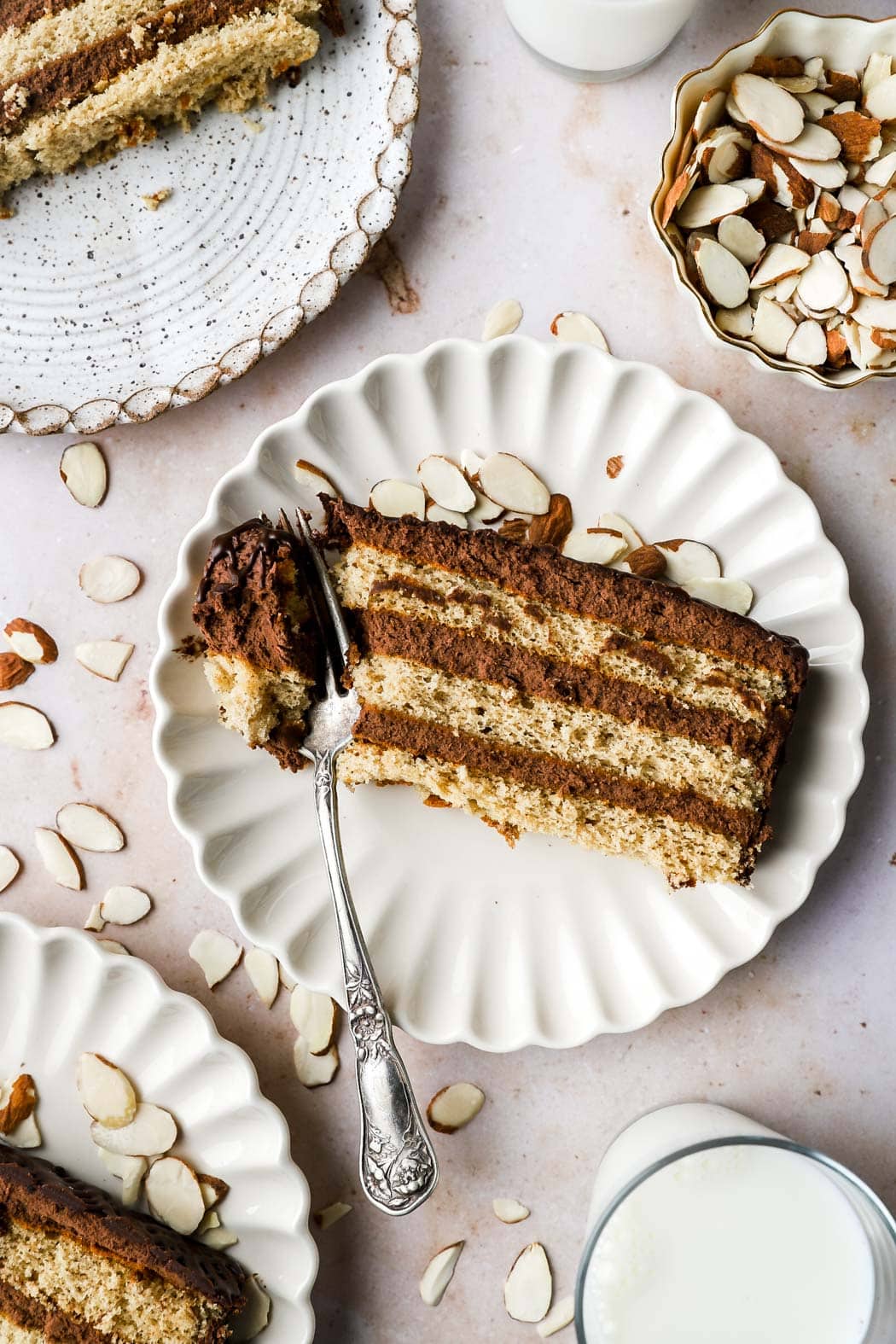
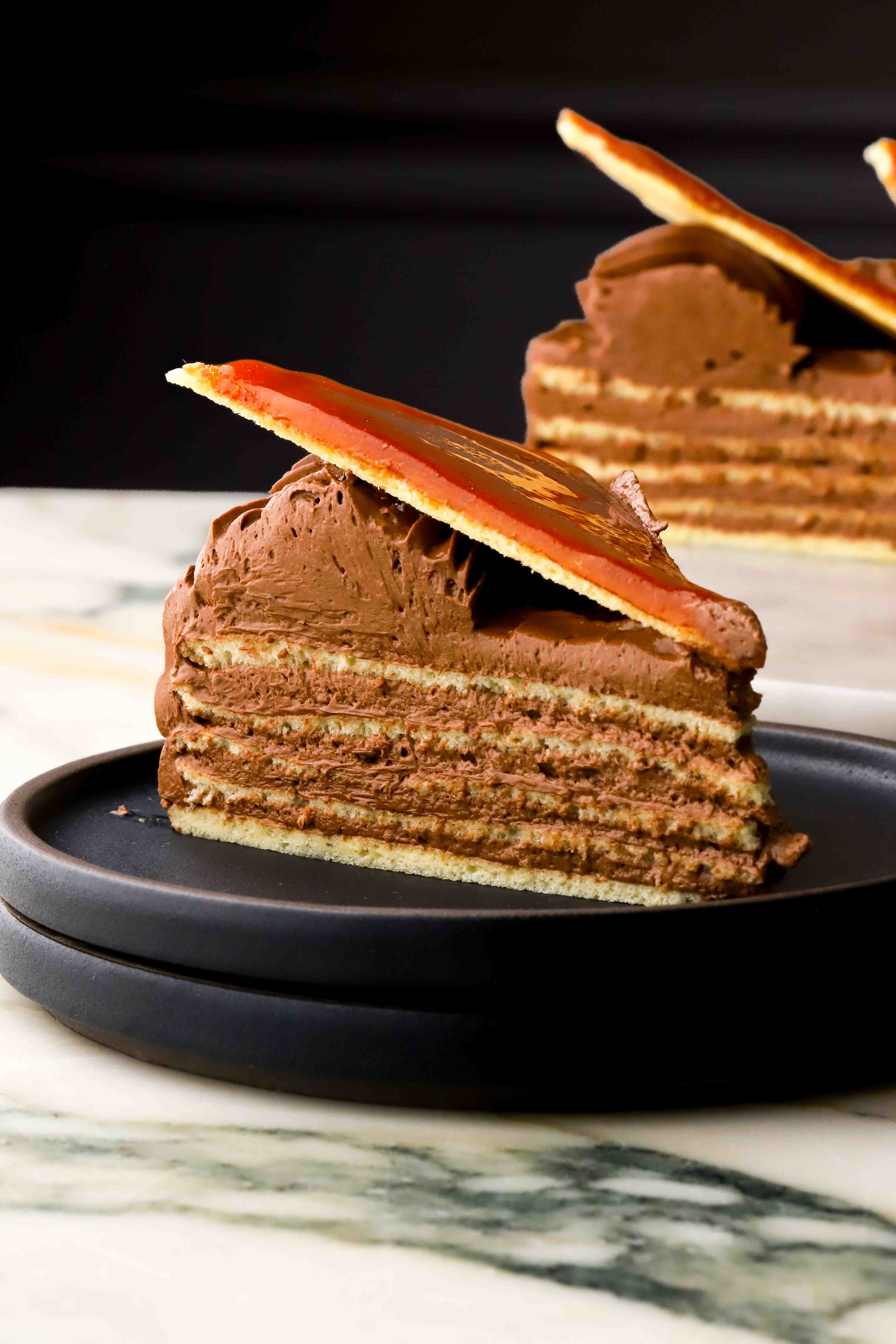
Dobos is a classic Eastern European cake known for all its gorgeous layers. My mom makes hers with thin vanilla cake layers and chocolate diplomat cream, and since I’ve always been partial to chocolate cake and vanilla cream, I reversed the Dobos.
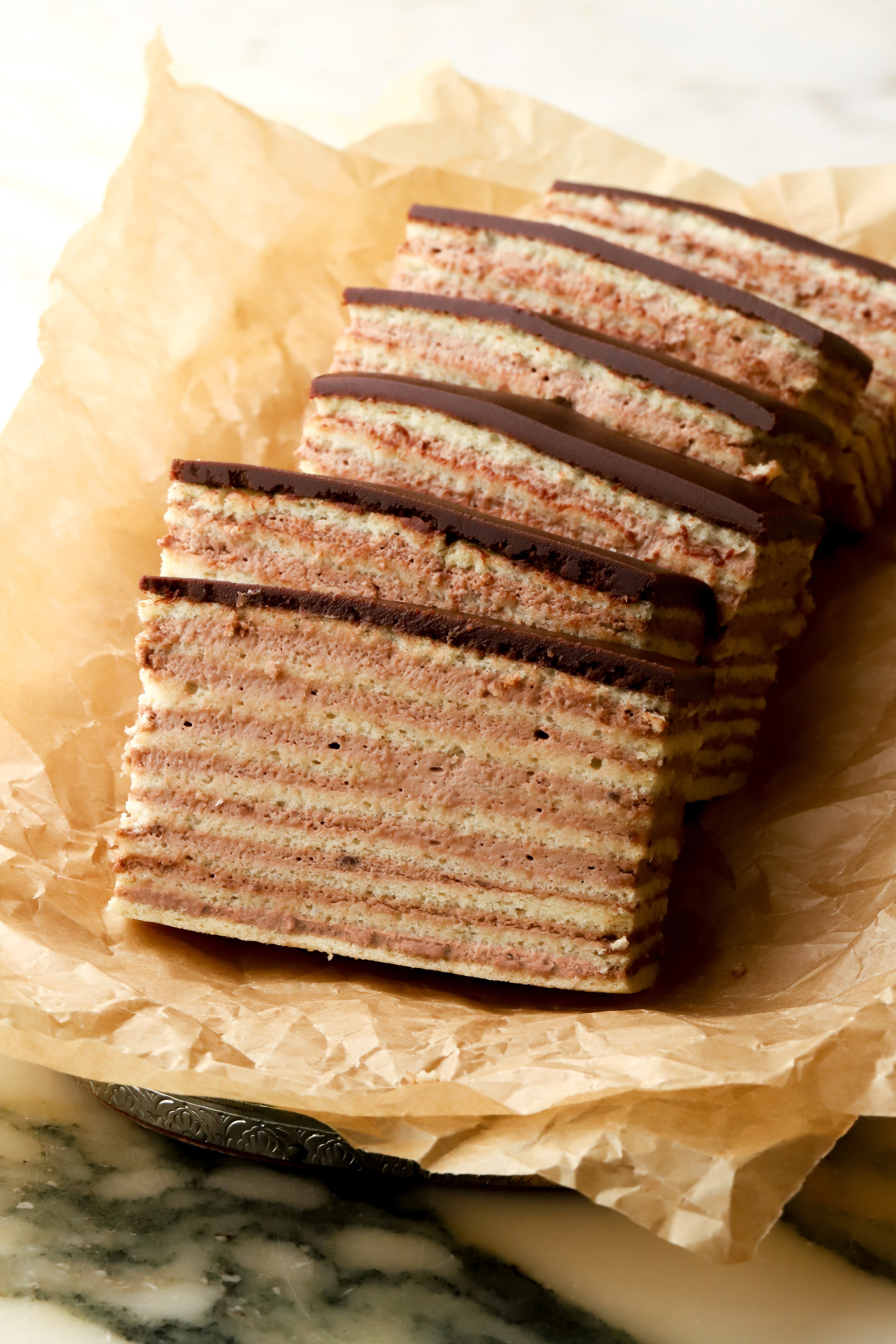
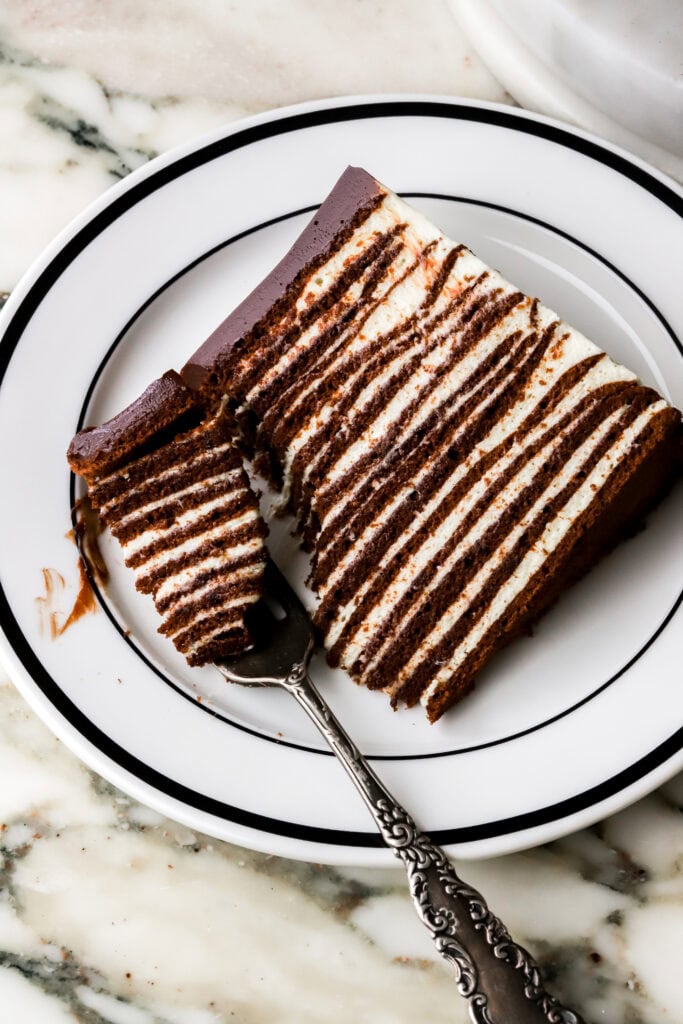
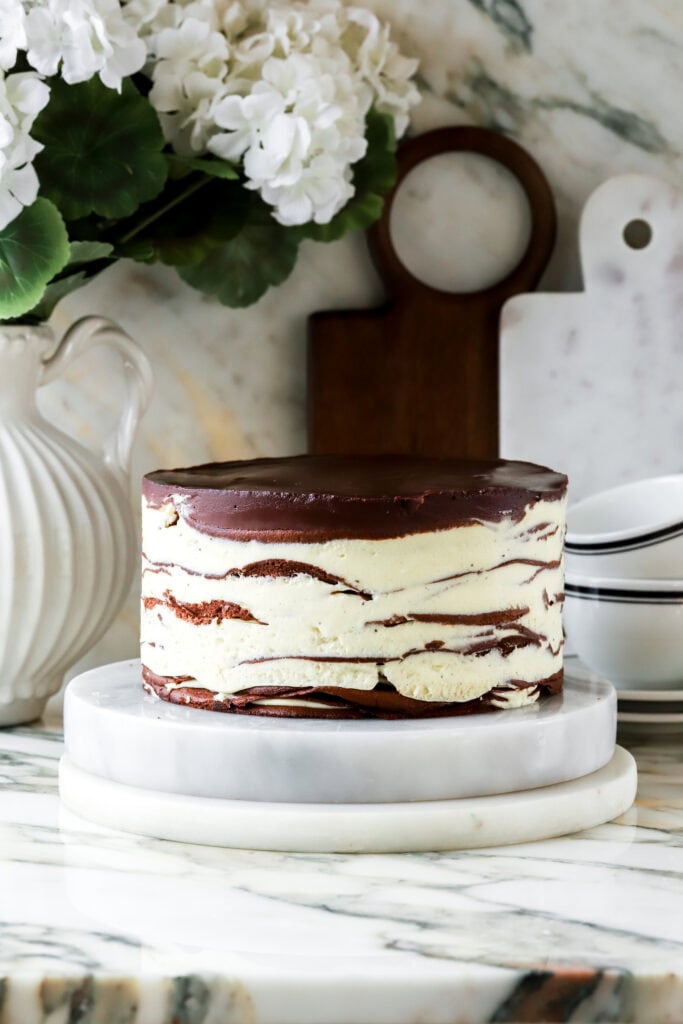
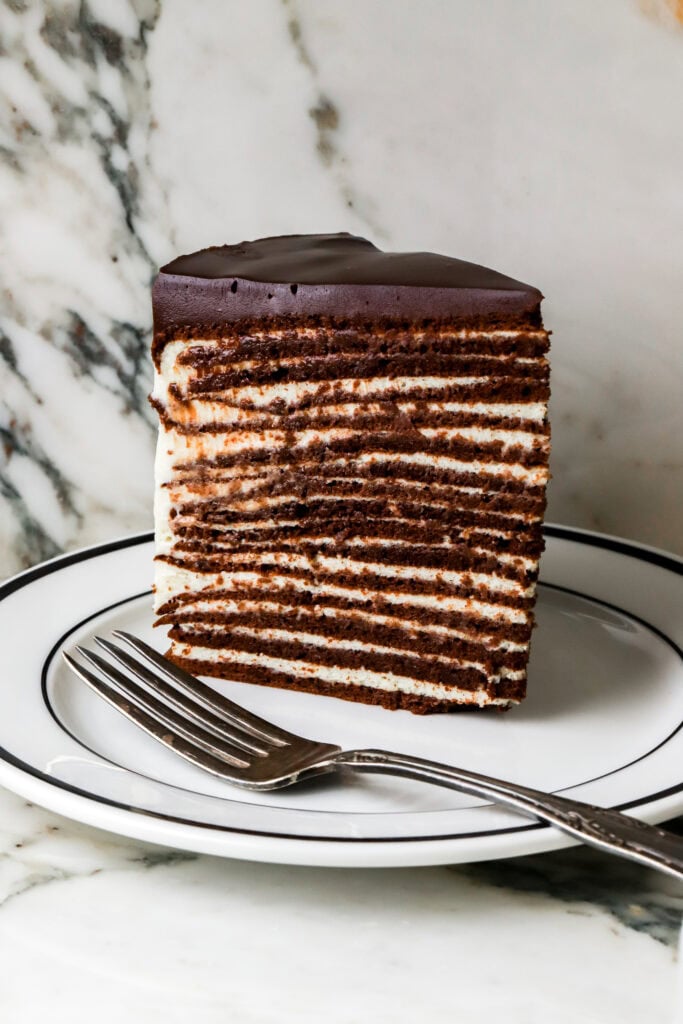
This version has 16 super-thin chocolate sponge cake layers stacked with vanilla diplomat cream and topped with dark chocolate ganache. How beautiful is she?!
Ingredients & Substitutions
The ingredients are pretty straightforward and the full recipe is in the recipe card at the bottom but here are a few things to note.
- Eggs – I recommend using large eggs and if they’re at room temperature they whip up quicker.
- Flour – please please please, use a digital scale to measure dry ingredients; that includes the flour, cocoa powder and cornstarch in the cream.
- Trust me when I say I had to learn the hard way when using my mom’s recipes. She measures with A SPOON…an actual spoon. So I have her make her recipes, her way but with my scale underneath lol.
- Cocoa Powder – I use dutch-process but natural cocoa powder will also work fine.
- Chocolate – I recommend using dark or semi-sweet chocolate for the ganache on top (chips or chopped are fine). The ratio will be different if you substitute it for milk chocolate.
Let’s Talk Details
There aren’t a lot of parts to this cake, just a lot of those parts LOL
- Vanilla Diplomat Cream – a simple pastry cream lightened up with whipped cream. Side note – this could easily be flavored into many fun flavors too!
- Chocolate Cake Layers – this is a thin chocolate sponge cake but the technique is different to get the layers so thin.
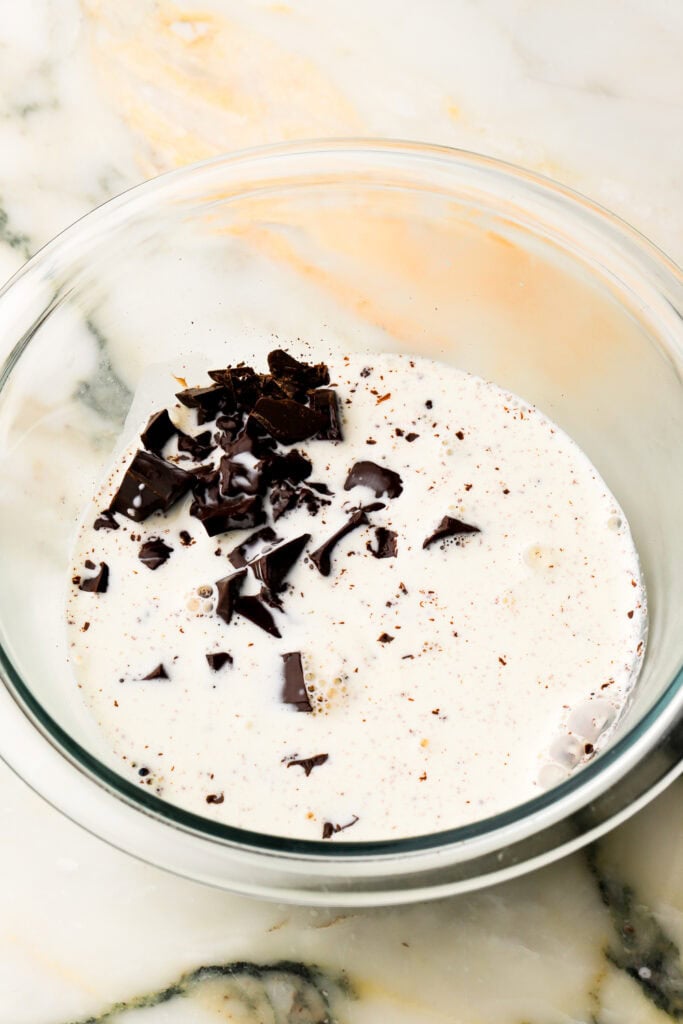
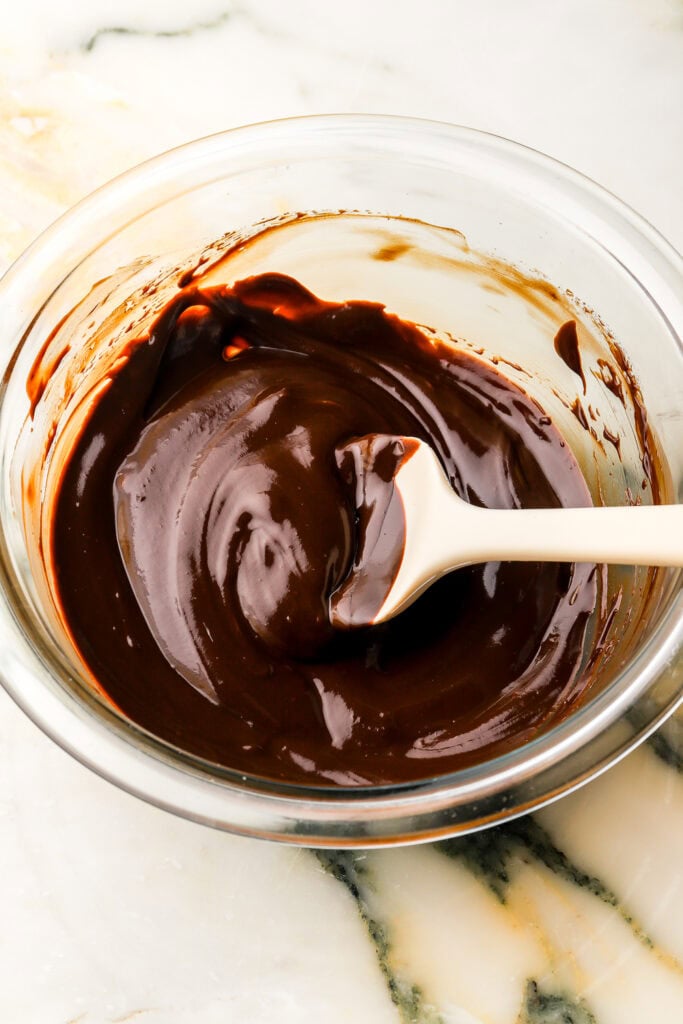
- Chocolate Ganache – a traditional 1:1 ratio but I recommend sprinkling the top with some flaky sea salt for a little pizazz.
Vanilla Diplomat Cream
We’re starting with the cream because the pastry cream takes longer to cool than the cake layers.
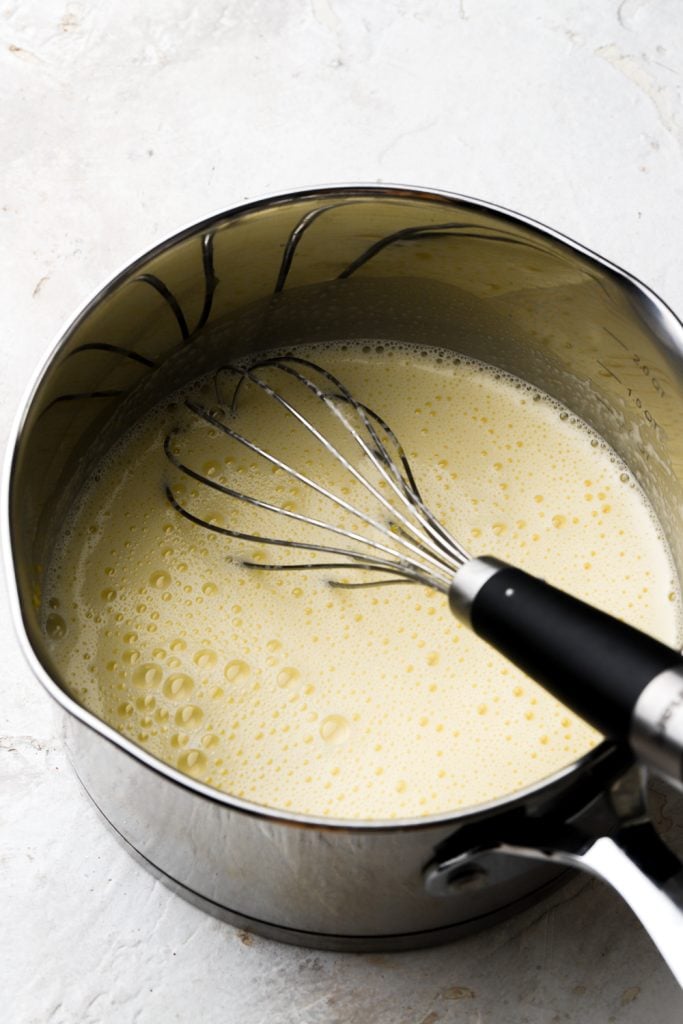
- Heat the milk in a saucepan.
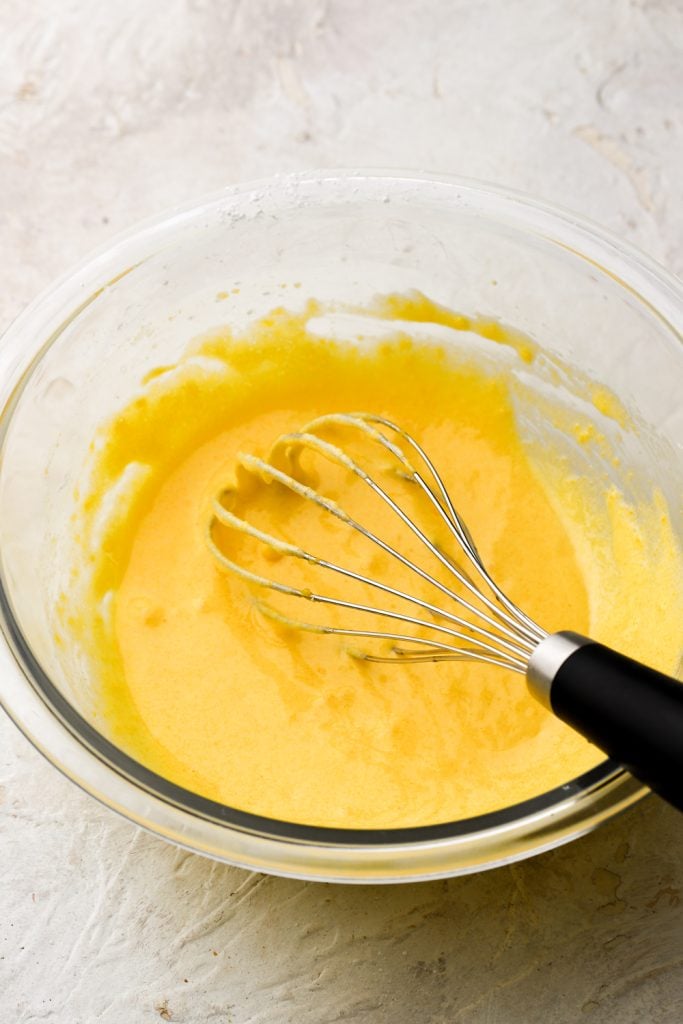
- Whisk egg yolks with sugar first, then add in the cornstarch and whisk well.
- Stream the milk into the egg yolk mixture.
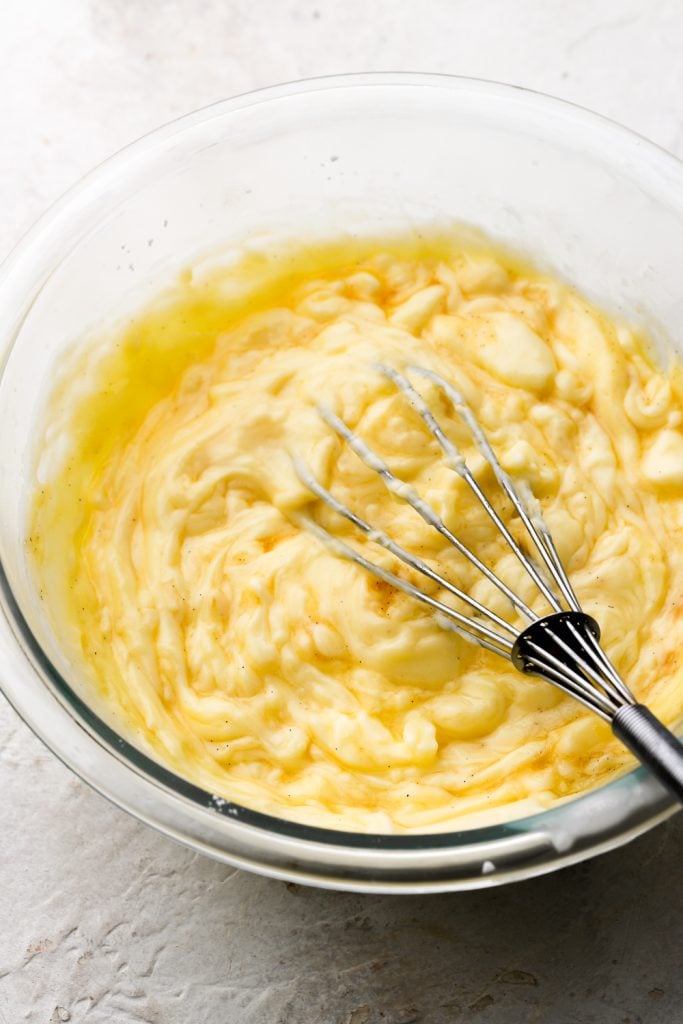
- Cook the whole thing for 5ish minutes, until it thickens and leaves streaks.
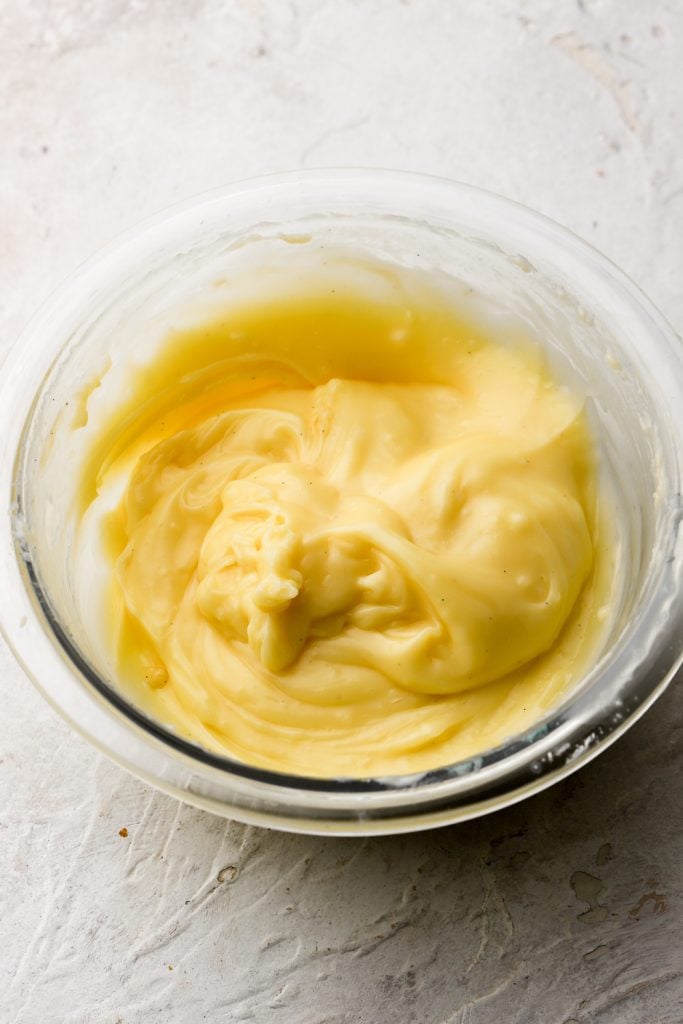
- Remove from the heat and add butter and vanilla.
- Cover with plastic wrap and allow to cool completely.
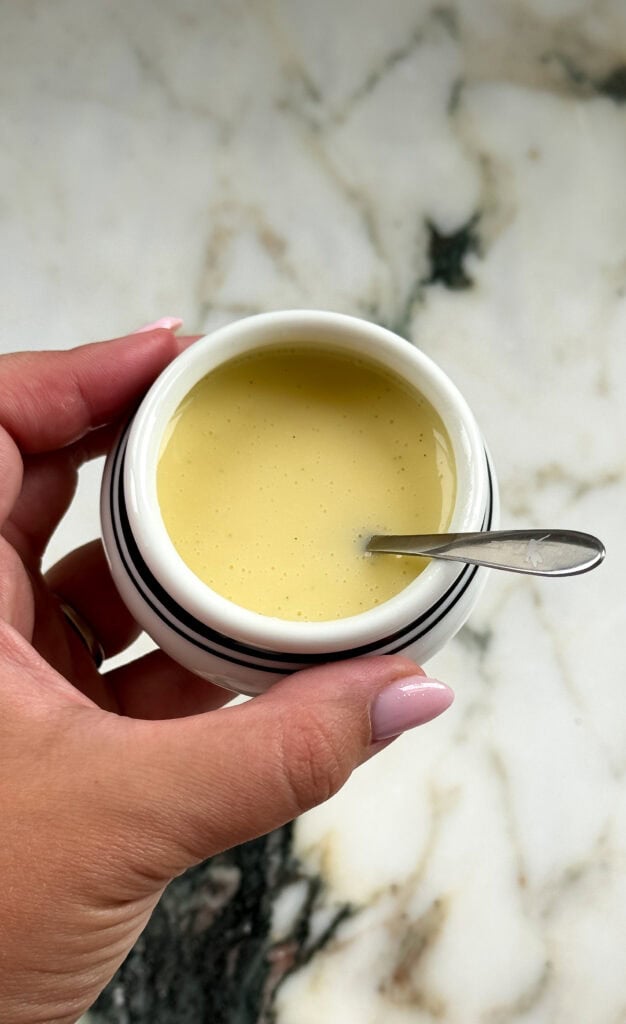
- Bloom gelatin in cold water, then microwave for 5 seconds to melt it.
- Add a little pastry cream to the warmed gelatin and mix until it’s smooth.
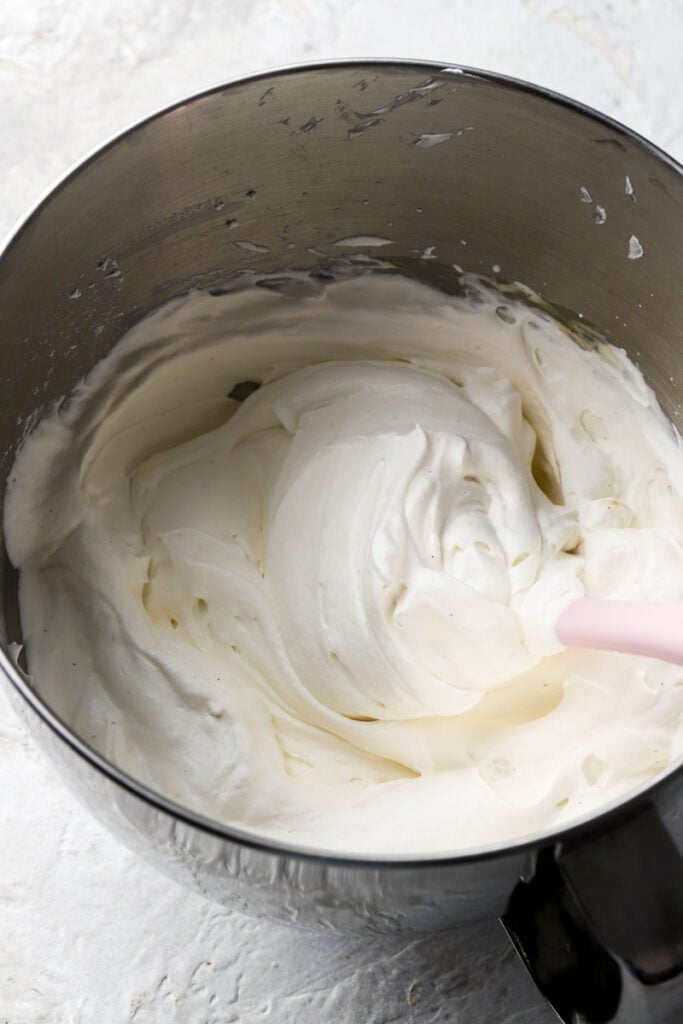
- Whip the cream with the powdered sugar.
- Add the gelatin mixture and a few spoonfuls of the whipped cream into all the pastry cream, whisking until it’s smooth.
- Gently fold in the rest of the whipped cream into the pastry cream in 2-3 increments.


Chocolate Cake Layers
- Preheat the oven and line a countertop or table with a tablecloth to flip the cake layers onto.
- Whisk together the flour, cocoa powder and salt and set aside.
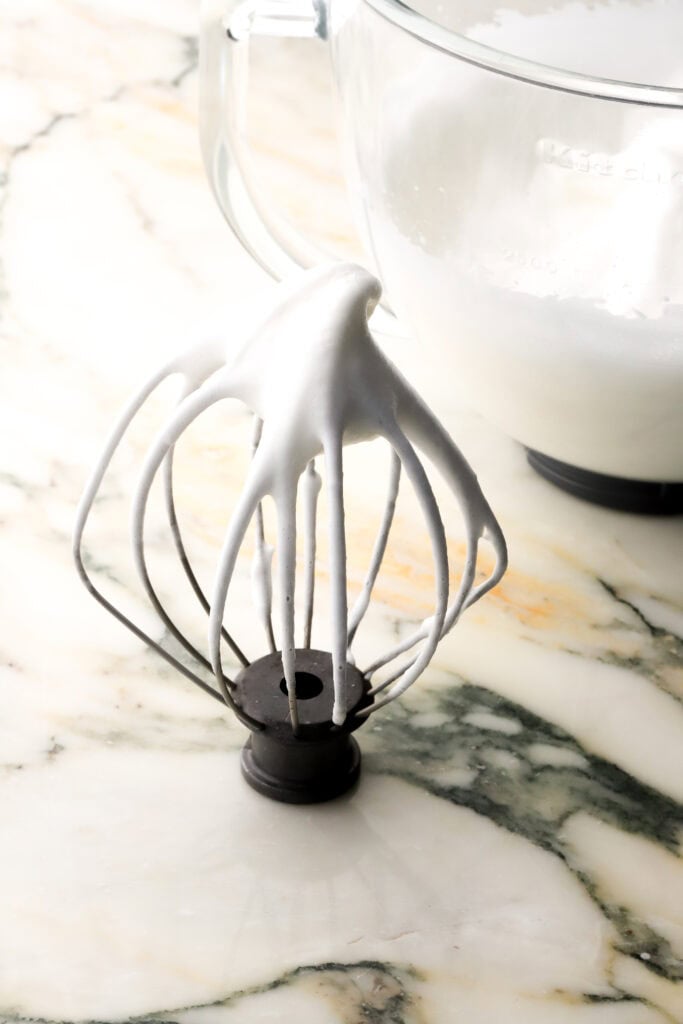
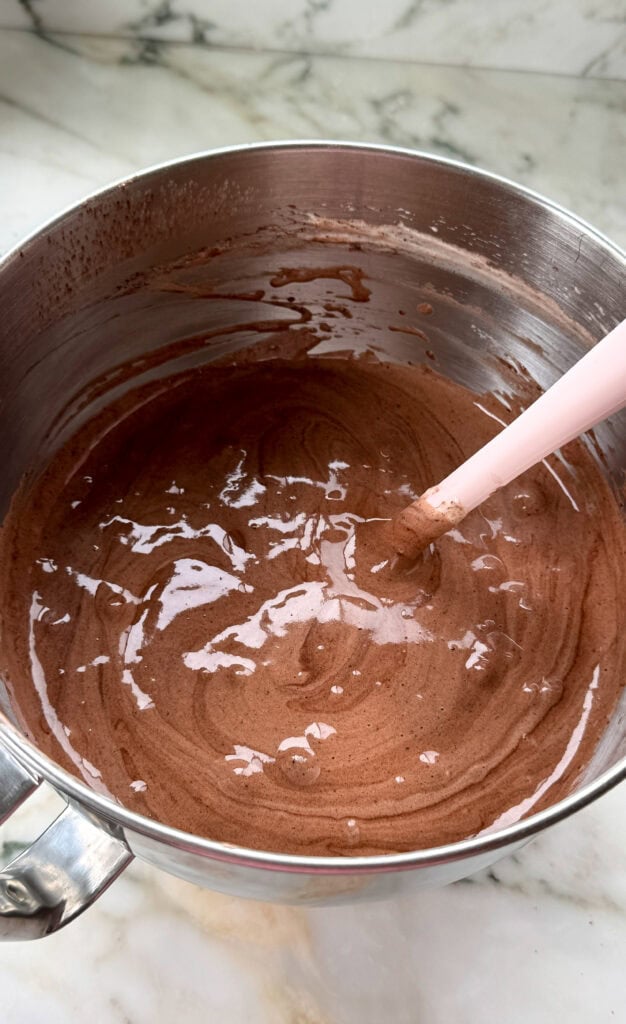
- Separate the eggs and beat the egg whites with the sugar until it’s thick and fluffy like a meringue.
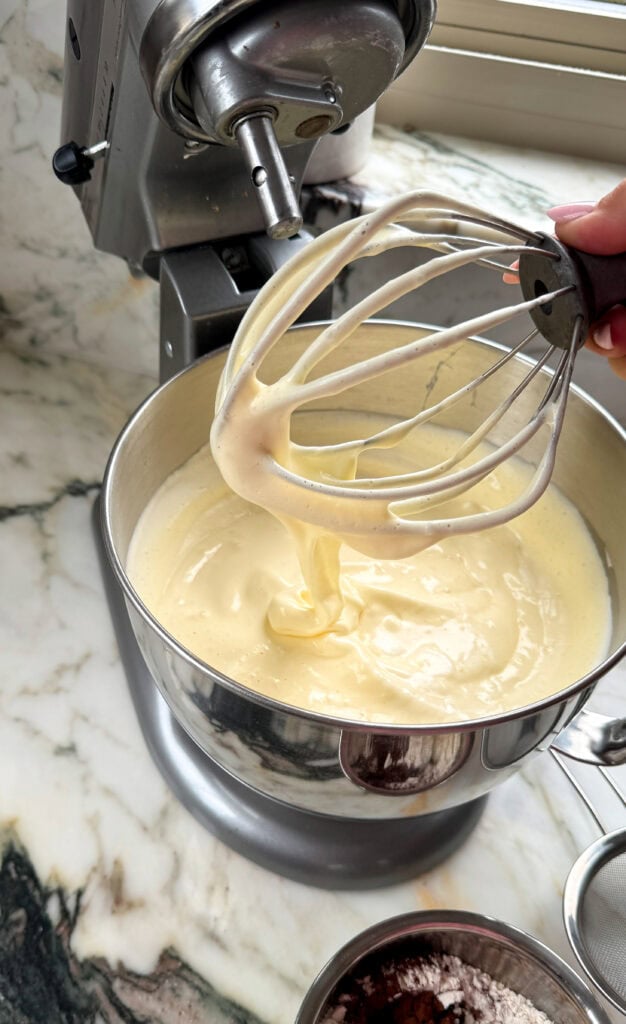
- With the mixer running, add in the egg yolks, followed by the oil.
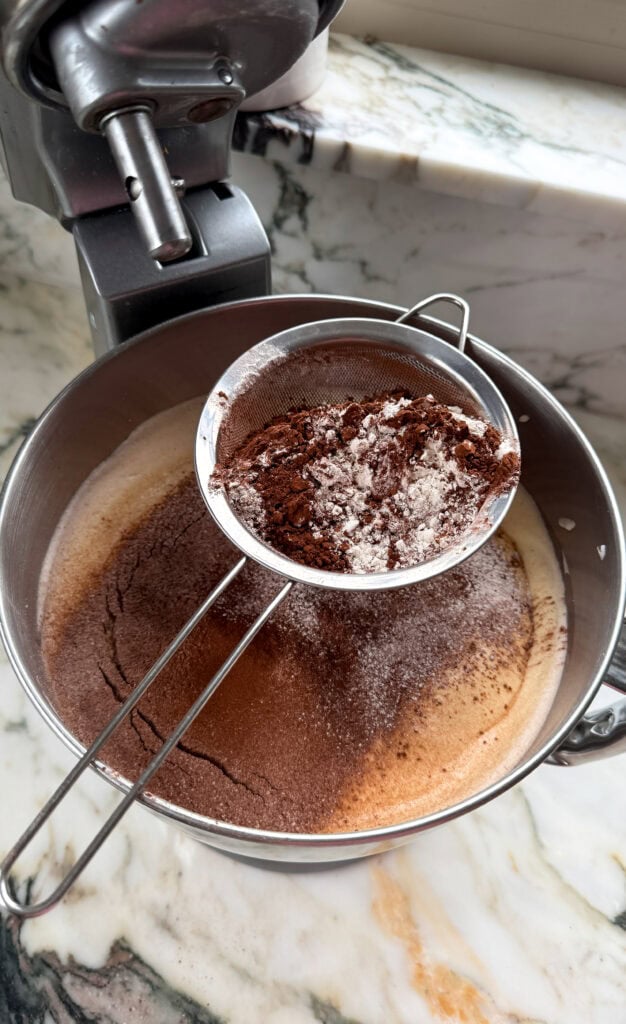
- Scrape the edge of the bowl and sift in the dry ingredients.
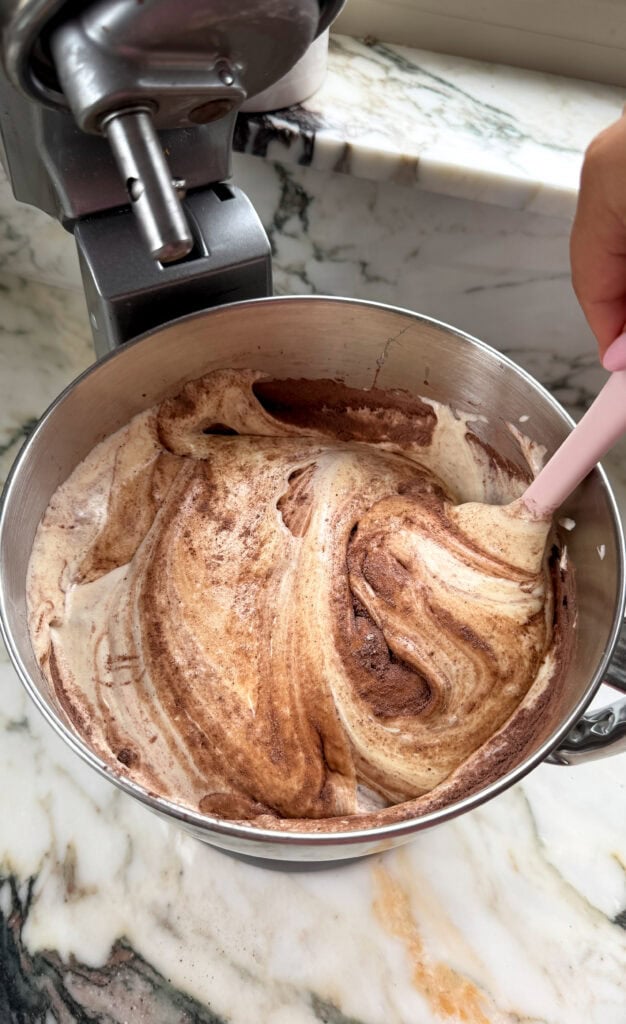
- Fold in the dry ingredients just until the batter is fully mixed.
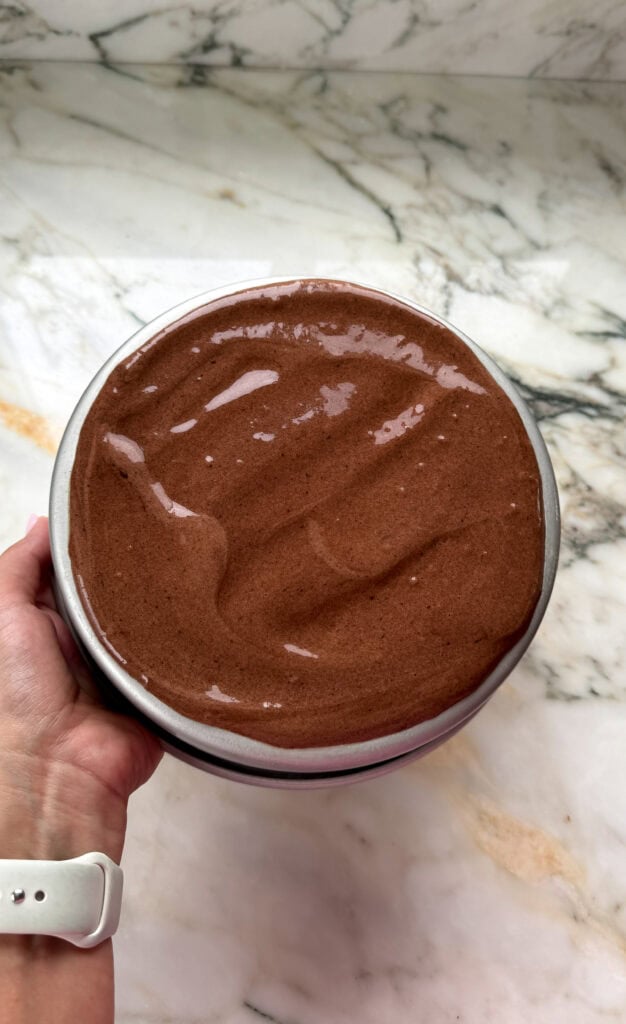
- Grease the BOTTOM side of an 8 inch pan and spread a thin layer of batter on top, like a crepe.
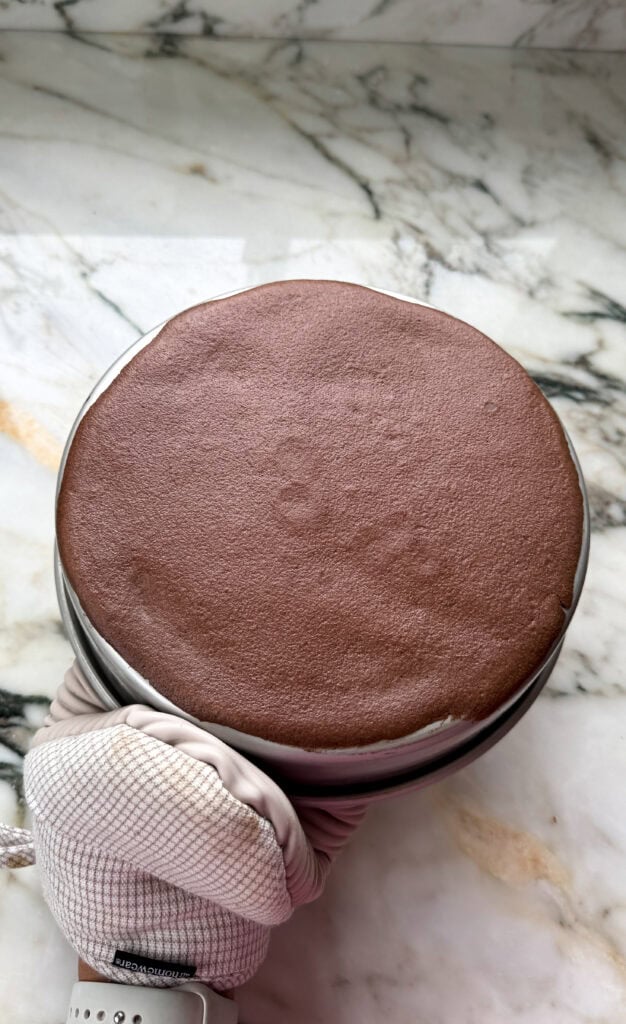
- Bake until it no longer looks wet.
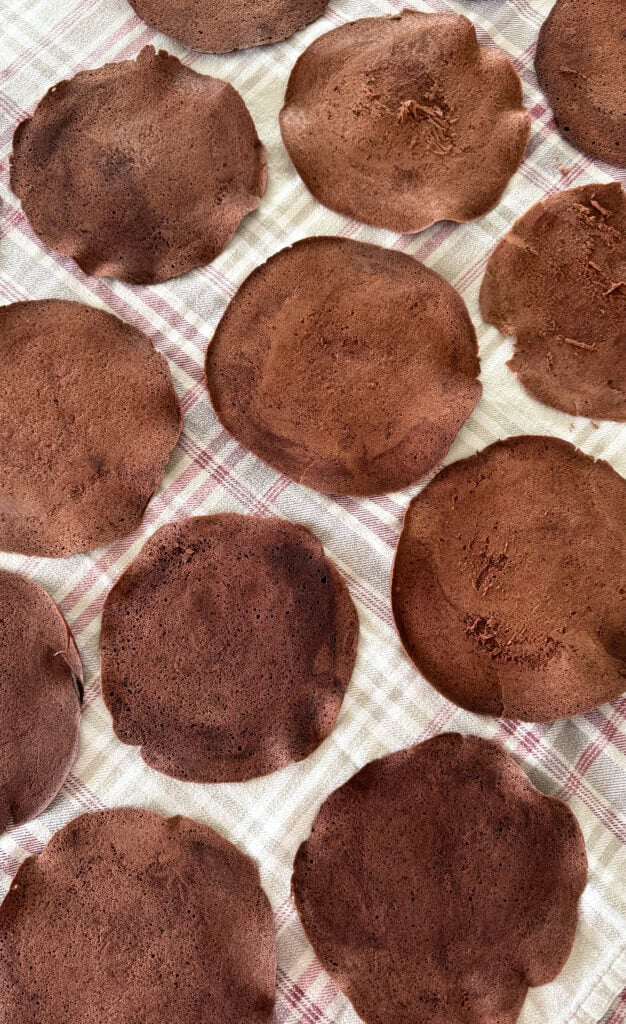
- Use a large knife to release the cake from the pan and flip it upside down onto the tablecloth to cool.
- Repeat with 16 layers – I did two at a time.
Chocolate Ganache
- Heat the cream in a saucepan and pour over the chocolate.
- Let it rest for a minute and then mix it gently until it’s smooth and combined.
Assemble The Cake
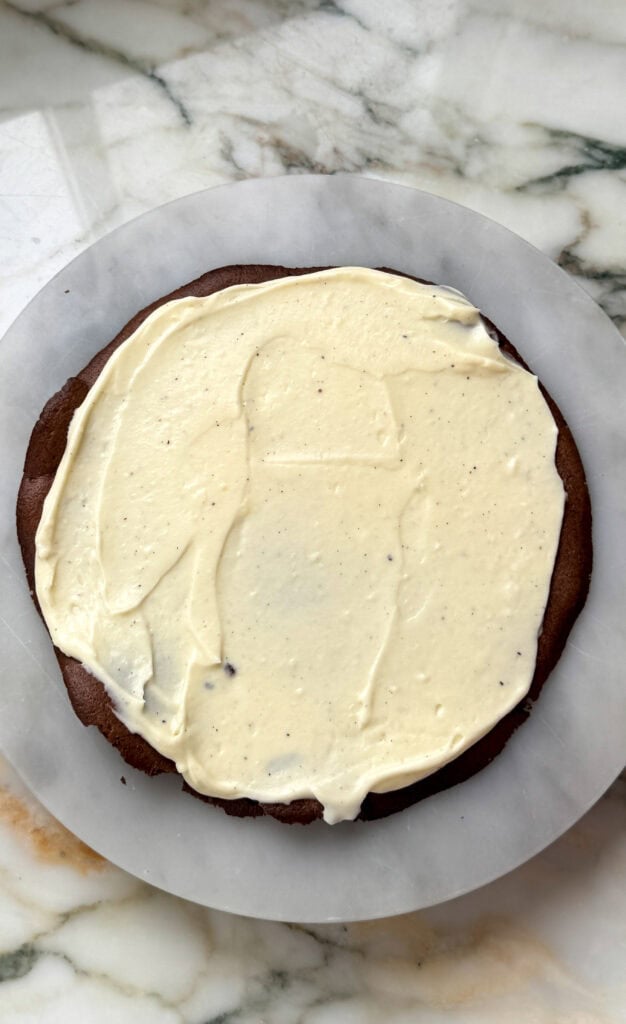
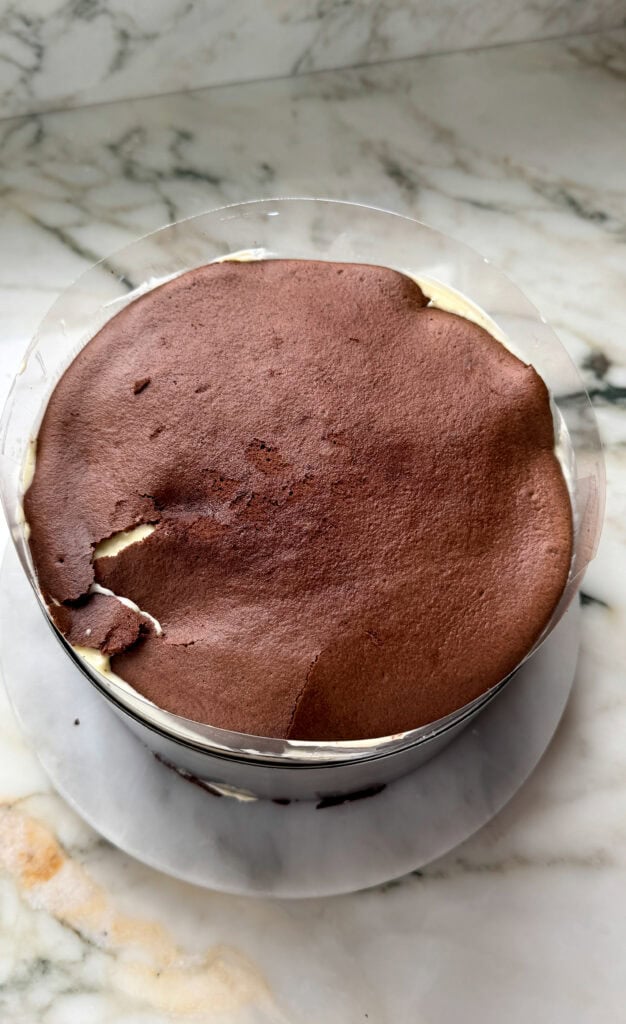
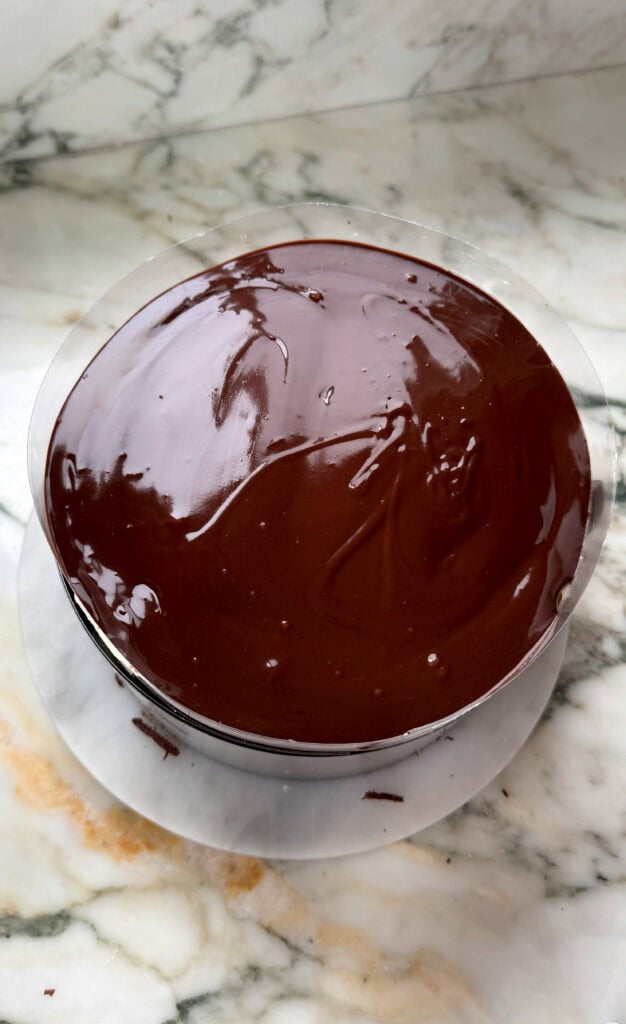
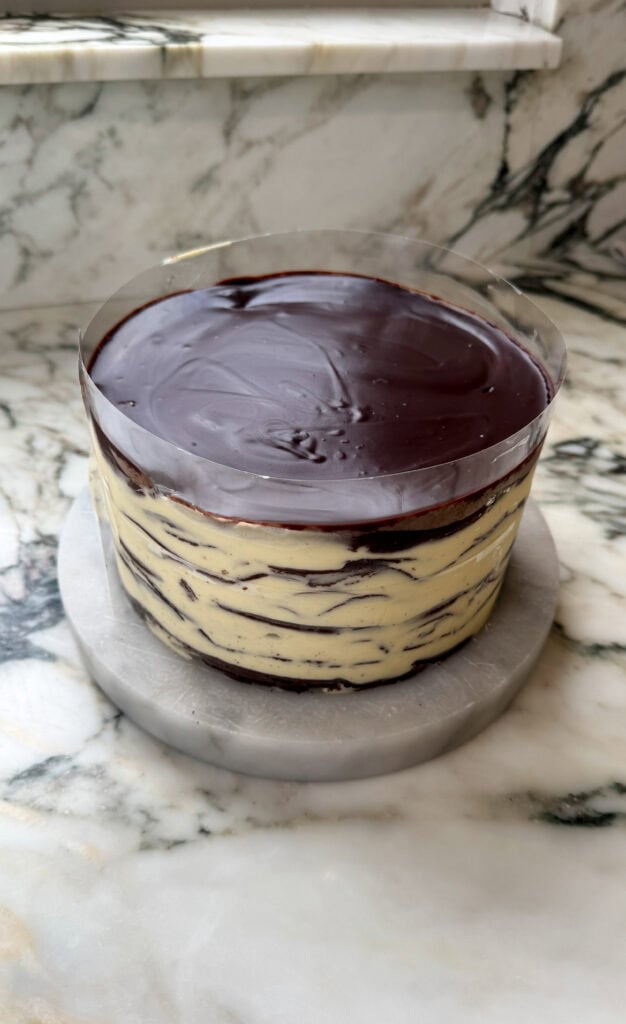
I used a cake ring and acetate to build the cake, which is definitely the method I recommend for getting those super clean sides.
I found it difficult to spread the cream over the first few layers with the acetate already in place, so I assembled the first several layers without it. Then I wrapped the cake in acetate, secured it with the cake ring and continued building until all 16 layers were stacked.
You can assemble the cake without any support, but I don’t recommend it unless you want to flash freeze it for a few minutes between layers. The edges will also be a little more ruffled instead of perfectly straight.
If you have a tall 8-inch cake pan, that works too. Line it with plastic wrap, assemble the cake inside and use the plastic wrap to lift it out once chilled. The cake will likely be taller than the pan, so either let the ganache drip slightly over the edge or allow it to thicken before spreading it on top.
Refrigerate the finished cake for several hours before removing the cake ring and acetate. I like to run a clean cake scraper around the outside after peeling off the acetate to tidy up the edges.
Can I Decorate The Outside Of The Cake?
Absolutely! Once the cake is fully chilled and set, you can frost the outside if you want to turn it into more of a celebration cake. I frosted the entire cake with Swiss meringue buttercream for my son’s birthday and it worked beautifully.
I assembled the cake with the chocolate ganache on top as written, chilled it completely and then frosted over the whole thing. Just make sure the cake is cold before decorating so all those thin layers stay nice and stable.
What To Do With Leftover Egg Whites
Speaking of Swiss meringue buttercream, you’ll be left with six egg whites. They freeze well so you can freeze them and use them for later or I have several recipes I like to make to use these up.
- Swiss Meringue Buttercream – 1 batch uses 4 egg whites. You can make 1.5 batches – If I don’t need it right away, I just freeze it and use it when I need to decorate a cake next time.
- Egg White Cookies – a single batch uses 2 egg whites and makes 9 cookies; you can easily triple this.
- Any recipe that uses meringue – my favorites are S’mores Sheet Cake, Chocolate S’mores Cake, or S’mores Cupcakes.
- Macarons – 1 batch uses 4 egg whites; fill them with Cream Cheese Frosting or Ganache, whatever you prefer.
Serving & Storing
I prefer this cake served cold or slightly chilled, but it can also be served at room temperature if desired.
It’s easiest to slice when cold and should be stored in the refrigerator. If serving at room temperature, just don’t leave it out for too long.
If you have any questions feel free to comment down below & if you’re a fan of my mom’s cakes, make sure you try her Honey Cake, that’s my favorite!
Have a blessed day & happy baking!
Love, B