
Classic Cheesecake Recipe
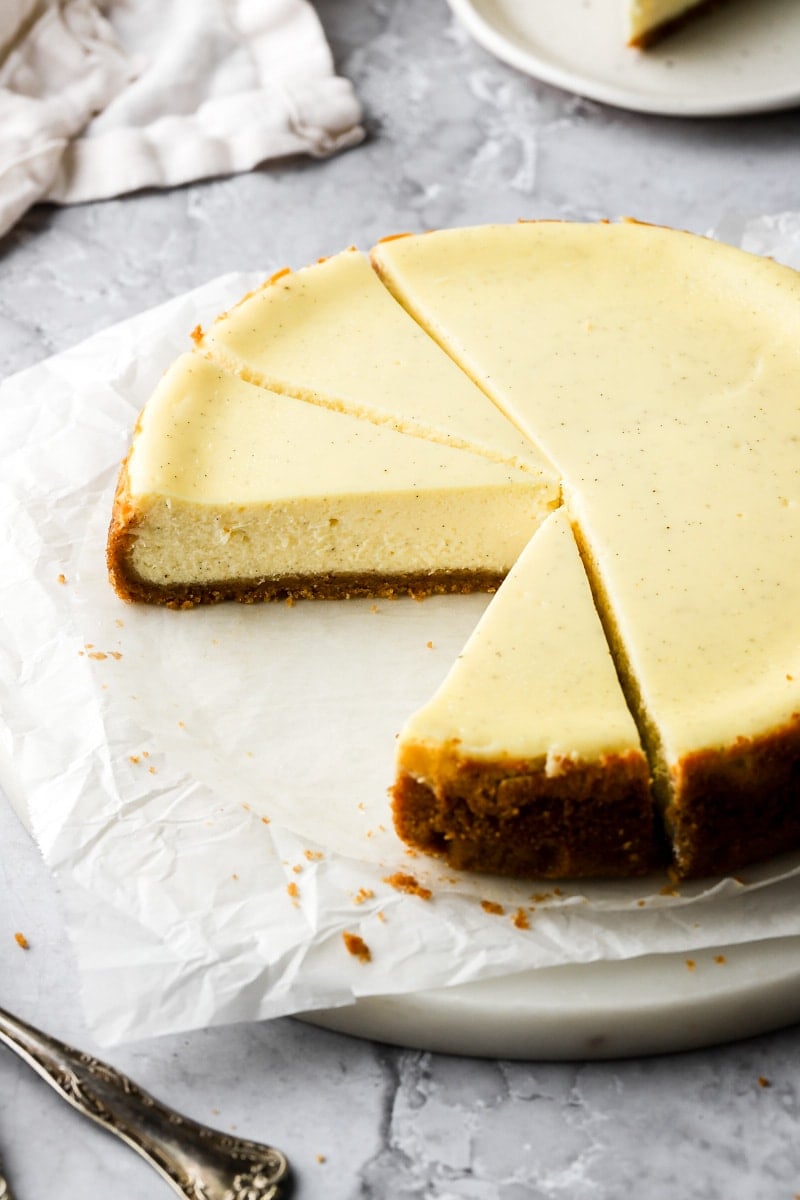
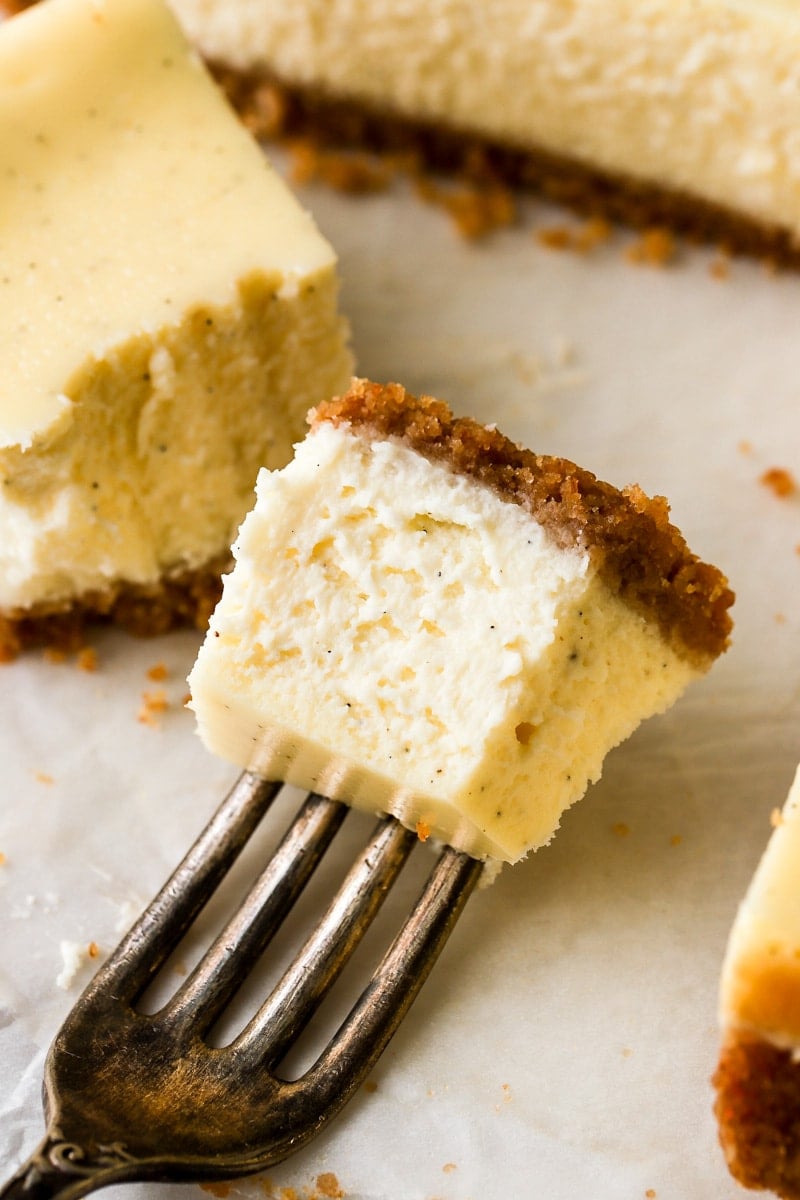
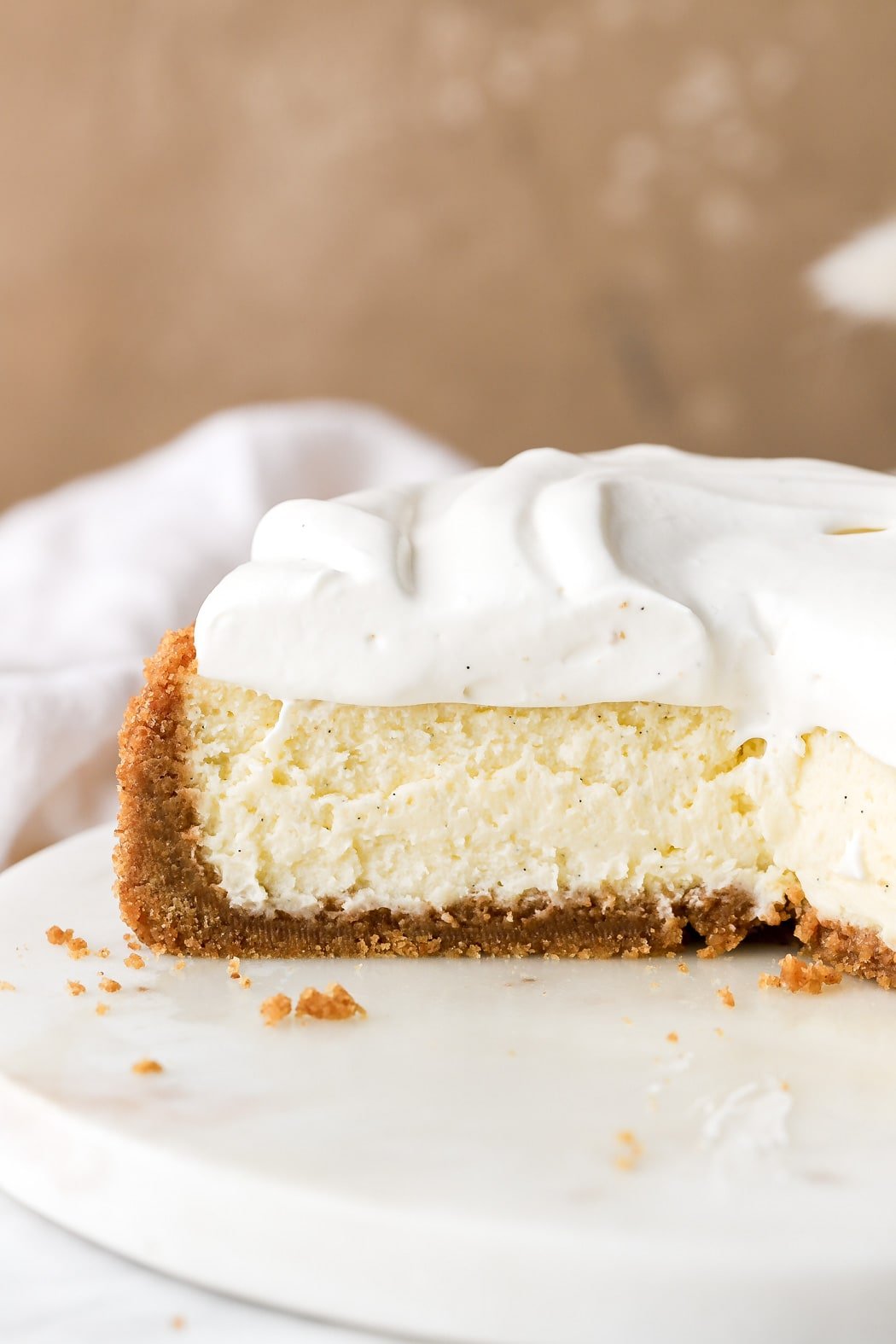
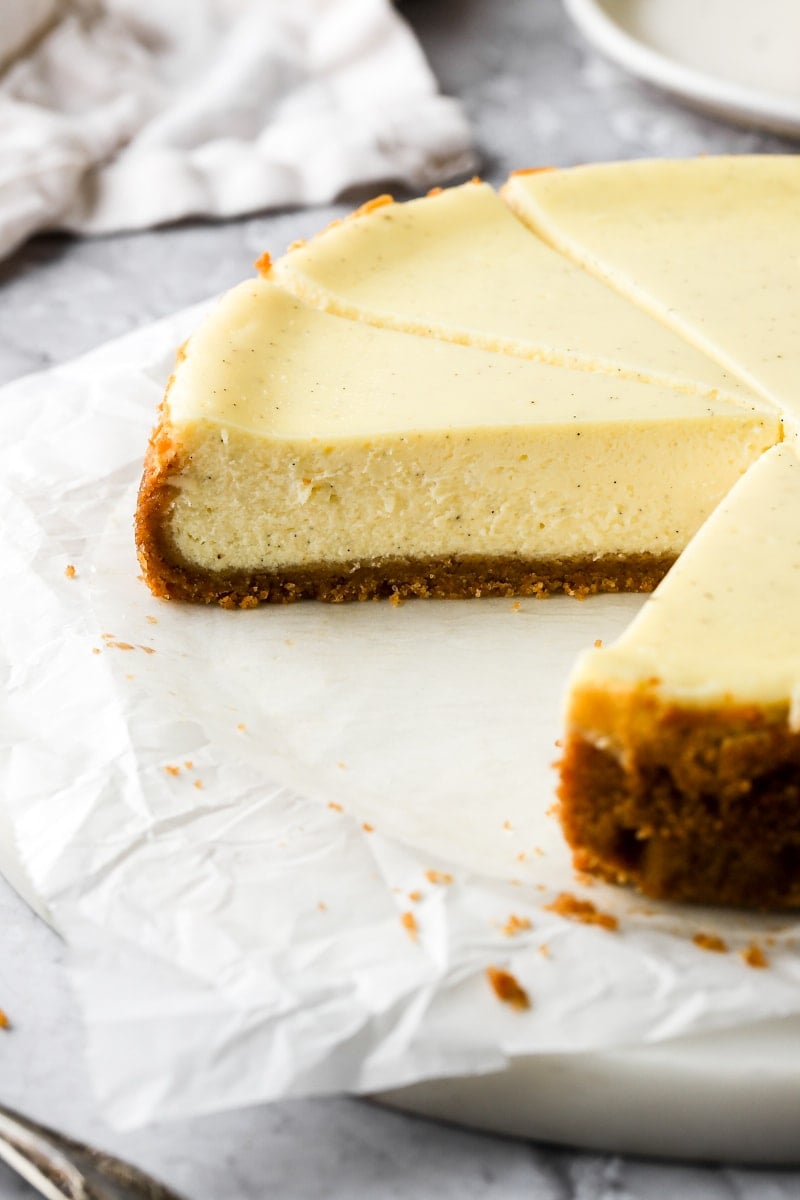
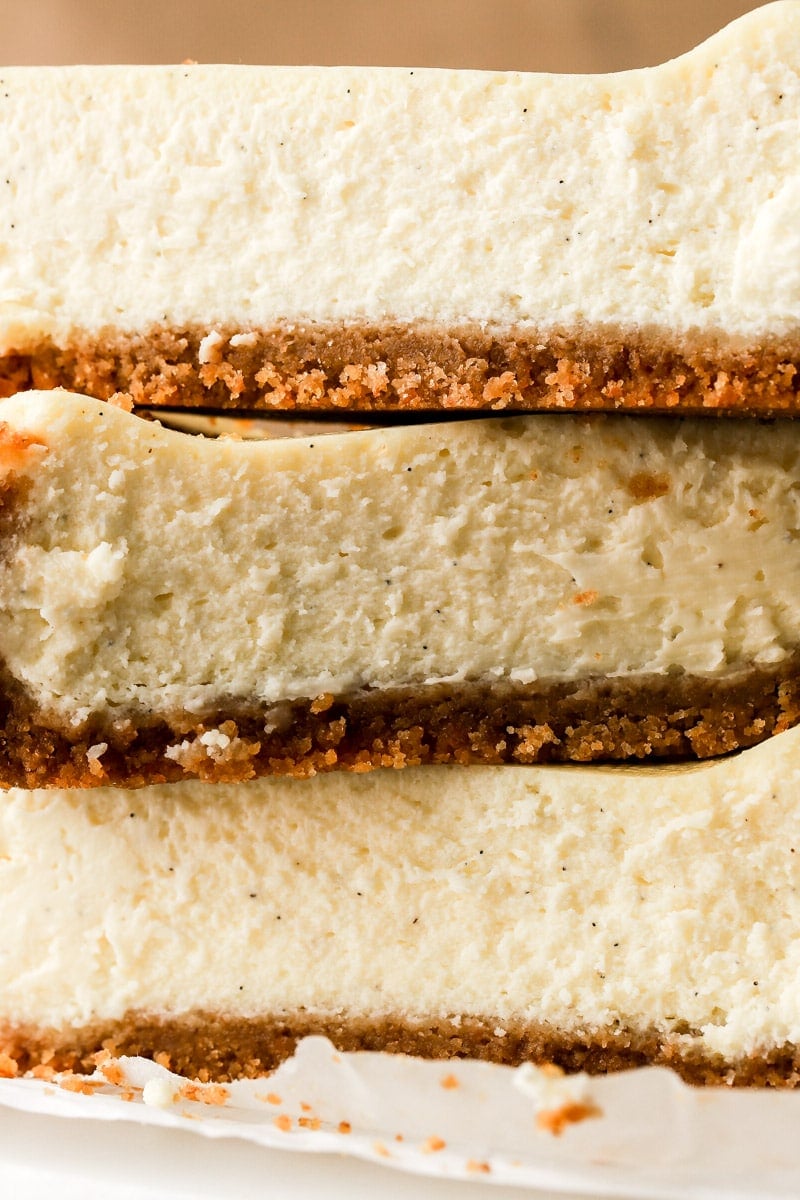
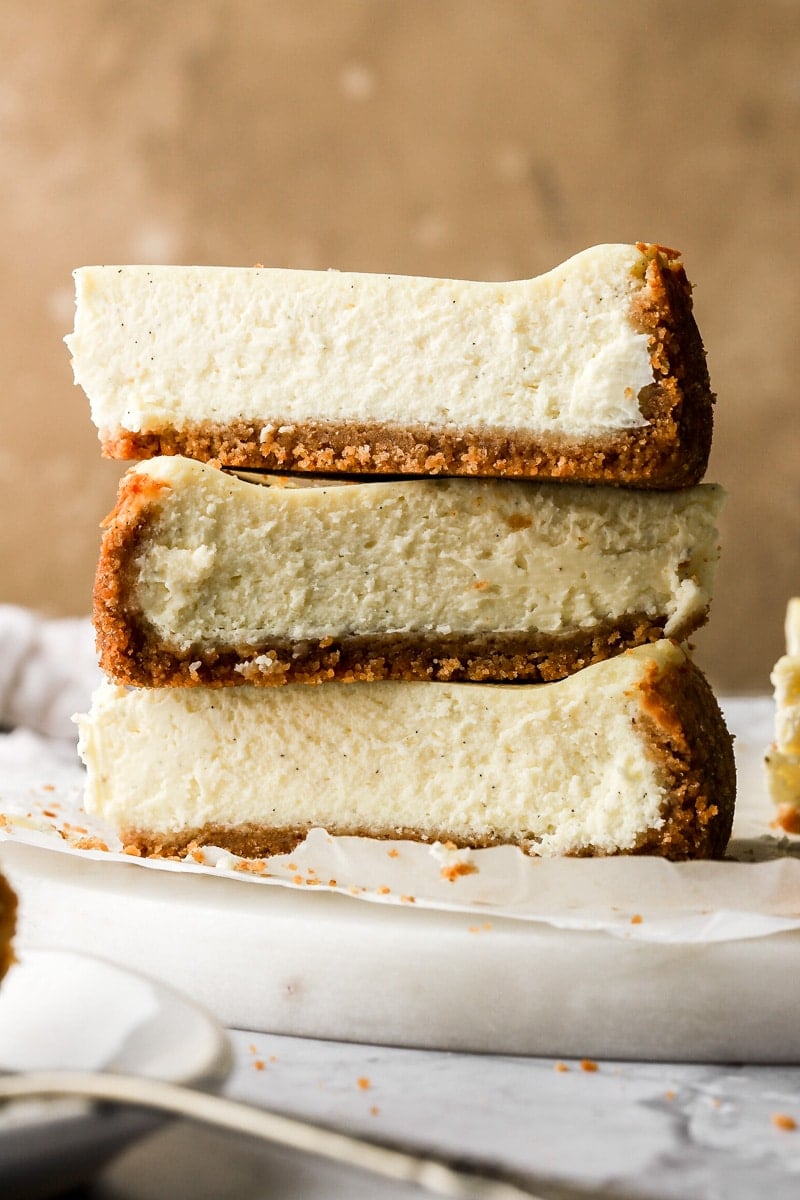
A creamy classic cheesecake with a rich vanilla filling, buttery graham cracker crust and smooth, sliceable texture.
She’s simple and doesn’t require an *actual* water bath!
This is my go-to base cheesecake recipe. I’ve adapted into so many flavors and the recipe can also be adjusted to make different sizes, from a small batch 6 inch cheesecake to a large 10 inch cheesecake.
Ingredients & substitutions
- Cream Cheese: make sure to use the full-fat brick cream cheese. I prefer the Philadelphia brand. It’s important that this specifically is at room temperature so it mixes well.
- Sugar: I used granulated sugar but I’ve adapted this recipe into many flavors, using brown sugar as well.
- Sour Cream: I’ve tested this recipe with equal amounts of sour cream and greek yogurt several times and have never noticed a difference. Plain yogurt also work fine, just make sure it’s unsweetened.
- Eggs: Use large eggs, preferably at room temperature, as well. If you’re in a pinch, place them in hot water for 5-10 minutes.
- Vanilla: I recommend vanilla bean paste or actual vanilla beans. If you’re in a pinch, pure vanilla extract works well too but when you have a simple dessert that’s vanilla flavored, I like to use a higher quality vanilla.
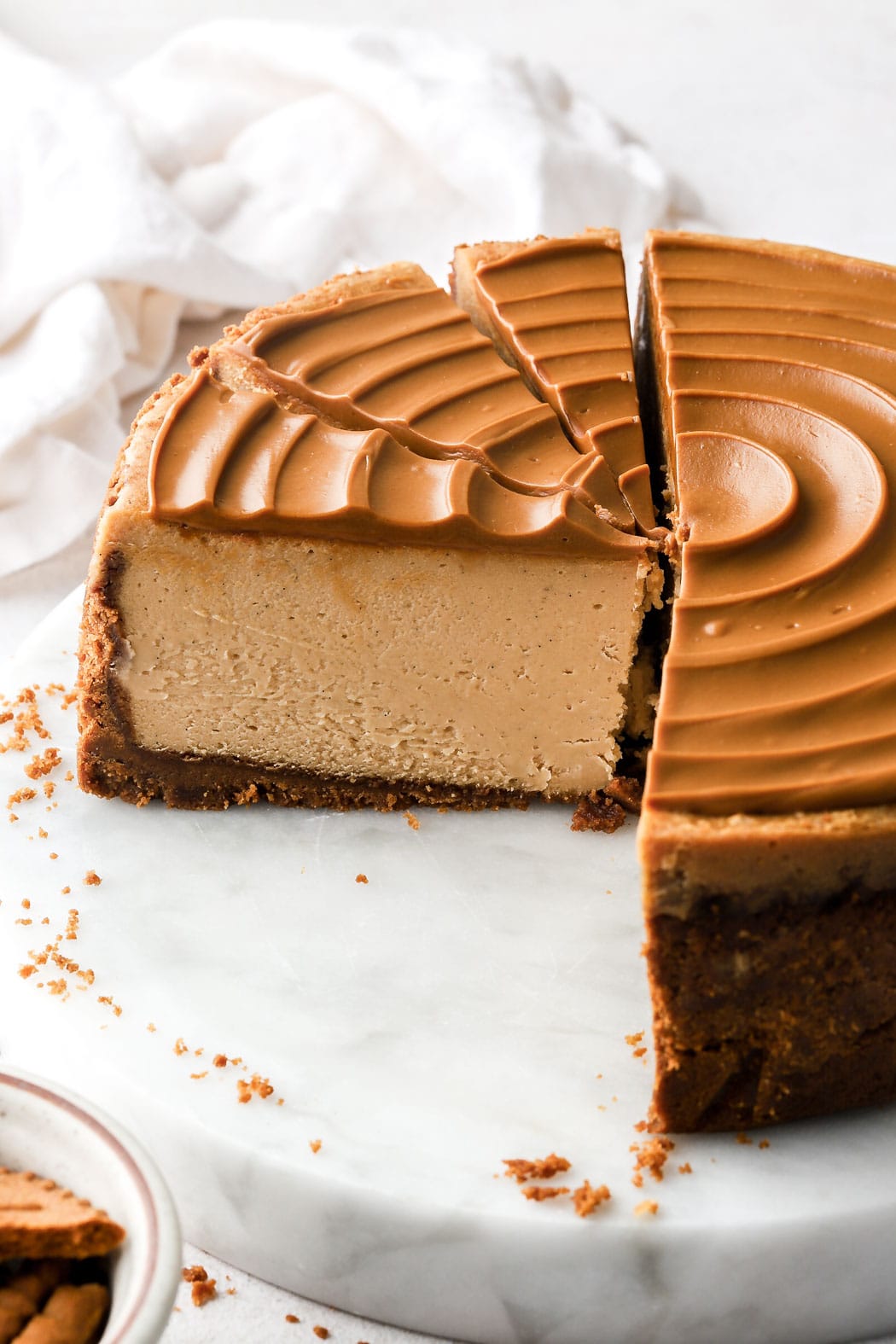
- Crust: I’ve used graham crackers and biscoff cookies (speculoos cookies) interchangeably in this recipe. Graham crackers are more classic, biscoff has a more fall(ish) cinnamon-y flavor. Any sort of digestive cookie works fine.
Step-by-Step Instructions
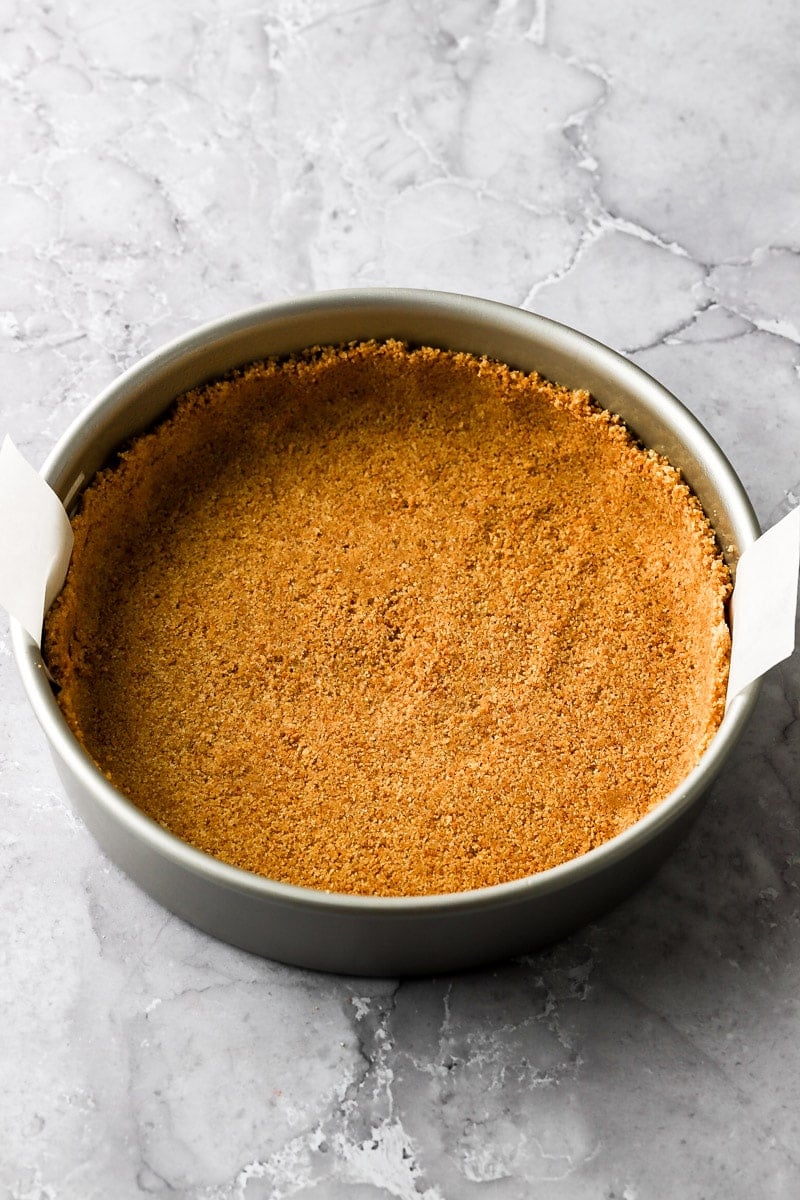
- Prepare your pan by removing the edge of the springform pan. Place a sheet of parchment paper onto the bottom of the pan so that it hangs off the edge. Then attach the side of the springform pan back to the bottom, so the parchment paper should be secure between the two pieces. Lightly spray the sides of the pan with baking spray.
- Make the crust by placing the graham crackers in a food processor and pulsing until you have fine crumbs. Add the melted butter and pulse until it’s evenly distributed. Spread the crust into the prepared pan, coming all the way up the sides. Use a ½ cup measuring cup to make the bottom smooth and the corners sharp.
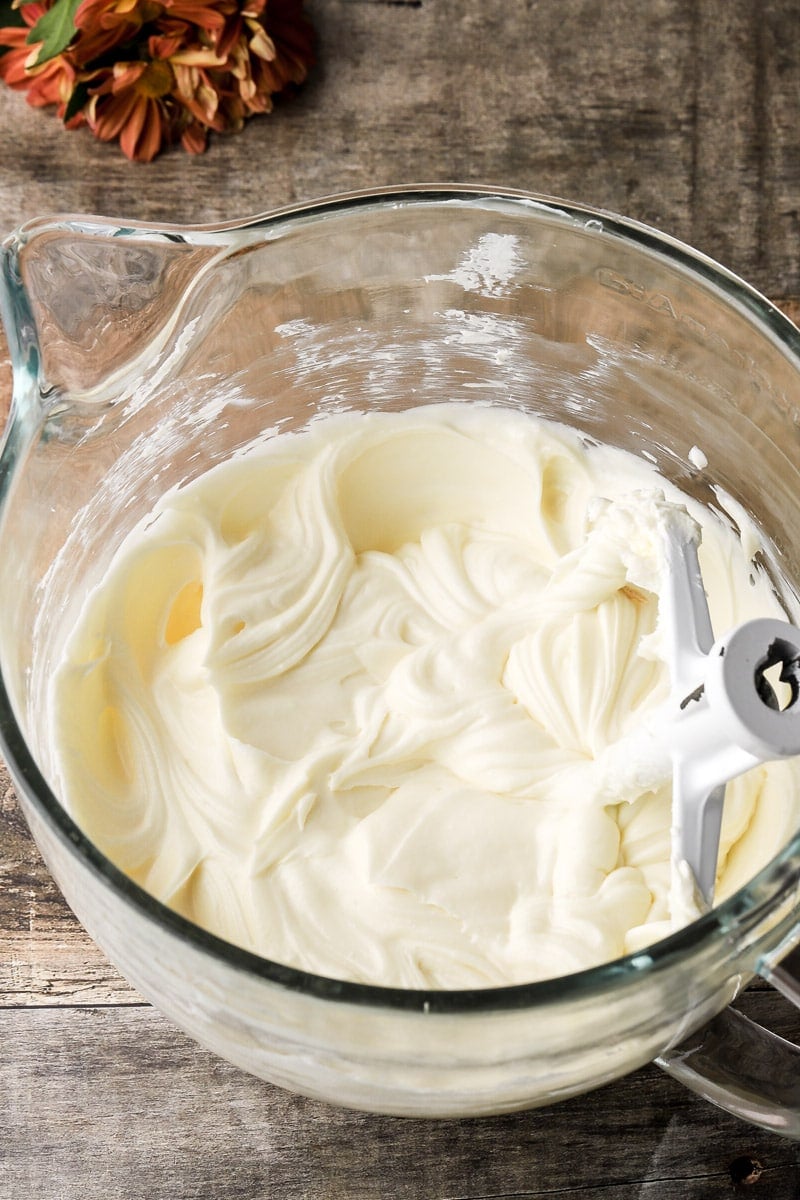
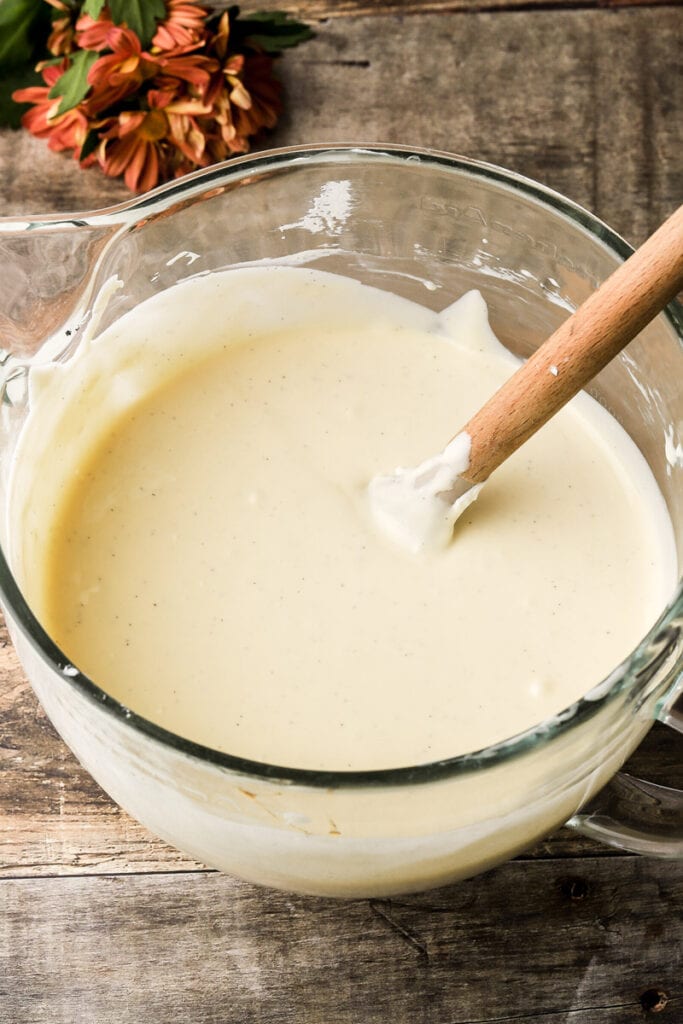
- Make the filling by creaming the room temperature cream cheese with the sugar, until it’s smooth, creamy and glossy. Make sure there are no chunks of cream cheese left.
- Add the sour cream,vanilla, and salt and cream until it’s completely smooth. Then add the eggs, one at a time, mixing on low speed, just until each one is combined.
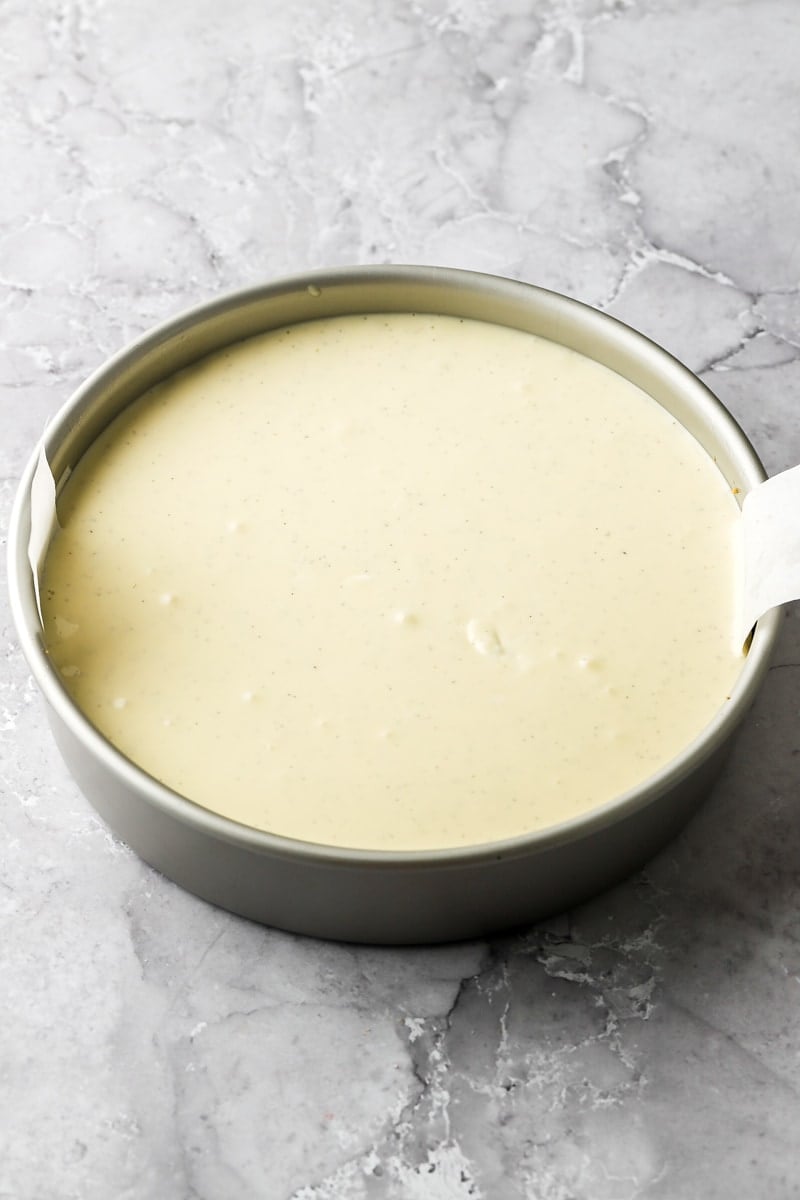
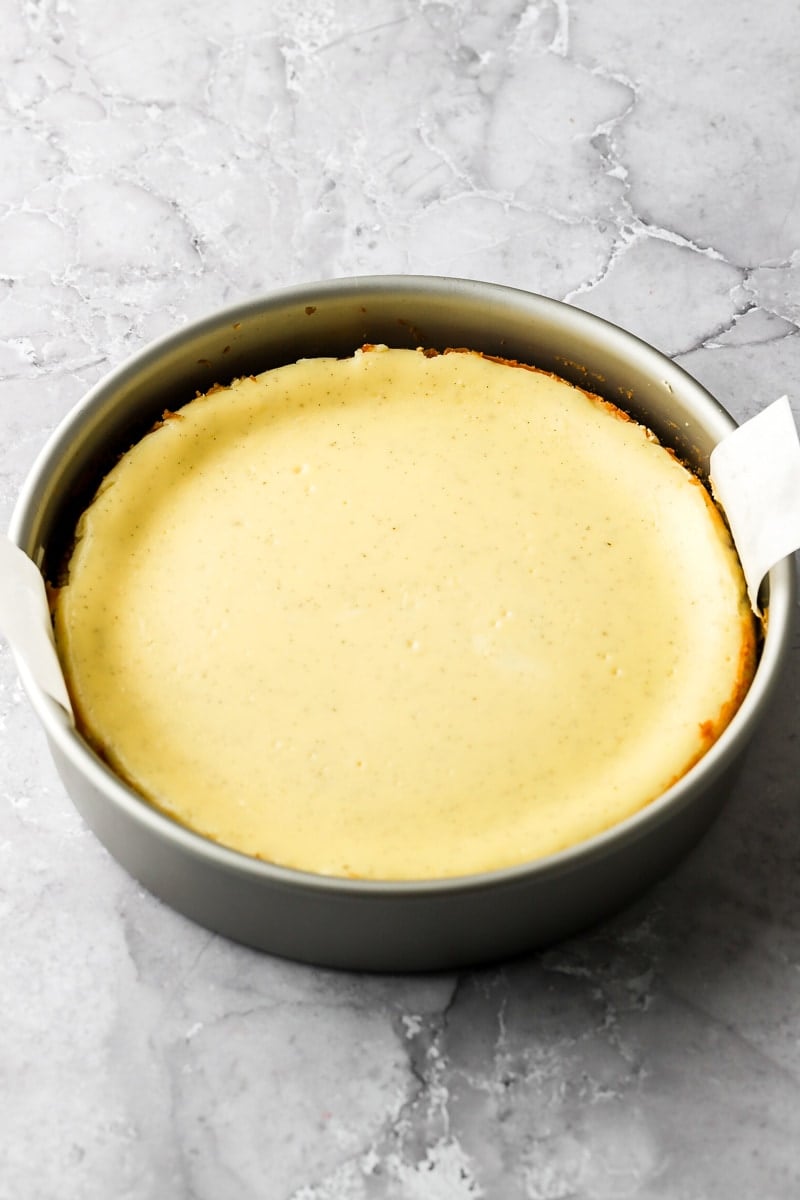
- Pour into the prepared pan and bake at 300F (148C) for 45 minutes. Then turn the oven off and use a knife to release the cheesecake from the edge of the pan. Let the cheesecake rest for 15 minutes in the oven with the door halfway open.
- Cheesecake should still have jiggle in the center, let it cool on the counter for a few hours before transferring to the fridge for at least 6 hours or overnight.
Tips to get the perfect bake without a water bath
- Cheesecakes are sensitive to heat so knowing your oven is important, to do that I recommend getting an oven thermometer.
- Bake the cheesecake at a lower temperature than normal for a longer period of time. Bake until the edges are set and the center is still a little jiggly.
- Use a knife to release the cheesecake from the edge of the pan after baking. The cheesecake will shrivel a little as it cools and if it’s stuck to the edge of the pan, that will make it crack in the center.
- Allow it to rest in the oven for another 15 minutes so that it can cool slowly to prevent cracking.
- Allow the cheesecake to chill in the refrigerator for at least 6 hours (preferably overnight) so that it sets fully.
How to flavor this base cheesecake recipe
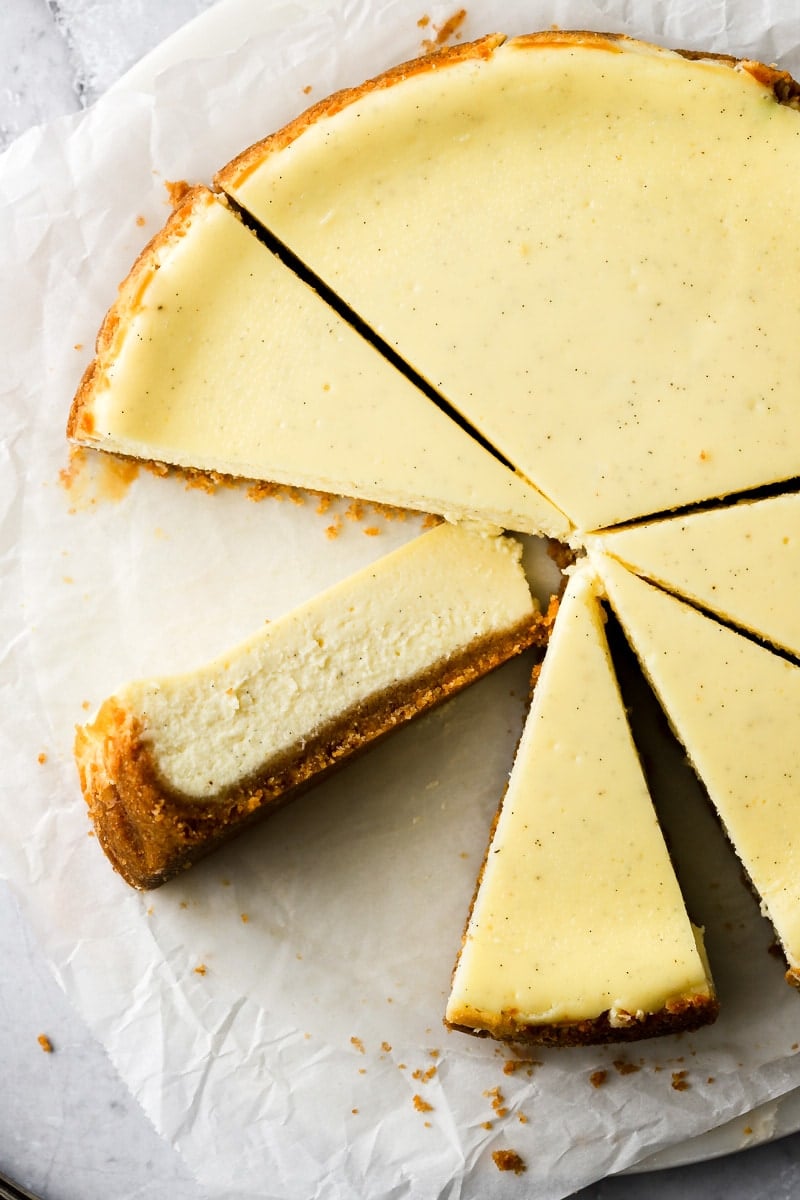
To take this exact cheesecake to the next level, you can just customize it by adding a topping.
Top it with:
- fresh strawberries
- blueberry topping
- cherry topping
- raspberry topping
- rhubarb jam
- caramelized white chocolate ganache
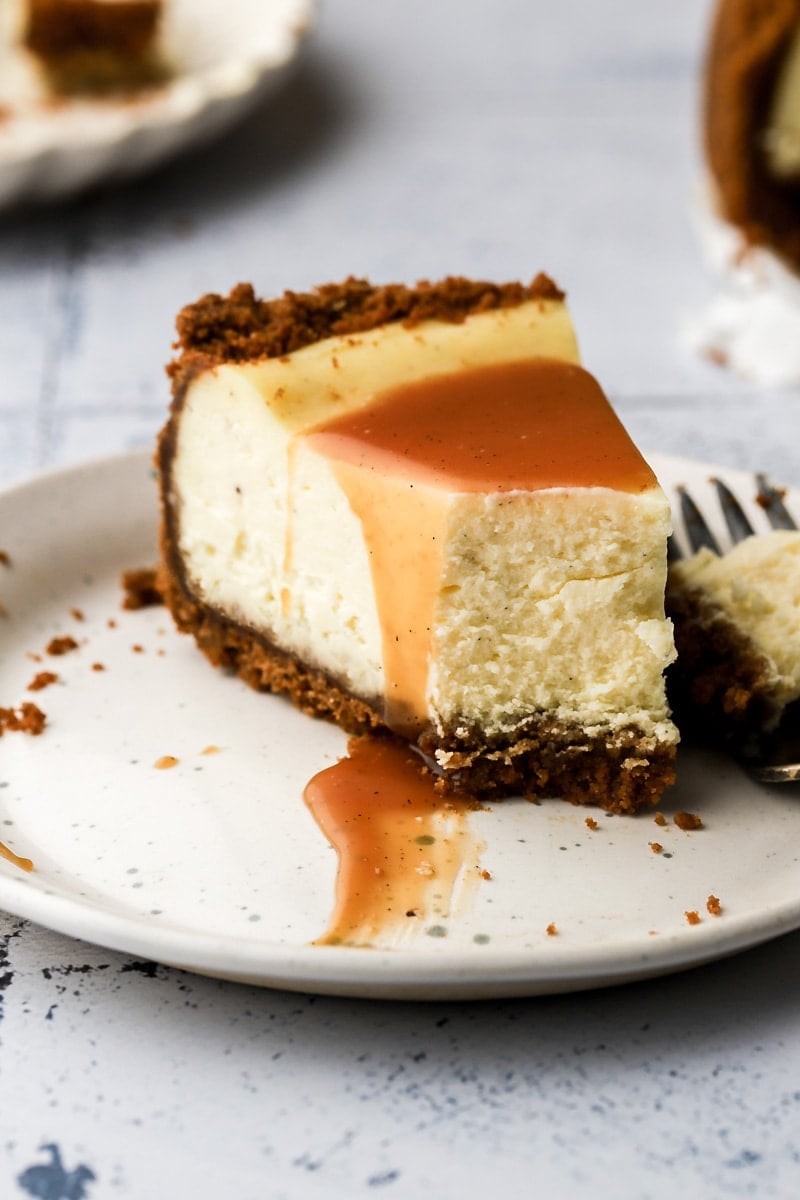
- salted caramel sauce
- chocolate ganache.
I also use this cheesecake recipe as the base for other flavors. I turned it into a biscoff cheesecake and you can use that exact recipe but swap out the cookie butter for the peanut butter or Nutella, if you prefer (I’d do graham crackers with peanut butter and Oreos with Nutella).
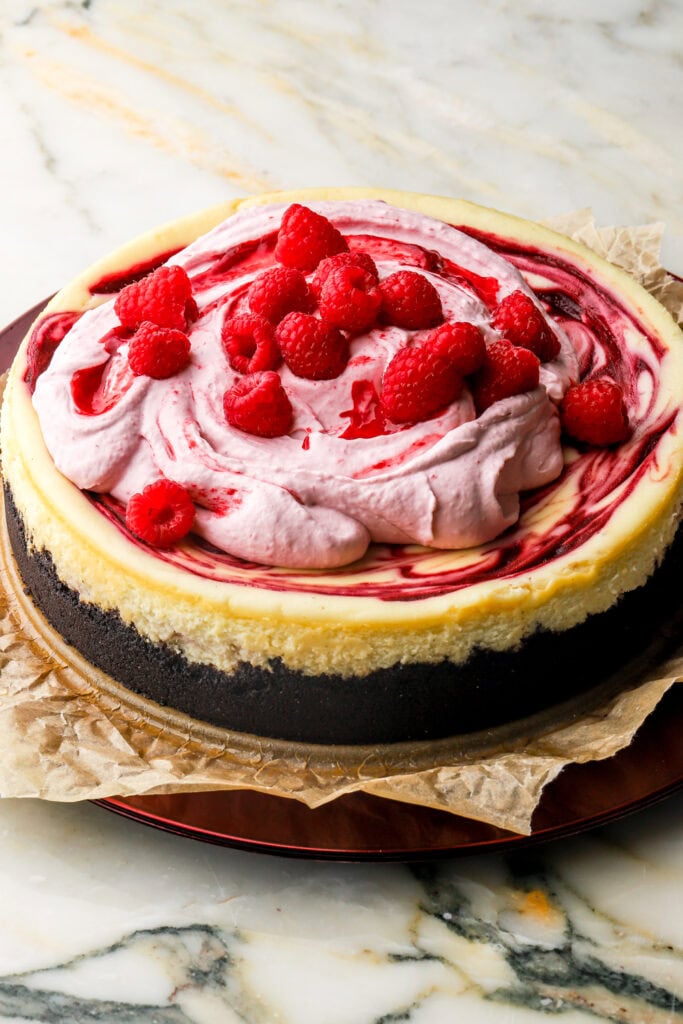
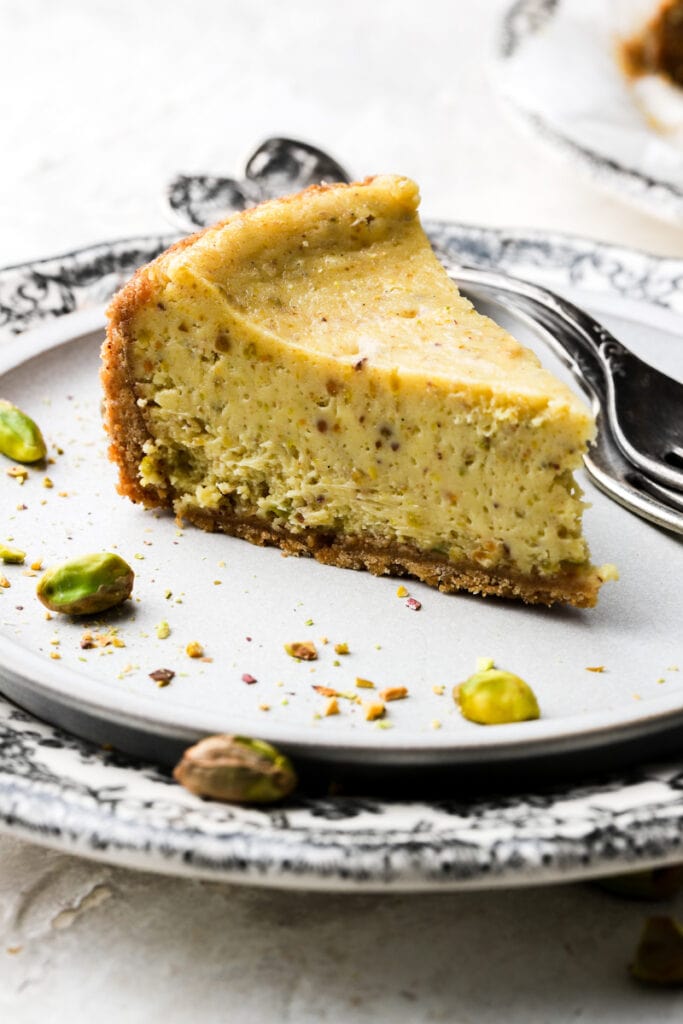
Some other variations I have are my pistachio cheesecake with brown butter crust, triple chocolate cheesecake, white chocolate raspberry cheesecake and cherry cheesecake. I truly cannot pick a favorite, they are all soooo good.

How to bake this cheesecake in different size pans
I tested my base cheesecake recipe in 4 different sizes. It’s pretty straightforward to adjust to whatever pan size you need. This vanilla cheesecake uses 2 bricks of cream cheese and is baked in an 8 inch pan but you could also use 3 bricks of cream cheese and bake in an 8 inch pan so it’s taller.
You can adjust the quantity needed by what size pan you have and how tall you want your cheesecake.
I’ll list out the amount of cream cheese needed and you can just adjust the rest of the ingredients accordingly.
The amount of cheesecake batter you’ll need for each size pan:
- 10 inch pan: 4 bricks of cream cheese – bake for 65 minutes, rest in the oven for 25 minutes.
- 9 inch pan: 3 bricks of cream cheese for shorter cheesecake or 4 bricks for a taller cheesecake – bake for 55-70 minutes, rest in the oven for 20 minutes.
- 8 inch pan: 2 bricks of cheesecake for a shorter cheesecake or 3 bricks for a taller cheesecake – bake for 45-60 minutes, rest in the oven for 15 minutes.
- 6 inch pan: 1 brick of cream cheese – bake for 30 minutes, rest in the oven for 15 minutes.
Frequently Asked Questions
If you don’t have a springform pan, you can use a regular cake pan. I recommend spraying it with baking spray and lining it with these precut parchment liners.
I like to use the 10 inch round liners in a greased 8 inch pan so that it comes up a little higher and you can remove it from the cheesecake from the pan easier.
Sometimes biscoff cookies can be hard to come by. If you find any speculoos cookies, those will be the most similar. If you can’t find speculoos cookies, gingersnaps are probably you next best and then cinnamon graham crackers.
If you’re in a rush and don’t have time to let your ingredients come to room temperature (aka me everyday), place the cream cheese (with the packaging) and the eggs in a large bowl of hot water for 10-20 minutes.
You can also microwave the sour cream for 10-15 seconds.
If your cheesecake does crack, it’s usually for 1 of 3 reasons.
– It’s over-baked, which means it dried out a little bit.
– It cooled too quickly which means it didn’t have time to set properly.
– It stuck to the sides of the pan and pulled on the center of the cheesecake.
Make sure to check out my pro tips on baking without a water bath above.
How to store cheesecake
To refrigerate, cover the cheesecake with foil or plastic wrap and refrigerate it for up to a week. Serve cold or bring to room temperature 1-2 hours before serving.
To freeze the whole cheesecake, wrap it in plastic wrap and then wrap it twice in aluminum foil (or place it in an airtight container big enough).
To freeze slices, place them tightly in an airtight container and then place the container in a freezer bag, squeezing out all the excess air. Bring them back to room temperature by thawing at room temperature for a few hours before serving.
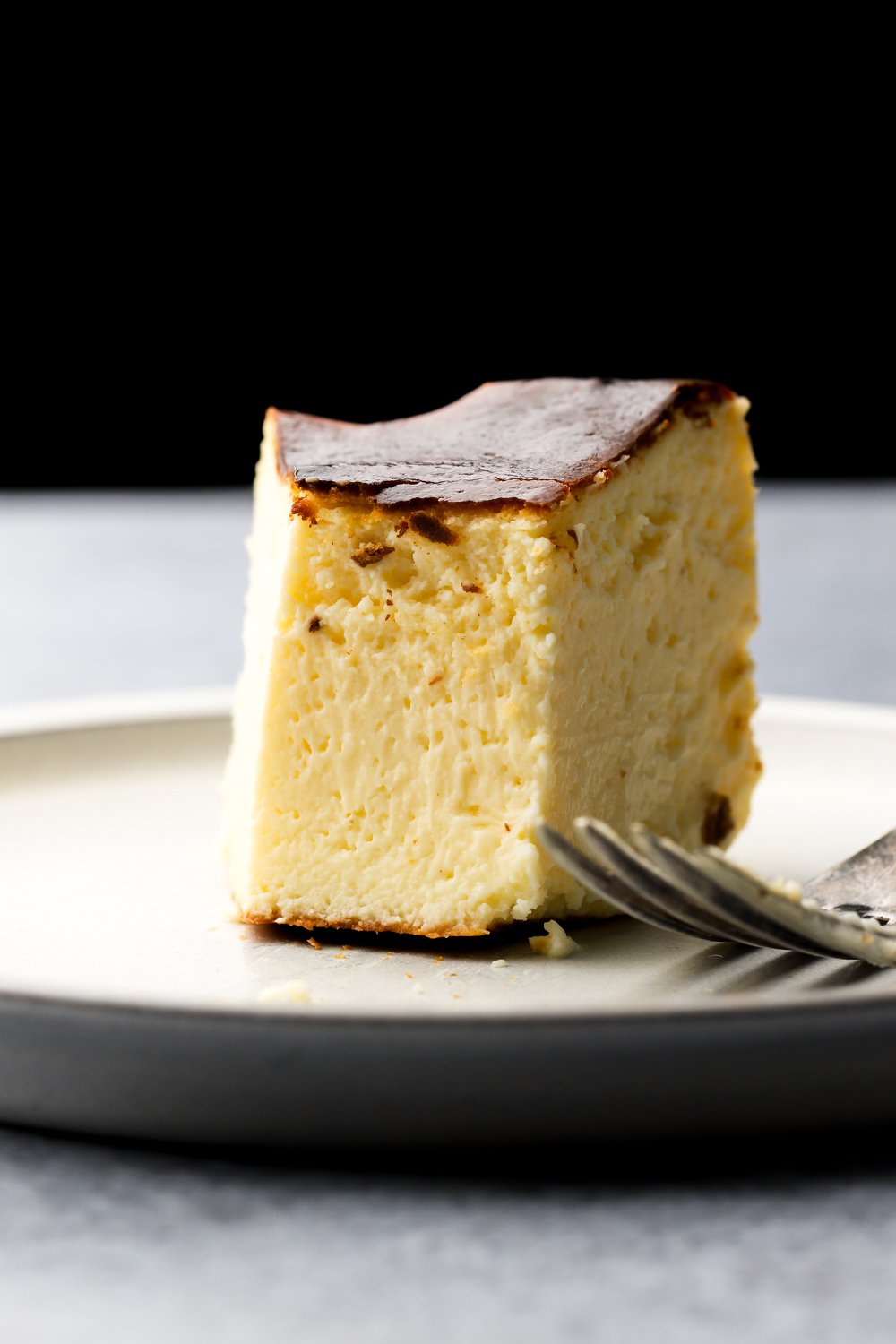
Before you go, I also wanted to introduce you to my San Sebastian Burnt Basque Cheesecake. It’s the only cheesecake that I make different from this base and it is soooo incredibly creamy – like a baked custard.
Thanks so much for reading today’s post, if you have any questions just comment down below.
If you make my cheesecake recipe, I’d love it if you left a 5-star rating or a review for me!
As always, have a blessed day and happy baking!
Love, B

I love to bale