How Different Baking Pans Affect Your Bakes
Not all baking pans bake the same, even if they’re the exact same size. The material, color, and thickness of a pan can all affect how quickly something bakes, how much it browns, and even how well it rises and sets.
That means the same batter can turn out completely different depending on whether it’s baked in metal, glass, ceramic or silicone. Metal pans conduct heat quickly and help baked goods set more evenly, while glass and ceramic pans heat more slowly and hold onto that heat longer, which can affect everything from browning to texture.
This post focuses on the most common bakeware materials used for cakes, cookies, brownies, loaf cakes, and pies. While it isn’t specifically about savory baking or artisan breads, the same general principles still apply there as well.
There are also other materials, like cast iron and Dutch ovens, that follow many of the same heat-conducting principles, but those are usually better discussed in the context of specific recipes.
The Main Types of Baking Pans
There are a lot of different baking pans out there, but when it comes to how a pan affects your bake, the biggest difference usually comes down to the material. The four most common types are metal, glass, ceramic, and silicone and they all bake a little differently.
Metal Pans
Metal pans are generally the most reliable and predictable for baking. They conduct heat efficiently, which helps batters and doughs bake more evenly. That’s why metal is usually my go-to for pretty much all dessert baking.
Light vs. Dark Metal Pans
Not all metal pans bake the same. Light-colored metal pans usually bake more gently and evenly, while dark metal pans absorb more heat and tend to brown faster, especially around the edges and bottom. That can be helpful in some cases, but it can also lead to overbrowned edges or darker bottoms before the center is fully baked.
For most bakes, I usually prefer light metal pans because they give me the most predictable results.
Really the only time I would intentionally opt for a dark metal pan is when placing a large sheet pan underneath a pie dish to catch any spillage. The dark metal here will absorb more heat, allowing the bottom of the pie crust to brown more.
Nonstick vs. Uncoated Metal Pans
Nonstick pans can bake a little differently than uncoated metal pans, but in most cases, the bigger factor is usually the color of the pan, not the fact that it’s non-stick. Many nonstick pans are darker, so they absorb more heat and brown faster. I do like this for cakes so they don’t get stuck and the browning issue isn’t as huge for them as it is for cupcakes and cookies.
Many nonstick pans have a darker, smoother coating, but not all of them look exactly the same.
Thin vs. Heavy Metal Pans
Thickness matters too. Thin metal pans heat up more quickly and are more likely to create hot spots or overbrowned edges, while heavier pans tend to bake more evenly and consistently.
If a pan is very thin or flimsy, it’s also more likely to warp and bake less predictably, especially with cookies.
Hot Tip: Don’t put metal pans in the dishwasher; it can ruin the appearance and damage the nonstick coating.
Glass Pans
Glass pans heat more slowly than metal and hold onto heat longer. That means they often bake differently enough that I don’t really think of them as interchangeable with metal. In some recipes they work just fine, but they can also lead to longer bake times which could result in soggy bottoms, darker edges and/or centers that take longer to fully set.
One advantage of glass is that you can see how browned the bottom and sides are, which can be helpful for things like pies or bars but I find that’s generally not worth it. So overall, I still find metal more reliable even for pies.
Ceramic Pans
Ceramic pans are similar to glass in that they do not conduct heat the same way metal does. They usually heat more slowly and retain heat well, which can make them great for serving and presentation, but not always ideal for baking.
Ceramic bakeware is also often thicker and heavier, which can make baking even slower and gentler. That can be fine in some cases, but in others it can lead to softer bottoms, longer bake times, or centers that take a little too long to set. I notice this most with things like loaf cakes and pies, where the structure and bottom texture really matter.
Silicone Pans
Silicone pans are flexible and nonstick, but they don’t conduct heat the same way metal pans do. Because of that, bakes in silicone often brown less, bake more gently, and can have softer edges or bottoms.
I personally don’t bake anything in silicone pans but they can work fine for some muffins, cakes, or molded desserts. The only time I would opt for a silicone pan is for molded desserts when NOT baking – I would use it to set things like custards into certain shapes.
How Different Pans Affect Specific Bakes
I prefer metal baking pans for all bakes because they are the most reliable and conduct heat the most efficiently. Here are a few examples of how different pan materials affect specific desserts.
Cakes and Cupcakes
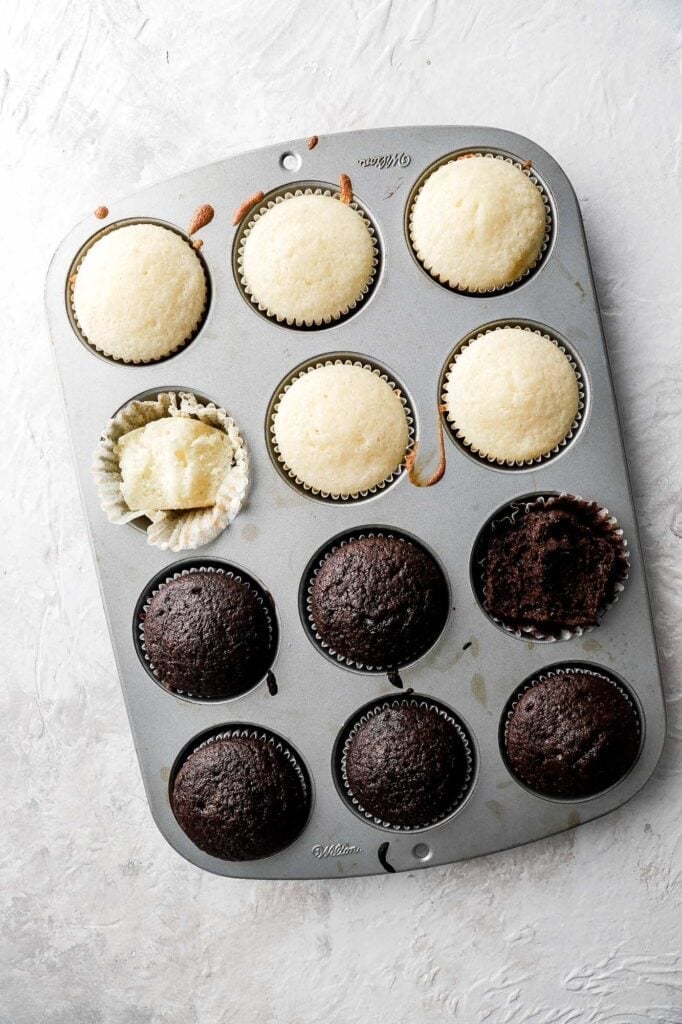
For cakes and cupcakes, I have both light and dark colored pans and for cakes, they’re pretty interchangeable but if I wanted a “white” cake with minimal browning or if I have a colored cake that I don’t want to brown around the edge as much, I would opt for a light metal pan.
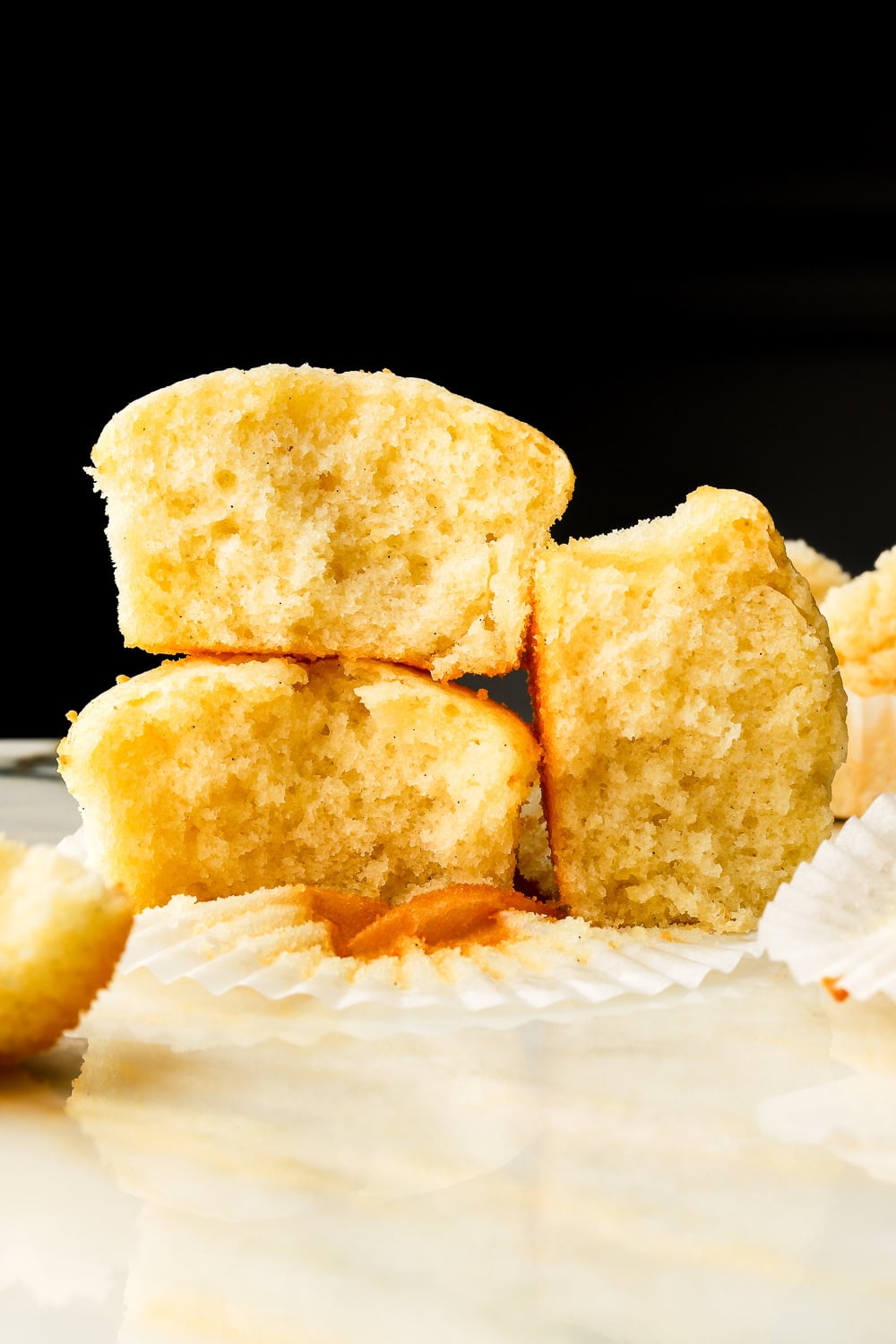
For cupcakes, I only use my light metal pan because I don’t like the yellow/browning around the edge of the cupcakes. You can see above, mine turn out pretty white (which I want for vanilla cupcakes) but they do brown if I use a darker pan.
Glass and ceramic pans can still work, but because they heat more slowly and retain heat longer, the edges and center do not always bake at the same pace as they would in metal. Cakes baked in glass pans generally take longer to set which can lead to denser texture, darker, drier edges with gummy sunken centers.
Cinnamon Rolls & Enriched Breads
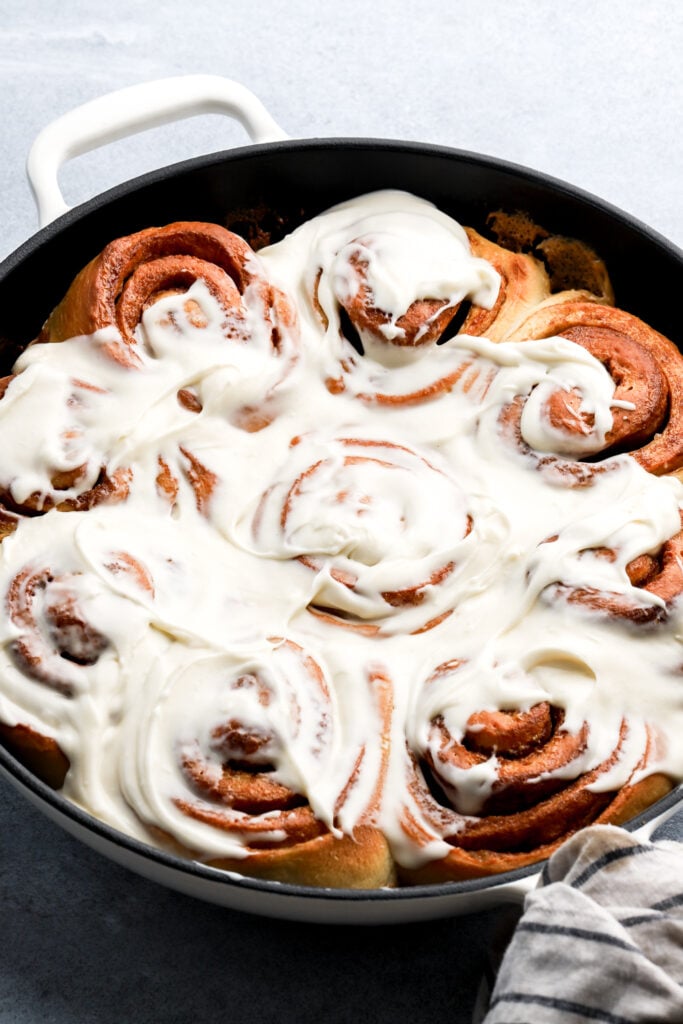
This one is actually the most versatile, I think they bake well in both metal pans and ceramic pans. That said, my favorite is baking them in a cast iron skillet because you get the browning properties of the metal but you get the slow and retaining heat since it’s so heavy.
I feel like you can’t go wrong with either here but I can’t say I’ve tried it in a glass pan so I can’t recommend that. You may need to add on an extra few minutes if you’re baking in a ceramic pan vs a metal pan though.
Cookies
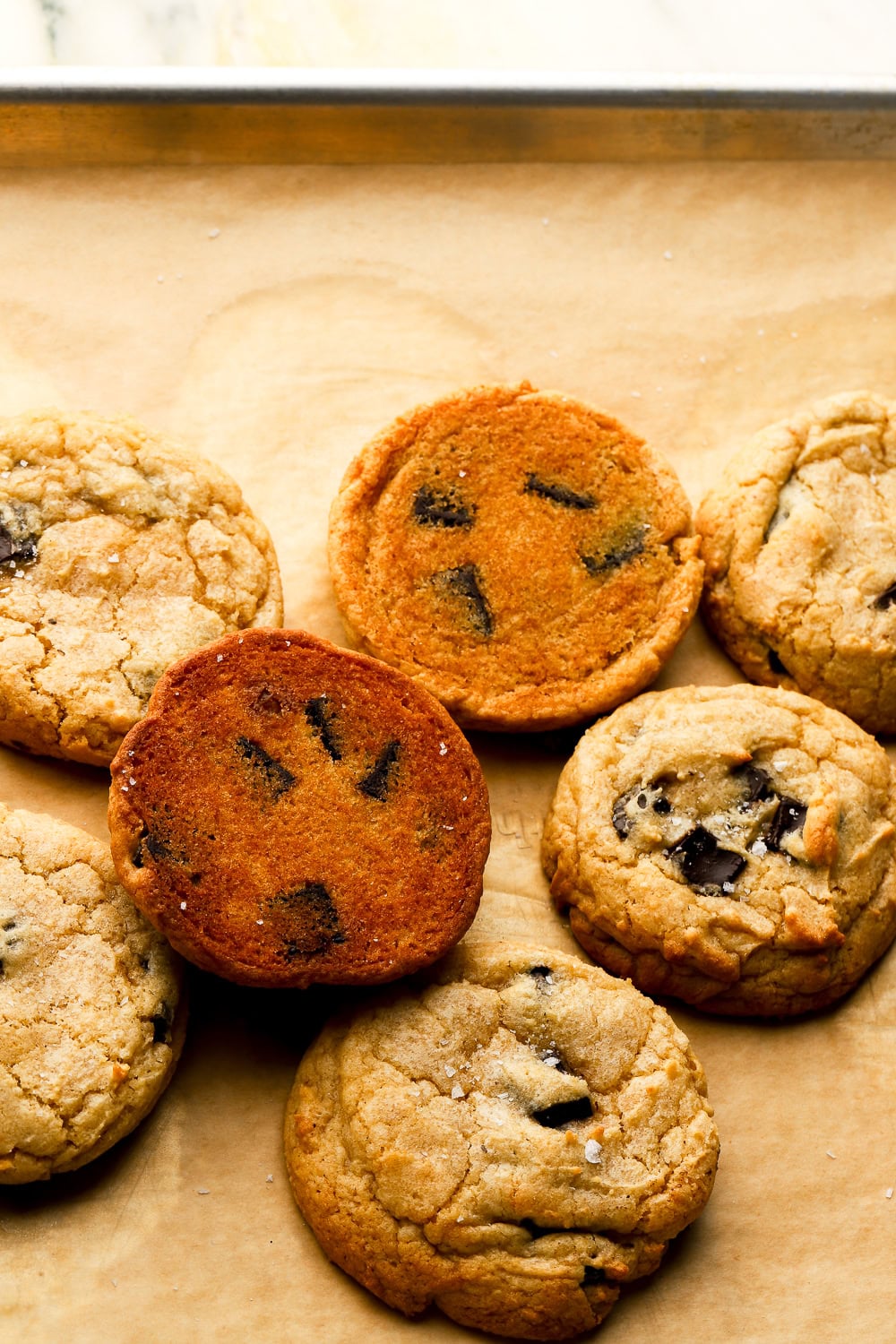
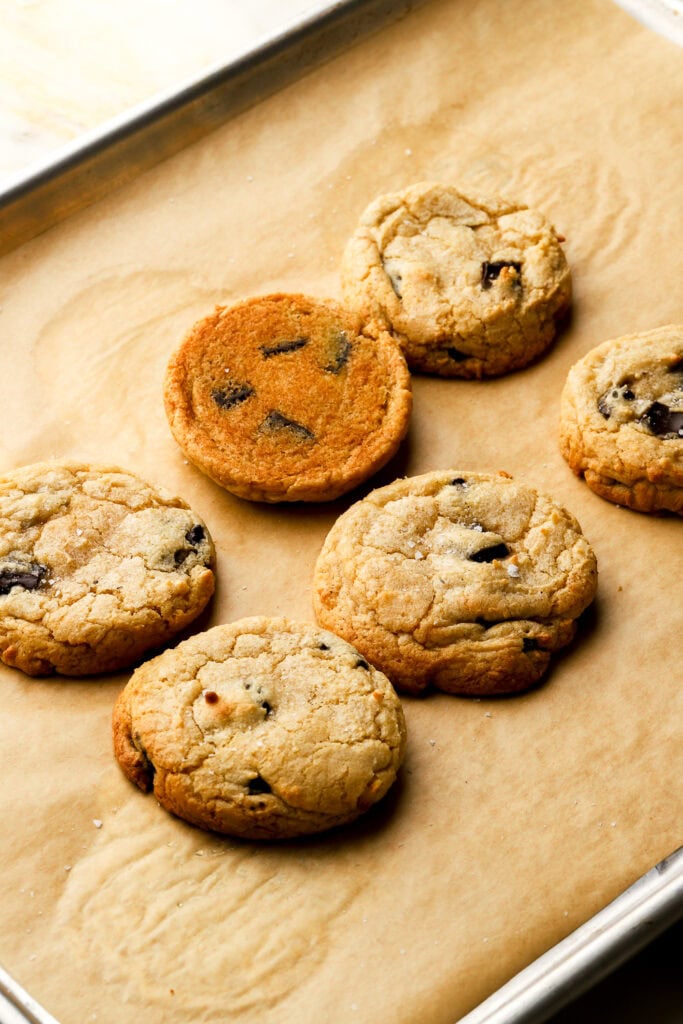
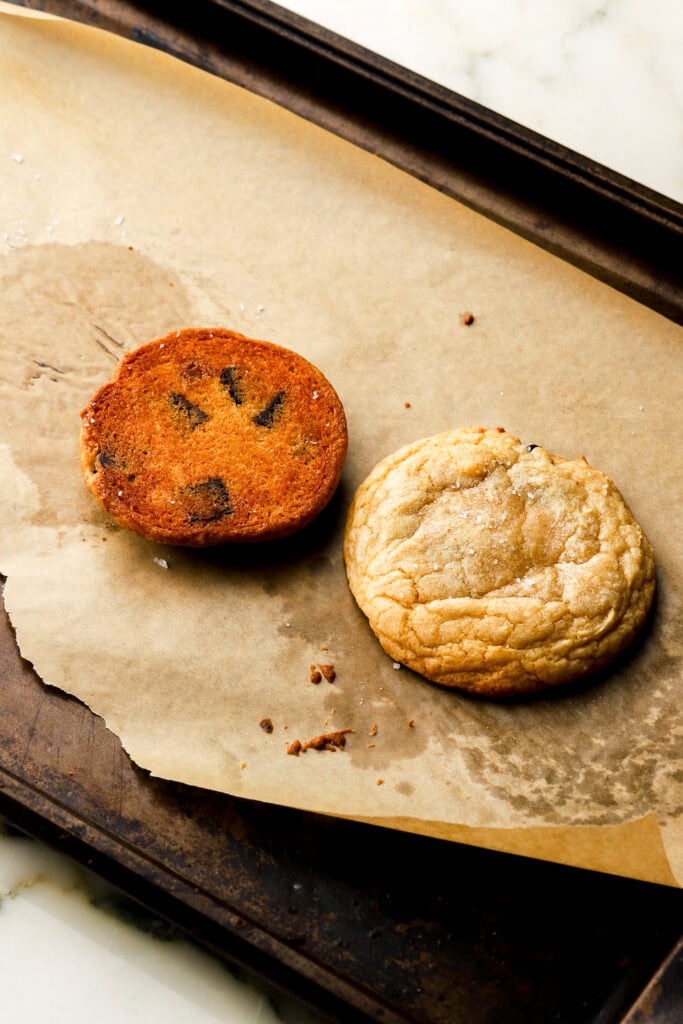
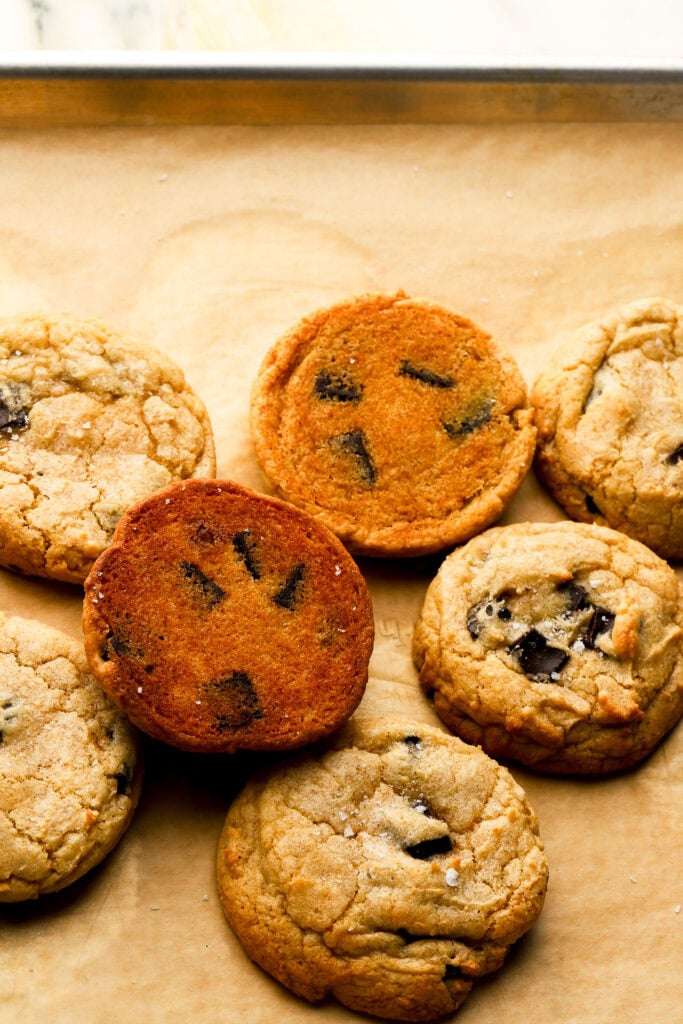
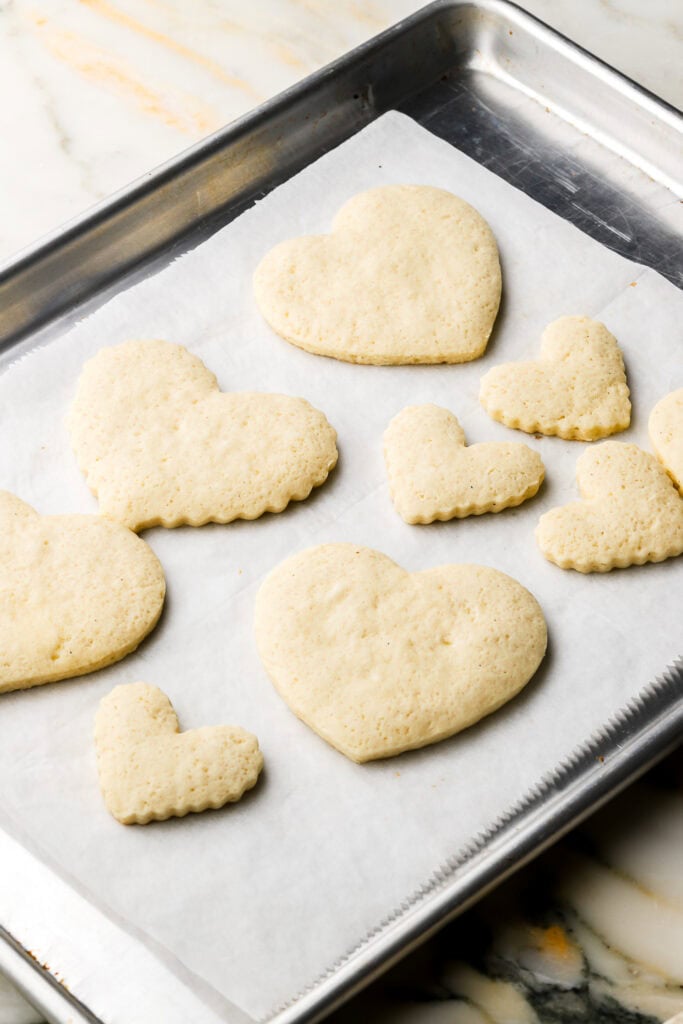
Cookies usually do best on light metal sheet pans. They bake more evenly, spread more predictably, and are less likely to get too dark on the bottom before the centers are done. You can see that in my cookie photos above.
Dark metal sheet pans tend to brown the bottoms faster which can cause the cookies to spread less. Thin metal pans can create more hot spots which would give you uneven baking. Glass and ceramic are generally not ideal for cookies since they do not conduct heat the same way and can affect both spread and browning.
Brownies and Bars
For brownies and bars, again metal pans usually give the most predictable results – I have both light and dark and use them interchangeably but again, if you don’t like the browning/crisp edges as much, go for a light metal pan.
Glass and ceramic pans can bake more slowly at first but hold onto heat longer, which means the edges may continue baking more aggressively while the center catches up. Depending on the recipe, that can lead to overbaked edges with underbaked centers.
If you let them cool in a ceramic pan, it can continue baking for far too long because it holds on to heat longer and that, depending on the recipe, can make your gooey brownies turn cakey.
The bake times are definitely less consistent and need to be watched closely.
Loaf Cakes and Quick Breads
Loaf cakes and quick breads are one of the biggest places where pan material can make a difference. These bakes need enough heat to reach the center and set the structure before they collapse or sink too much.
Metal loaf pans are usually the most reliable because they help the batter bake through more efficiently. Glass and ceramic loaf pans often take longer to bake and can often lead to dark, dry edges with underbaked centers that are prone to sinking.
One of the first times I realized that pan material really matters was when I was helping a reader troubleshoot my Gingerbread Loaf Cake. Spoiler alert: it does NOT bake well in a glass pan.
Pies
Pie crust is my favorite example of how much pan material matters. Metal pie pans usually conduct heat the best, which helps the bottom crust bake quicker so no more soggy bottoms! & the darker pan will make the crust brown more.
Glass and ceramic pie pans may be more beautiful and can still work well, but they usually bake differently. Because they heat more slowly and retain heat longer, the crust can take longer to fully bake and may stay softer or less crisp, especially on the bottom.
A lot of people still bake pies in ceramic dishes (including myself) because they are beautiful to serve the pie in. What you’ll notice is that the top edge of the crust will likely brown too quickly before the bottom is done so using a pie shield is helpful. Make sure to read my post on pie dough for more details on this.
Glass does have the advantage of letting you see how browned the crust is, which can be helpful, but I still find metal the most reliable for the crispest results. Again, you may need to add on an extra few minutes if you’re not baking it in a metal pan though.

My Go-To Baking Pans
Here’s what I generally prefer each type of dessert:
- Cakes: any metal pan but I have these Fat Daddio ones and several others and they all work fine!
- Cupcakes: light metal pans – I have an old Wilton one that I can’t link but if I was buying a new one, I would get this USA or Nordicware one.
- Cookies: thick light metal sheet pans – these Nordicware ones are great and affordable.
- Cinnamon Rolls: any pan works beautifully but cast iron skillets or enameled cast iron are my favorite.
- Brownies and bars: any metal pans but I love this USA pan because it gives you nice sharp corners.
- Loaf cakes and quick breads: any metal loaf pans (always make sure you have the right size) – I love this USA Pan.
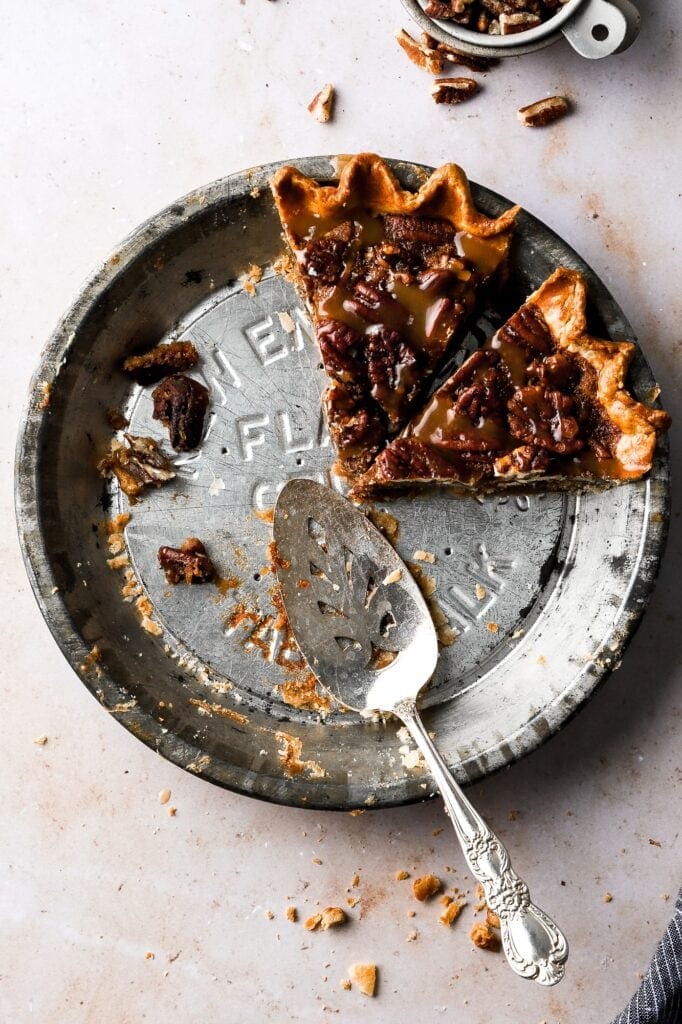
- Pies: dark metal pie pans for the crispiest crust – this is personal preference, I have a vintage shallow metal pie dish (you can see it used in my pecan pie), it’s similar to this one. But I also use my deep dish ceramic one when I make deeper pies like apple pie and it works fine but if I was to get a new one, I would actually get this deep dish cast iron one because it’s still beautiful but it will conduct heat a little better.
- Bundt Cakes: light metal pan – (again make sure you have the right size for your recipe!) – I only use Nordic Ware for bundt pans and my favorites are this 10 cup one and this 12 cup one.
This doesn’t mean other pans can’t work, but they often bake differently enough that I don’t really think of them as interchangeable for myself. If a recipe was developed in a metal pan, using glass or ceramic may change the bake time, the browning, and the final texture.