
Cake Flour vs All-Purpose Flour: When to Use Each
Cake flour and all-purpose flour are often treated like interchangeable ingredients, but are they really? And if they are, why use one over the other?
In this post, I’m breaking down the difference between cake flour and all-purpose flour, how each one affects the final texture of cakes, sharing side-by-side comparisons, and explaining when I recommend using one over the other.

What Is Cake Flour?
Cake flour is a finely milled flour with a lower protein content than all-purpose flour, usually around 7–10% protein. That lower protein means it develops less gluten, which is why it’s often used when you want a softer, more delicate, melt-in-your-mouth texture.
It’s also usually bleached, which affects the way it absorbs liquid and can help create a finer, lighter texture in certain cake recipes. However, King Arthur has an unbleached option as well, which is my favorite one to use.
Bleached vs. unbleached cake flour
Cake flour is usually bleached, which can help create a finer, lighter texture in certain cakes. That said, I personally prefer King Arthur’s unbleached cake flour because I like the flavor better. Some other cake flours can have a flavor that I don’t personally love but most people don’t have an issue with.
What Is All-Purpose Flour?
All-purpose flour is a more versatile flour with a moderate protein content, usually around 10–12% protein. Because it has more protein than cake flour, it develops a little more gluten and gives baked goods more structure.
In cakes, that usually means a crumb that is a little sturdier and less delicate, though still plenty soft when the recipe is designed for it.

How Cake Flour and All-Purpose Flour Affect Cake Texture
The biggest difference between cake flour and all-purpose flour is how much structure they give the cake.
Because cake flour has a lower protein content, it develops less gluten and usually gives you a softer, finer, more delicate crumb. Cakes made with cake flour often feel a little lighter, more tender, and less chewy.
All-purpose flour has a little more protein, so it creates slightly more structure. In cakes, that usually means a crumb that is a little sturdier and a texture that feels a little more substantial. It doesn’t mean the cake is dense or heavy, it just means it won’t be quite as soft and delicate as the same cake made with cake flour.
That said, flour is only one part of the formula. The amount of sugar, fat, eggs, and liquid in the batter all affect the final texture too. A cake made with all-purpose flour can still be very soft, and a cake made with cake flour can still feel sturdy if the rest of the recipe is designed that way.
A good rule of thumb is that cake flour tends to give cakes a more tender, fine crumb, while all-purpose flour gives cakes a little more support and flexibility.
Does Cake Flour Always Make a Cake Better?
No. Cake flour doesn’t automatically make every cake better, it just makes some cakes softer and more delicate. In some recipes, that’s exactly what you want. In others, all-purpose flour is the better choice because the cake needs a little more structure.

When to Use Cake Flour
I usually reach for cake flour when I want a cake to be especially soft, delicate, and fine-crumbed. It’s great for recipes where the goal is a lighter, more tender texture.
If I want the cake to feel a little more elegant and melt-in-your-mouth, cake flour is usually my first choice. I am a little more hesitant to make a cake too delicate if I’m stacking it into a taller layer cake, though.
I also highly prefer to use cake flour in cupcakes because their smaller size means I want the crumb to stay extra delicate. I’m also not worried about structure here because they’re so small.
When to Use All-Purpose Flour
I usually use all-purpose flour when I want a cake to have a little more structure or when I want the recipe to be more accessible for home bakers. It works especially well for cakes that hold fillings like coffee cakes or layer cakes that need to hold decorations and sit at room temperature for longer periods.
All-purpose flour can still make a very soft cake, but it usually gives a little more support and flexibility than cake flour.
Can You Substitute One for the Other?
Yes and no. In my experience, you can usually use all-purpose flour in place of cake flour in cake recipes, but the result may just be slightly less delicate/tender.
Using cake flour in place of all-purpose flour is a little less predictable. Sometimes it works beautifully and gives you an even softer cake, but other times the recipe really does need the extra structure that all-purpose flour provides.
If a recipe is designed to use all-purpose flour, cake flour may not provide enough structure to support the texture properly.
In cookies, that can mean a more fragile cookie that falls apart more easily and is less chewy. In breads or other dough-based recipes, it can affect rise and structure.
Cakes are usually a little more forgiving, but depending on the formula, using cake flour can still lead to a cake that bakes up flatter or sinks more easily.
What Is Homemade Cake Flour?
Homemade cake flour is just all-purpose flour combined with a starch, like cornstarch. Cornstarch does not contain protein, so you’re essentially lowering the protein content of the overall flour mixture.
Although some professionals may be personally offended by the homemade cake flour trick, in my experience it works just fine. Most people won’t notice much of a difference.
Homemade Cake Flour Formula:
120 grams cake flour = 100 grams all-purpose flour + 20 grams cornstarch
The Proof:
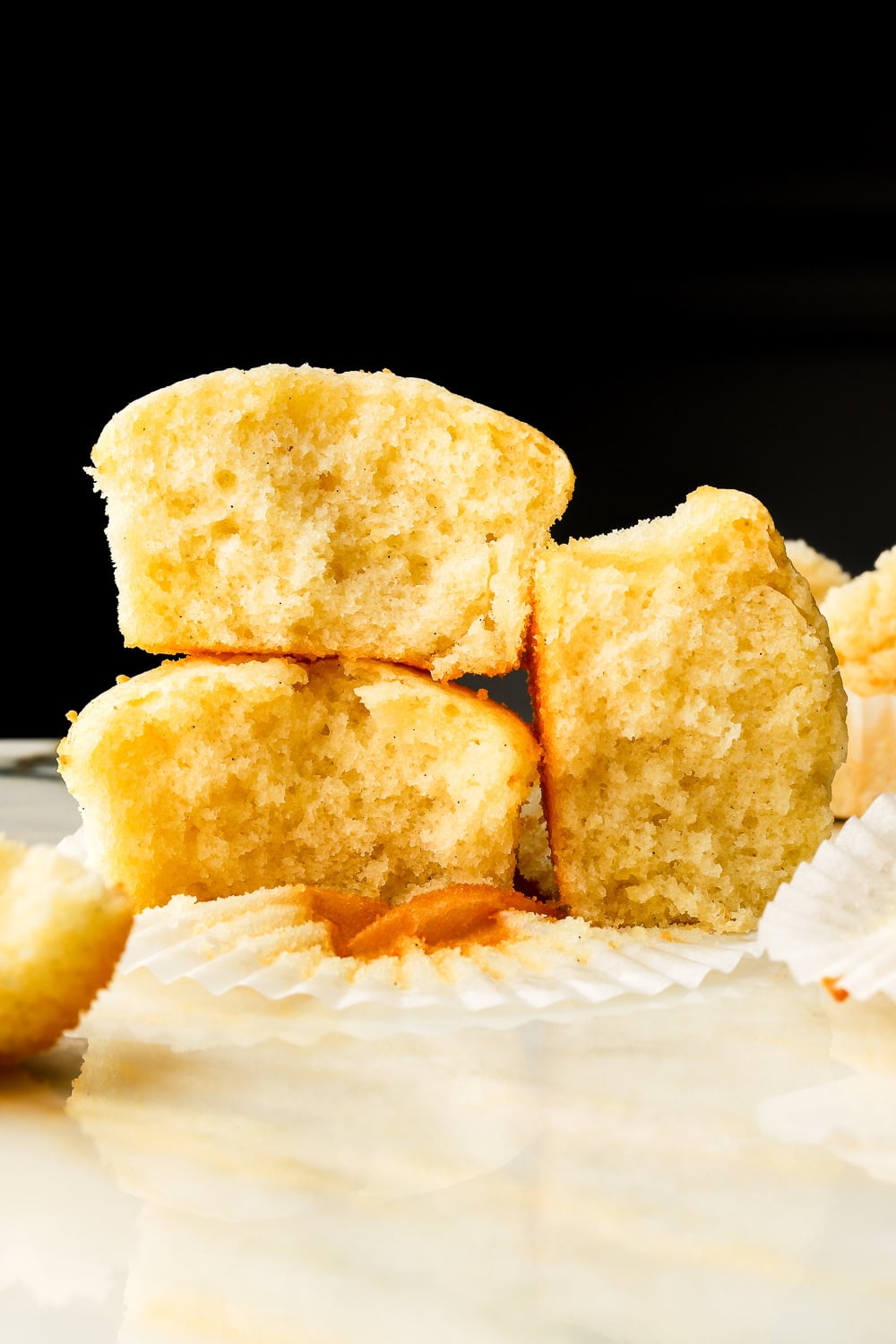
I did a side-by-side comparison using my favorite Base Cookie Dough, my Vanilla 6-Inch Cake, and my Vanilla Cupcakes with all three flour options: all-purpose flour, cake flour, and the homemade cornstarch trick.
You can see below how each one performed. Every version was perfectly edible and delicious. They weren’t identical, but the differences were not very noticeable.
I chose my vanilla cake because it was developed with all-purpose flour, and my vanilla cupcakes because they were developed with cake flour. I also included cookies because I wanted to show an example outside of cakes.
My Results
Honestly, they were all sooo similar. If you mixed them up, I’m not sure I could tell which one was which, especially between the all-purpose flour and the cake flour. When you know which one is made with cake flour, it’s easier to identify it because you’re looking for it but it really was such a subtle difference.
I actually don’t prefer the cornstarch option, I felt that in all three tests I did, the cornstarch and flour option had a slightly different (more chalky?) mouthfeel. Again, super subtle, most people probably wouldn’t notice it but since I knew which one was which it was easier to identify the differences.
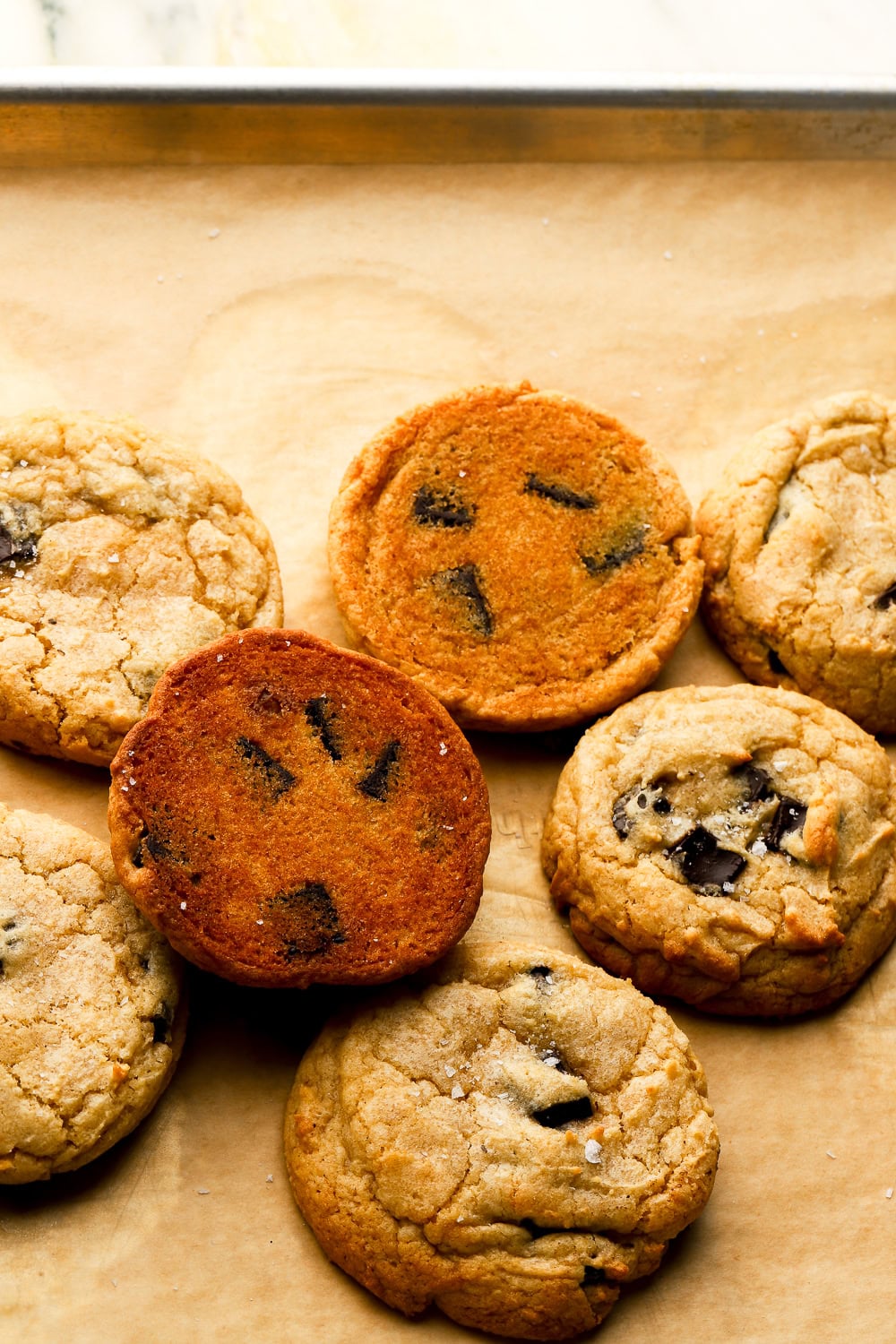
For the cookies, I would say the all-purpose flour cookie was slightly more chewy (again barely noticeable) and the mouthfeel on the cornstarch/flour version was off for this too (& only because I knew and was looking for it).
*It’s important to note that I used King Arthur’s Unbleached Cake Flour and Simple Truth Organic All-Purpose Flour for these tests. If you bake with a bleached cake flour you would probably notice a tiny bit more of a difference because the bleaching does make the baked goods even more delicate.


How to Measure Cake Flour vs. All-Purpose Flour
I recommend measuring all flours by weight with a digital kitchen scale. Flour is one of the most commonly over-measured ingredients, and even a small difference can affect the final texture.
Cake flour is usually slightly lighter per cup than all-purpose flour, but to keep things simple, I generally treat both as 120 grams per cup.
My Rule of Thumb
If a simple recipe for cakes or cupcakes calls for cake flour without giving substitution options, it is best to follow the recipe as written. However, 9/10 it will work out just fine with all-purpose flour as well (unless the recipe specifically advises against it).
I’m much more hesitant to swap them in recipes that aren’t cakes, especially pastries and breads where structure matters more, so I can’t recommend that.
My Recipes Where They’re Interchangeable
In these recipes, I have personally tested and found that cake flour and all-purpose flour are interchangeable with little to no noticeable difference:
- Coffee Cake
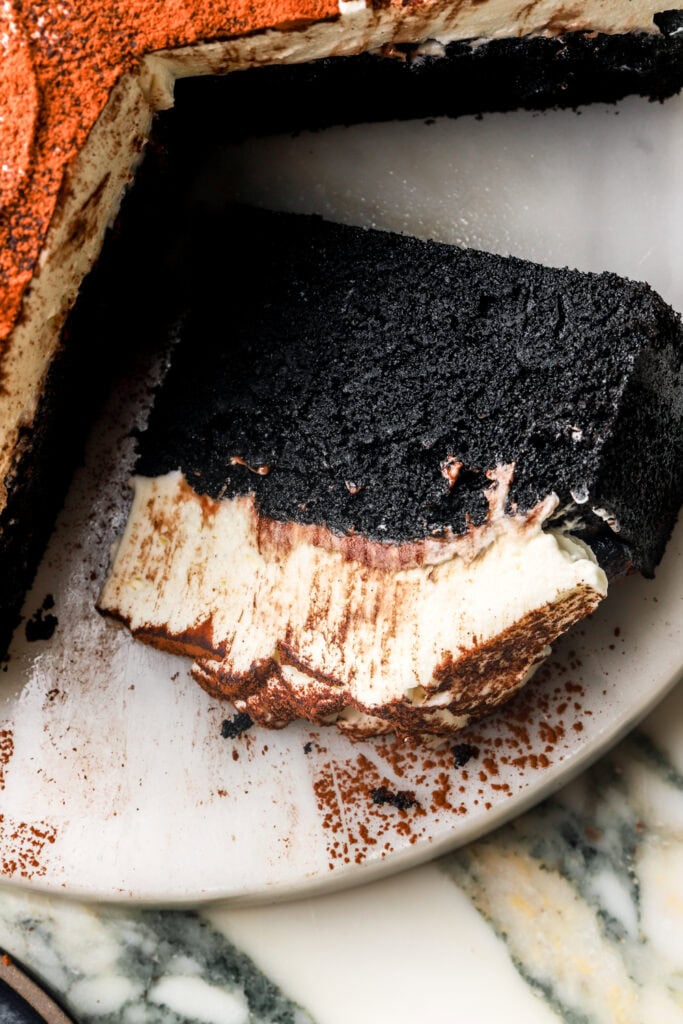
- Black Cocoa Cake – all forms (layers, sheet, bundt, cupcakes)
- Vanilla Muffins – and all other muffins/muffin cakes adapted from this
- All sizes of my Vanilla Cake
- Vanilla Cupcakes & all variations I have posted


If you have any questions, I’d love to answer them below.
As always, have a blessed day and happy baking!
Love, B

Thanks for your great article and research. I like to experiment with different cookie recipes. I’m still searching for an Italian spritz cookie recipe that mimics a cookie I found at a local bakery.
i