American Buttercream (Foolproof Guide)
American buttercream is one of the easiest frostings to make—but also one of the easiest to mess up.
If you’ve ever had buttercream that tasted too sweet, gritty, or heavy, it’s not because American buttercream isn’t good, it’s probably just because it wasn’t made right. Now don’t get me wrong, it is sweet but there are ways to balance that sweetness a little better.
In this guide, I’m breaking down what American buttercream is, how to make it smooth and balanced, how to adjust it depending on how you want it to taste and perform, and how to use it in recipes.
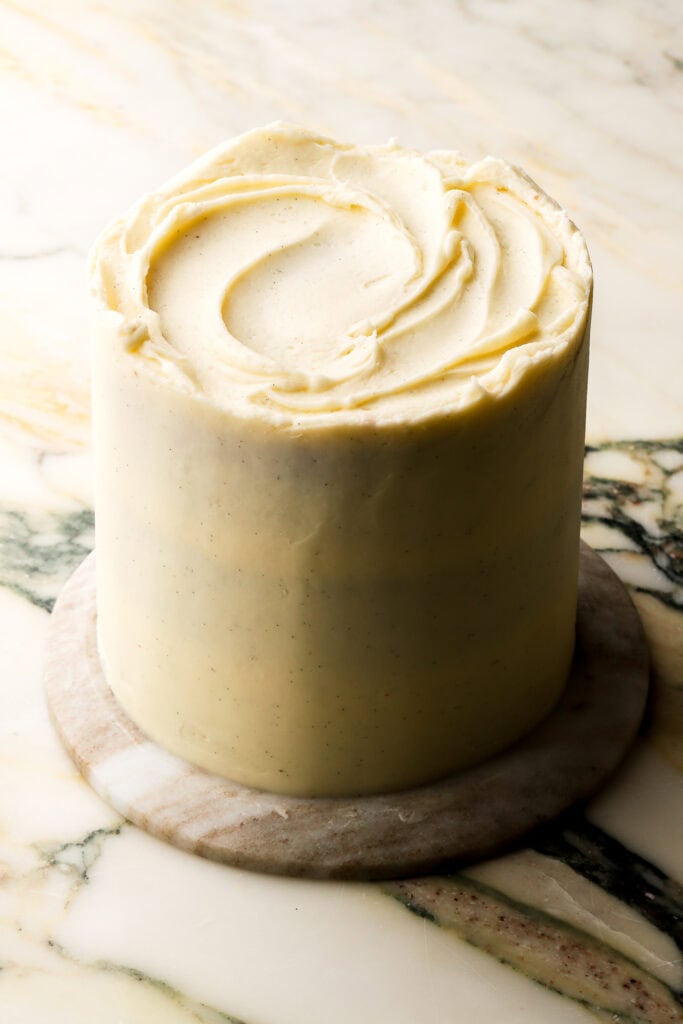
What Is American Buttercream?
American buttercream is a simple frosting made by whipping together butter and powdered sugar.
Unlike meringue-based buttercreams, it doesn’t rely on eggs or heating sugar, which makes it much quicker and easier.
Butter and sugar alone can feel dense and one-dimensional, so most recipes lighten it up with milk or cream and added flavorings.
Ingredient Notes & Substitutions
This section is just a few notes on the ingredients – the full recipe with measurements is in the recipe card below.
- Butter
I recommend using unsalted butter for the frosting so you can control the amount of salt used. Salted butter also works fine but I would skip adding the extra salt. - Sugar
It’s essential that you use powdered sugar for buttercream because the small amount of starch in powdered sugar helps stabilize the frosting and gives it structure. - Milk/Cream
I recommend adding heavy whipping cream and I’ll explain my technique below. Milk is oftentimes used as well but less than if you’re using cream because the water content is higher and too much milk will split the frosting.
How to Make American Buttercream
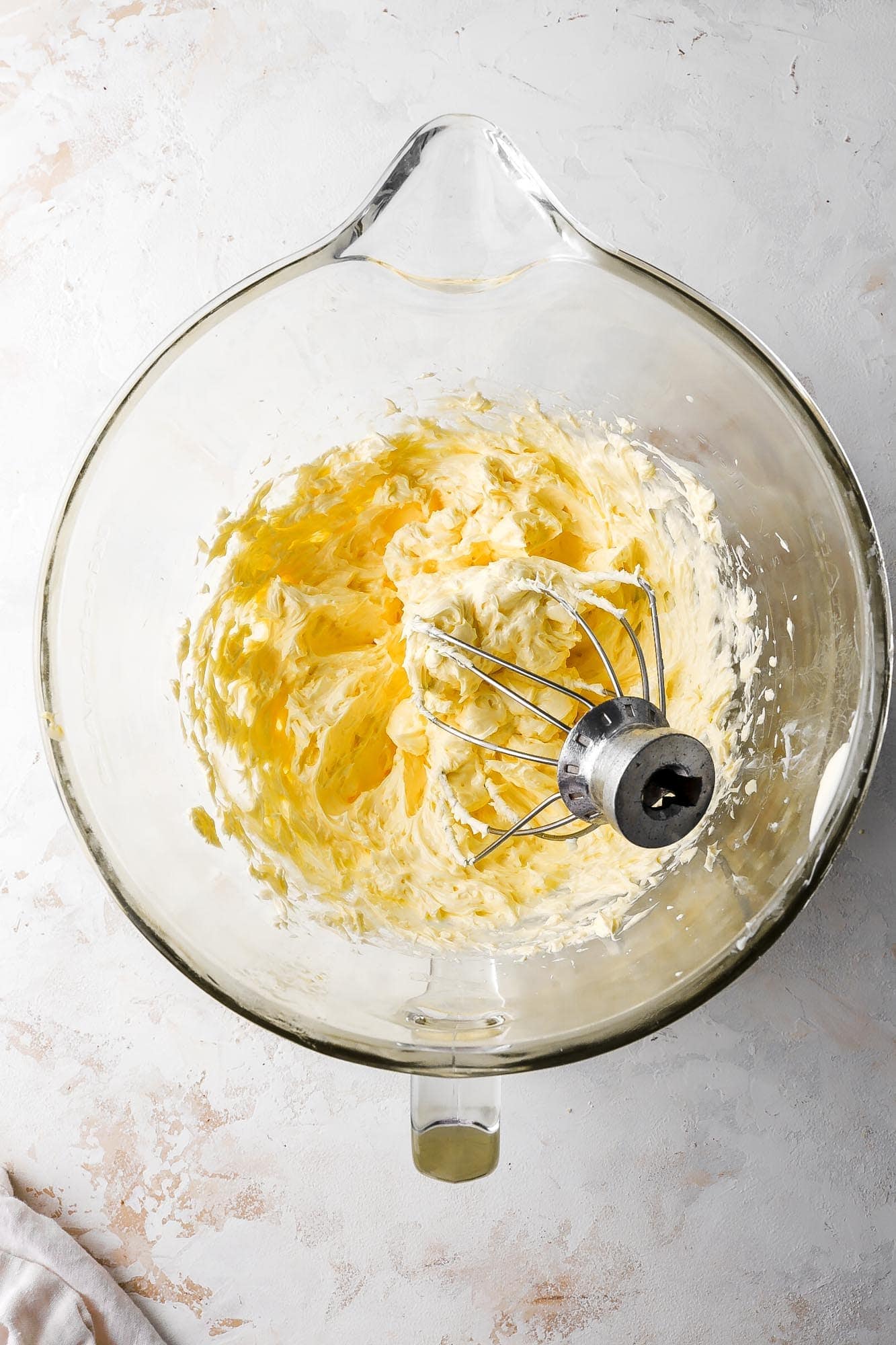
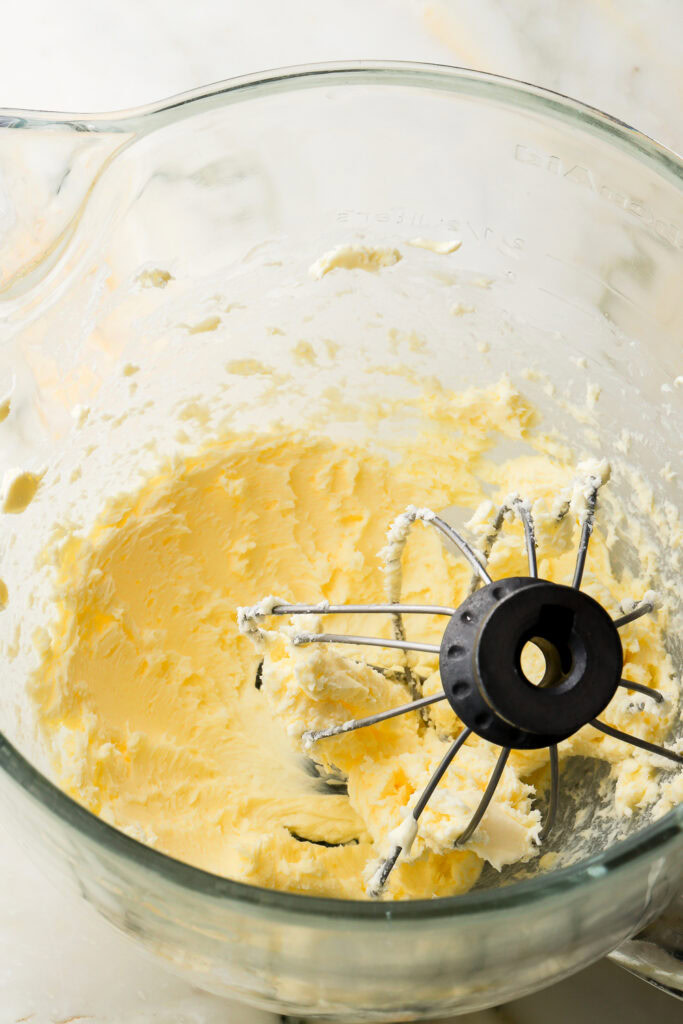
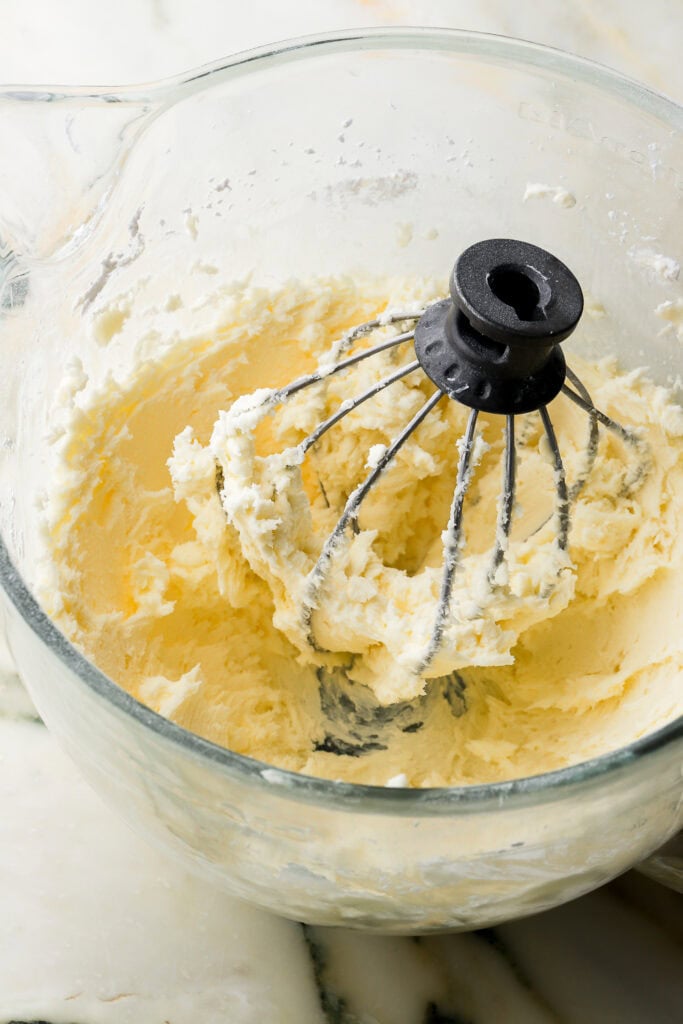
- Beat the butter for a few minutes, until it’s pale and fluffy. This is where your texture starts, don’t skip it.
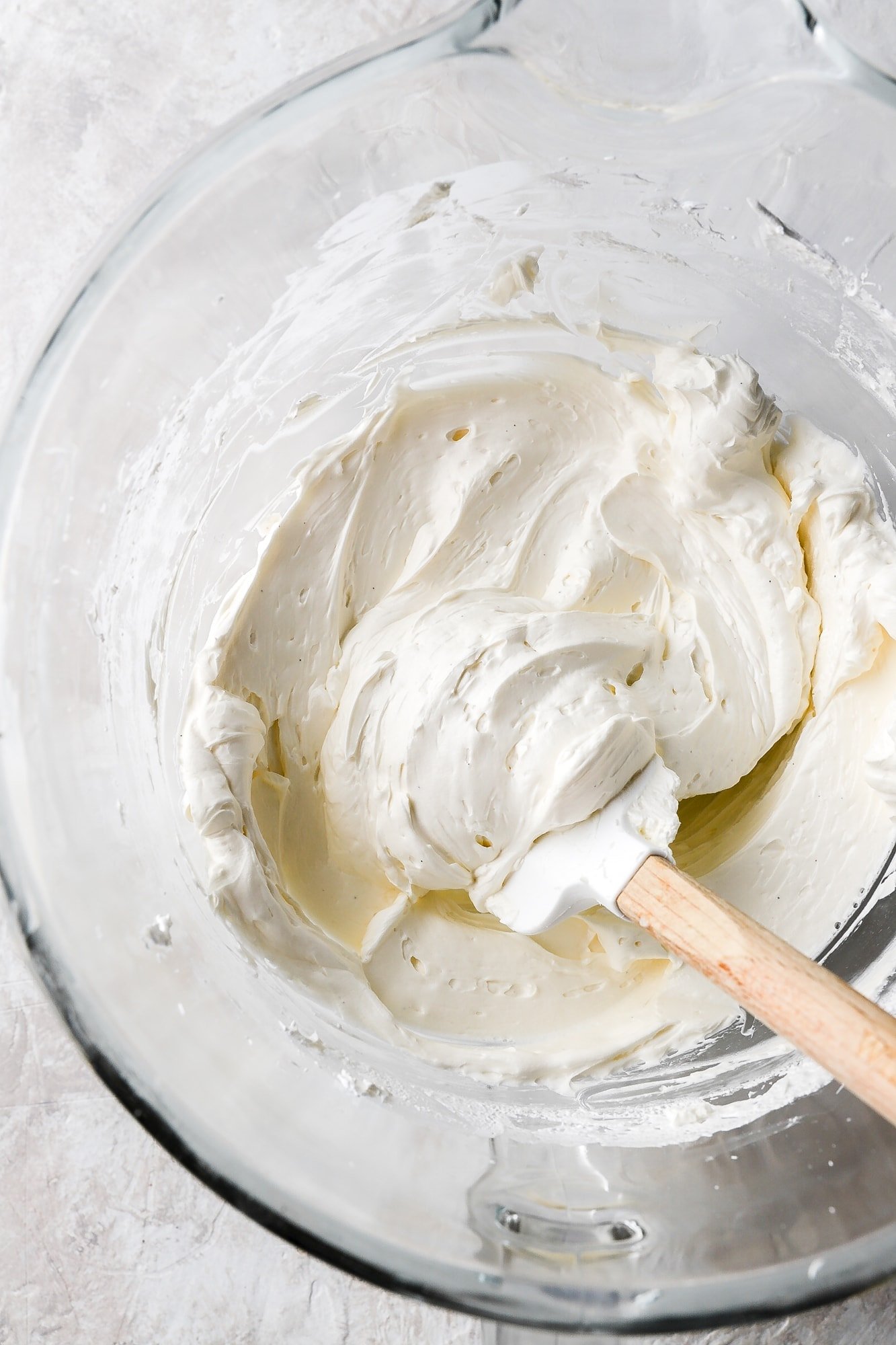
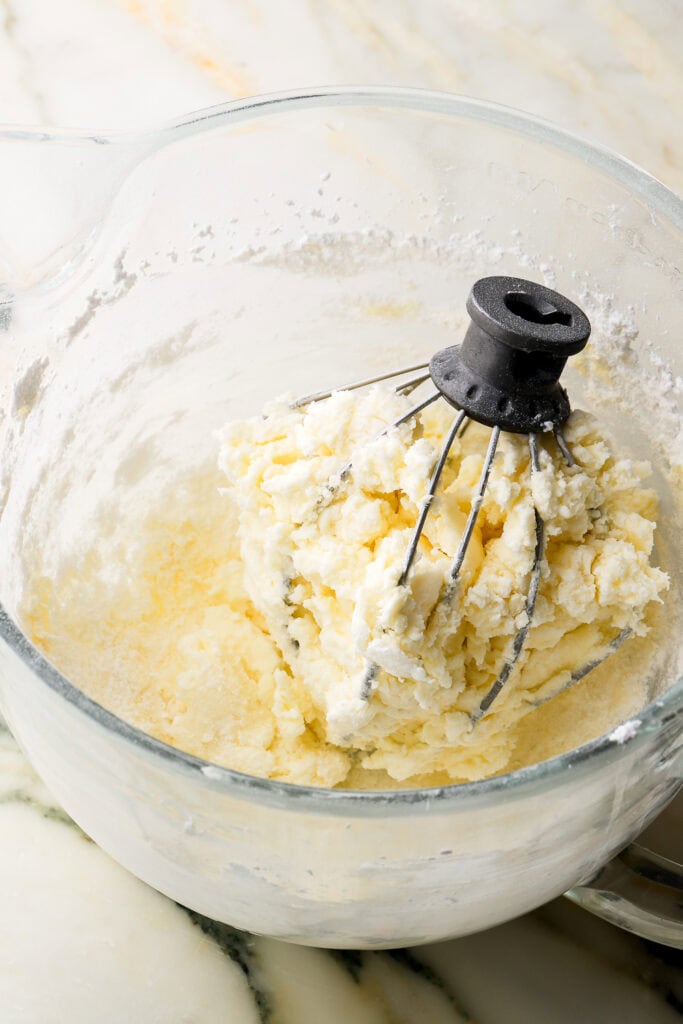
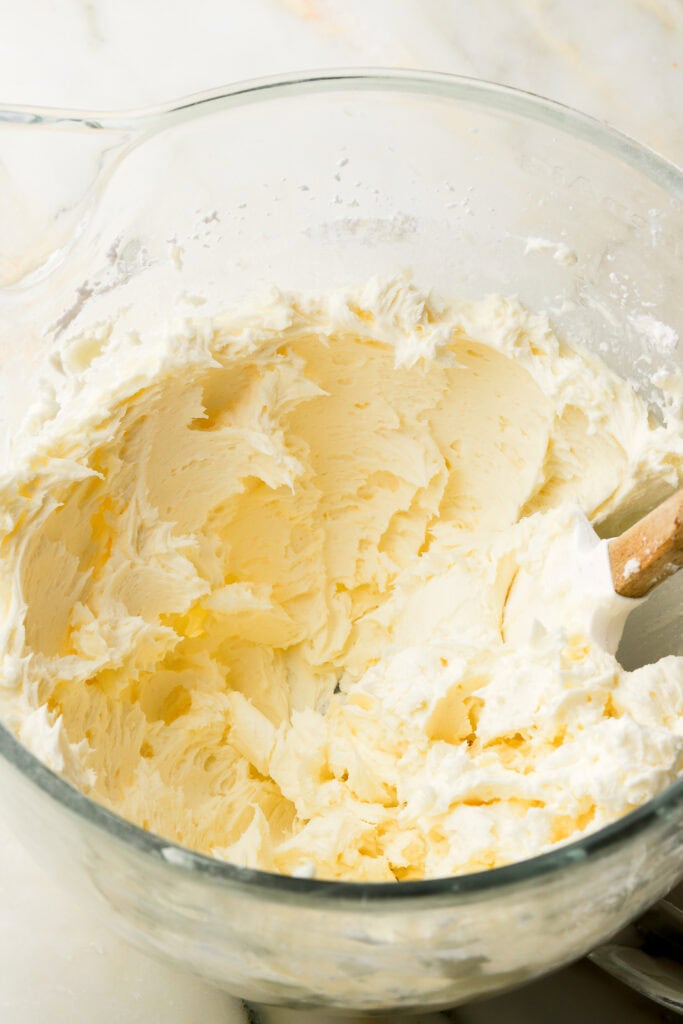
- Add powdered sugar and use the whisk attachment to beat it on low speed, just until it comes together. Then increase the speed to high for a couple minutes to make sure it’s well combined.
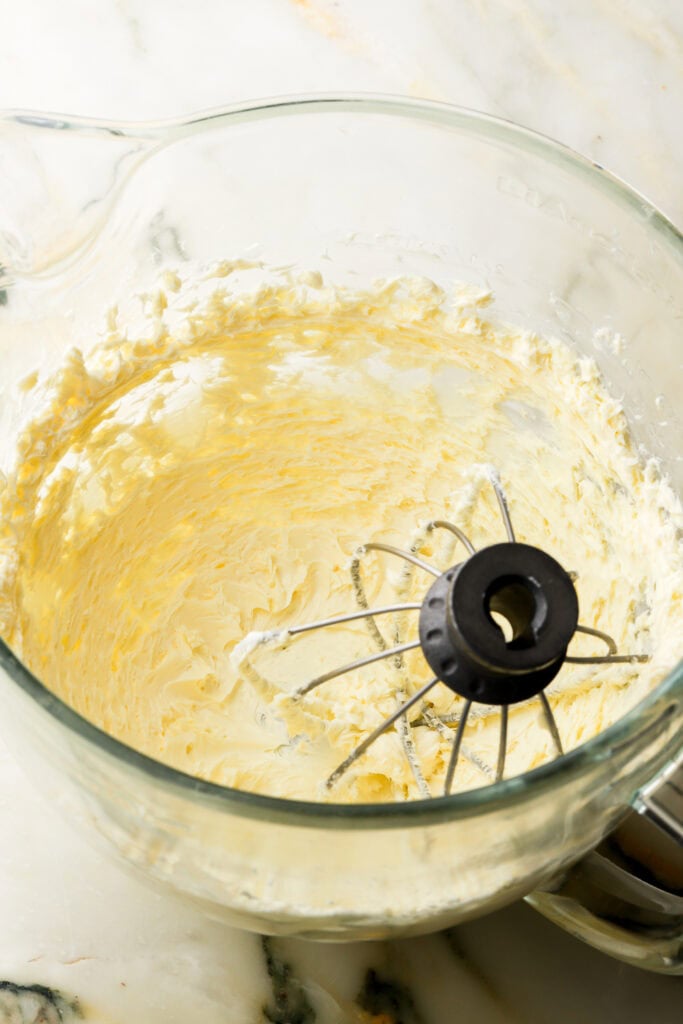
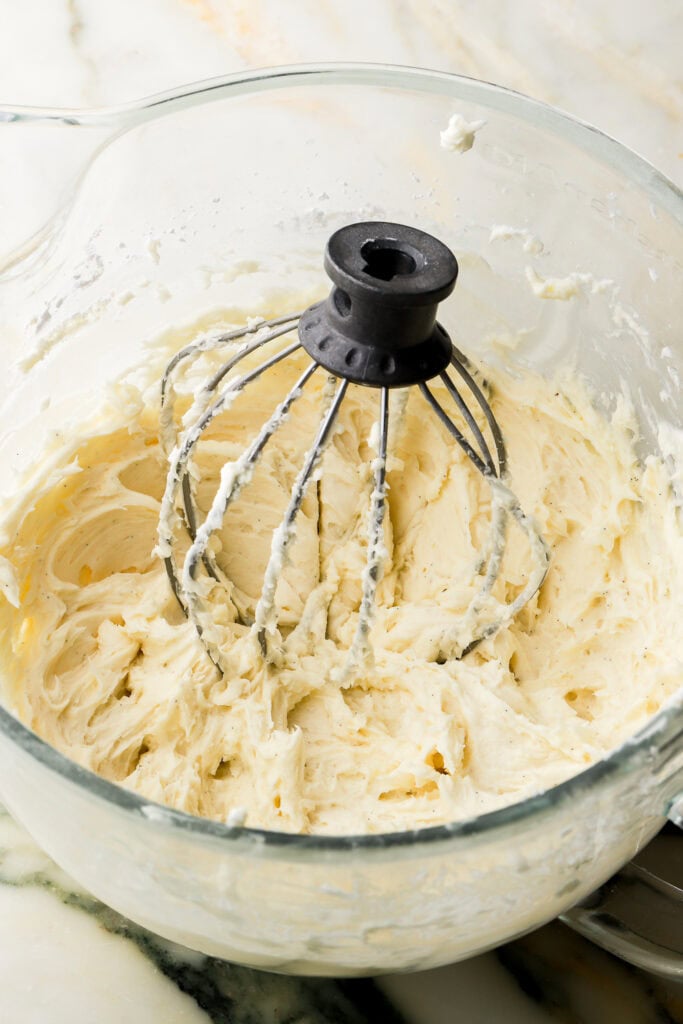
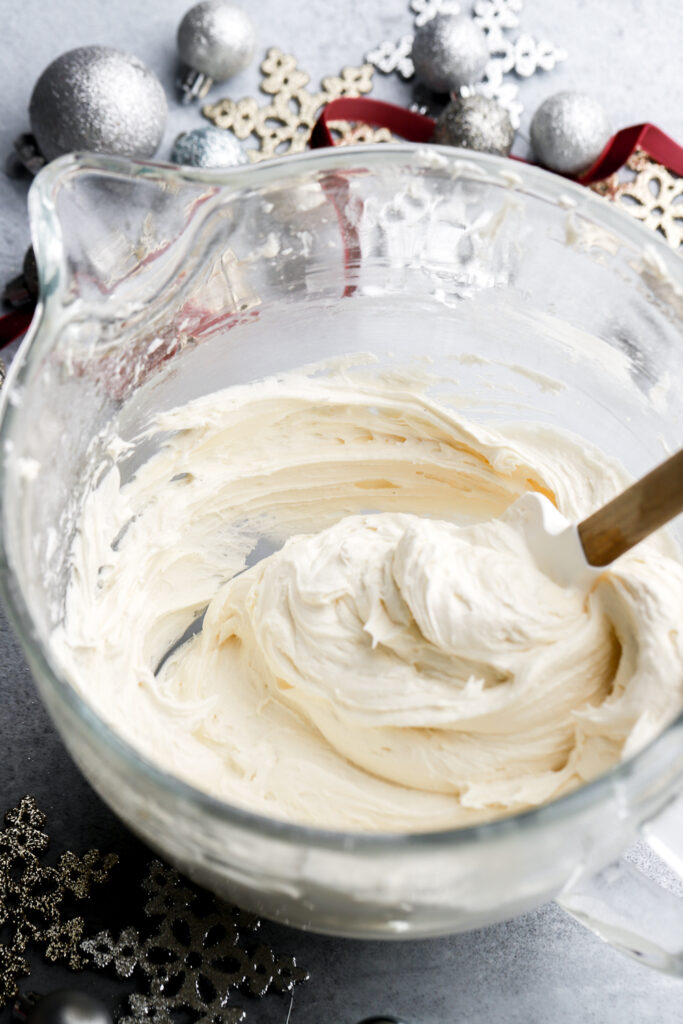
- Add the vanilla and with the mixer on medium speed, stream in the heavy cream slowly, making sure it’s beating into the frosting before adding more. Don’t dump it all in at once, you don’t want to flood the buttercream with cream.
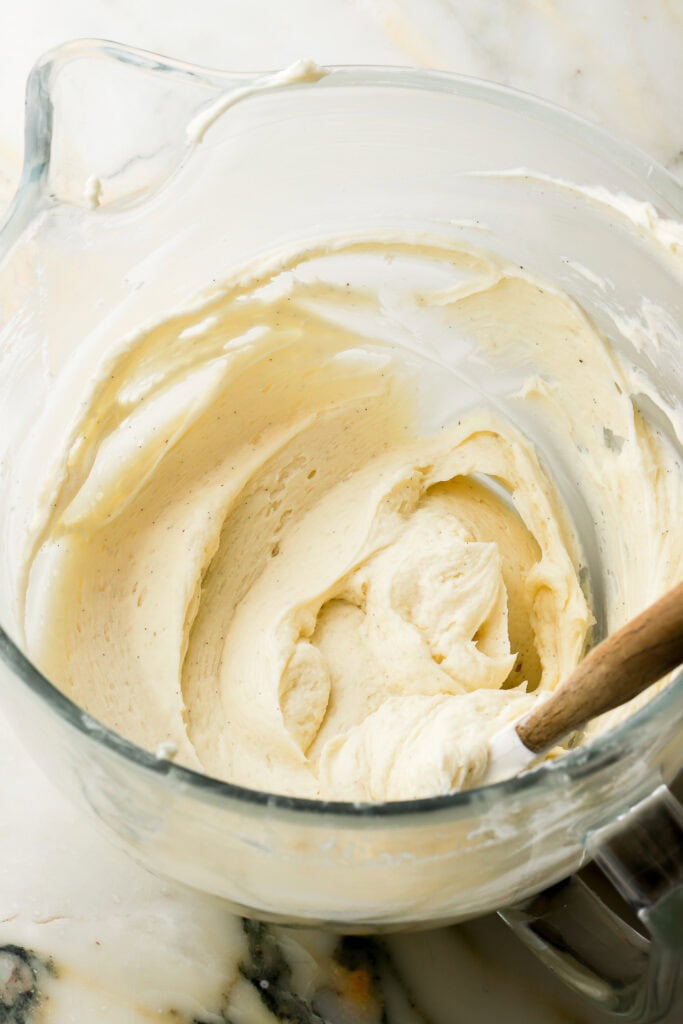
- Once it’s all combined, make sure to scrape the edge of the bowl and increase the speed for just 1-2 minutes to make it light and fluffy.
Which Attachment to Use for the Mixer?
I use the whisk attachment for American buttercream because it whips more air into the frosting, giving it a lighter texture.
The paddle attachment also works well, but I find it makes the frosting a bit more dense because it knocks out more air.
So depending on the texture you’re looking for, I recommend the whisk attachment for a light, fluffy frosting and the paddle attachment for a smoother frosting that’s better for decorating. I usually use the whisk for the filling and switch to the paddle when decorating the outside of the cake.
Hot Tip: The paddle attachment tends to kick up powdered sugar when you first turn the mixer on, creating a cloud of sugar in your kitchen. The whisk attachment does this much less.
Troubleshooting
| Problem | Cause | Fix |
|---|---|---|
| Grainy buttercream | The sugar didn’t dissolve properly because butter alone wasn’t whipped long enough or the finished frosting wasn’t whipped long enough, or too much sugar was added. | Mix longer and/or add a small amount of liquid. |
| Too sweet | This is the most common complaint with American buttercream. | Don’t skip the salt, use slightly less sugar, or add a little more cream if you haven’t already used the max amount. Pair it with a less sweet cake, or add something tart like raspberry reduction or lemon curd. |
| Too thick | The buttercream may be too cold, too high in sugar, or too low in liquid. Texture changes a lot with temperature. In the fridge it becomes very firm, and in a warm kitchen it softens quickly, just like butter. | Warm the kitchen slightly if needed, or add 1 tablespoon of cream or 1 teaspoon of milk at a time until the desired consistency is reached. |
| Too soft or greasy | The buttercream is too warm or too much liquid was added. | Add more powdered sugar, or refrigerate for a few minutes and then re-whip. |
How to Balance the Sweetness?
American buttercream is sweet so please expect frosting to be frosting but it doesn’t have to be painfully sweet.
Some ways that I balance the sweetness is:
- Adding salt – I recommend sea salt, I feel like I can add a little more of this without it feeling like I’ve salted my frosting.
- Heavy cream instead of milk – because of the high fat content in heavy cream, you can add about twice as much cream instead of milk which gives you less sugar per serving.
- Whipping longer – this creates a lighter texture by incorporating air which increases volume and reduces the sugar per serving.
Balancing with flavors – American buttercream pairs well with things that are bitter like coffee, and cocoa or tart like cream cheese or some fruits, etc.
If you really don’t want a sweet frosting, I recommend trying a Swiss or French buttercream instead.
American Buttercream vs Swiss Meringue Buttercream
American buttercream is sweeter, easier, and more stable for decorating. Swiss meringue buttercream is less sweet, silkier, and more buttery in flavor, but it takes more time and technique to make.
I usually prefer American buttercream when I want something quick, sturdy, and easy to pipe, and Swiss meringue buttercream when I want a smoother, silkier, less sweet finish.
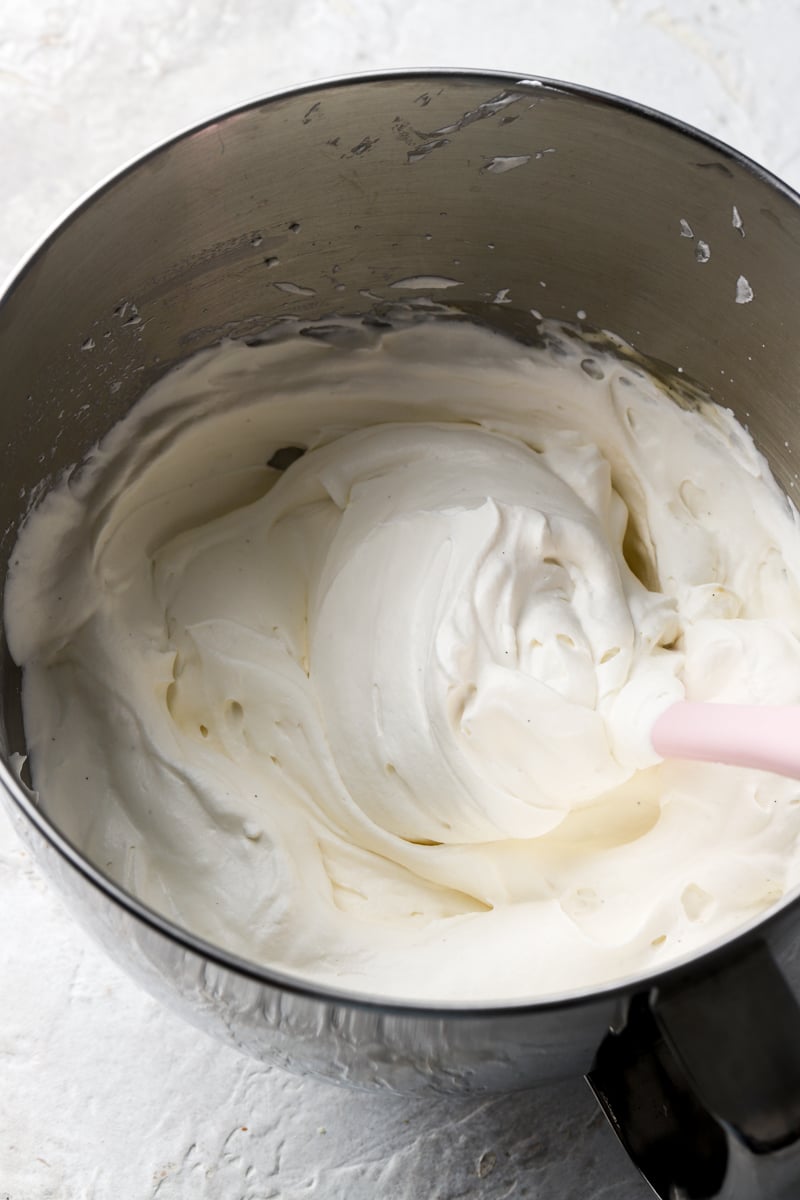
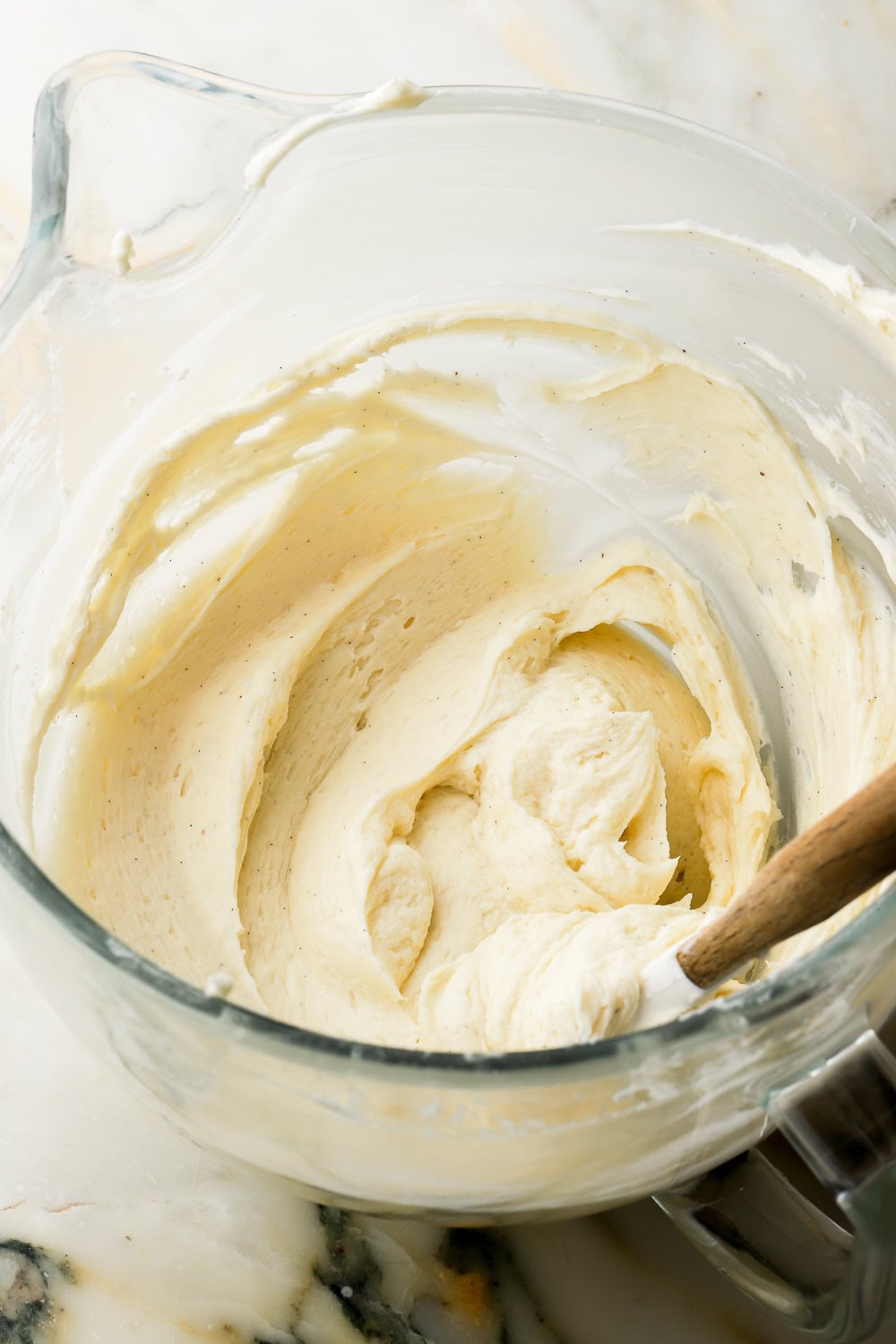
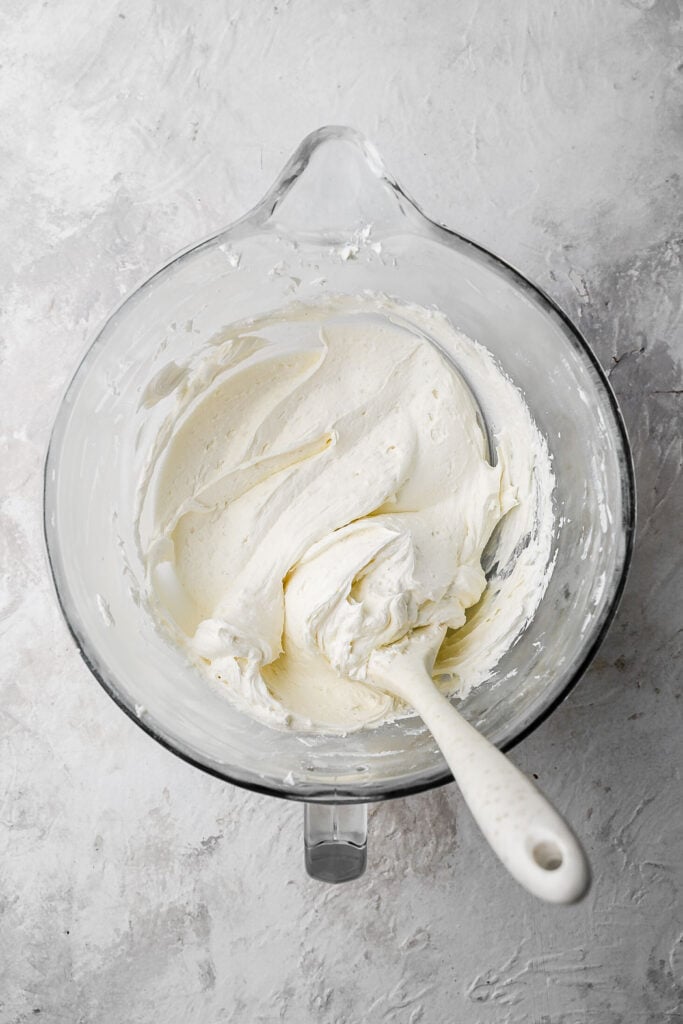
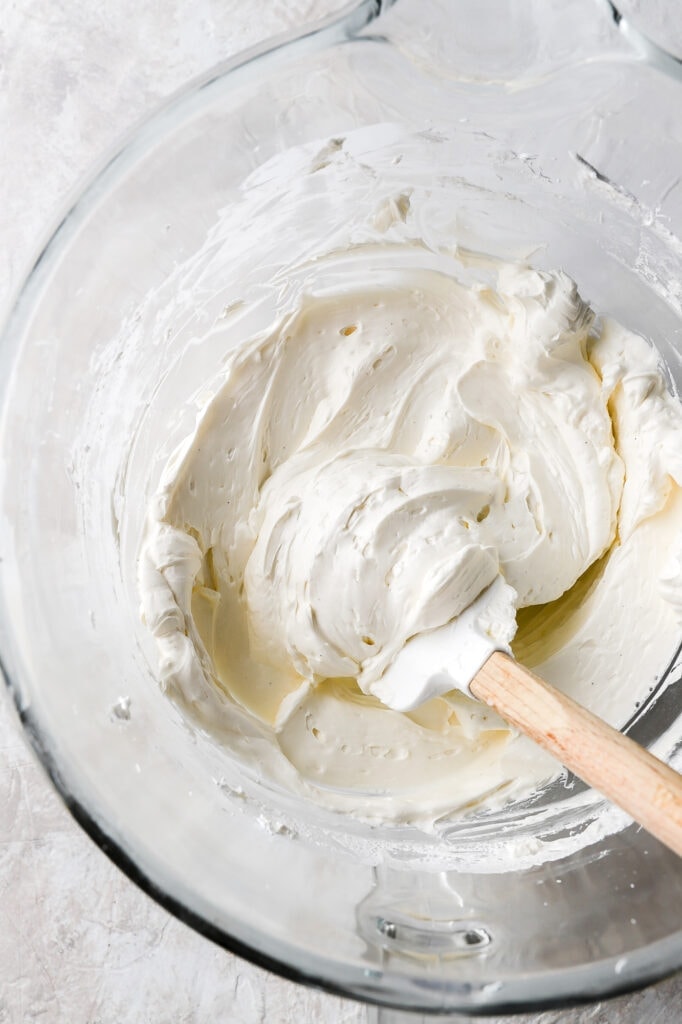
You can see both below – Swiss is shinier and silkier. The colors look the same below but I do think that Swiss is ever-so-slightly whiter than American buttercream. But any buttercream made with real butter will have a yellow hue to it.
How to Make Buttercream White
American buttercream naturally has a yellow tint because of the butter, and some butters are much more yellow than others.
Butter gets its color from beta-carotene (the same pigment found in carrots), and the more grass-fed the cows are, the more yellow the butter tends to be. So higher-quality butter will often give you a more yellow buttercream.
If you want a bright white buttercream for decorating, here are a few options:
- Use lighter-colored butter
Some brands are naturally paler than others, which will give you a more neutral base. This is usually true of cheaper, store-brand butters. Just note that they also tend to have less flavor and a slightly higher water content, so you may need a little less liquid. - Whip it longer
Beating the buttercream longer incorporates more air, which lightens both the texture and the color slightly. - Add a tiny bit of violet or blue food coloring
This cancels out the yellow tones (similar to purple shampoo for blonde hair). You only need a very small amount—too much will turn the frosting gray. - Use shortening (optional)
Replacing part of the butter with shortening will give you a whiter frosting, but it does affect the flavor and texture, so I don’t typically prefer it. That said, shortening also makes the buttercream more stable in warm weather, so it can be helpful for outdoor events.
Pro Tip: If you’re going for pastel colors, starting with a slightly yellow buttercream will affect the final shade. Neutralizing the base first will give you cleaner, more true-to-color results.
When to Use American Buttercream
In terms of texture, American buttercream pairs well with more dense desserts like creamed/butter cakes, cupcakes, cookies or bars, etc.
I generally don’t prefer paired with sponge cakes because it feels too heavy and overpowering.
American buttercream is great for decorating cakes though. It pipes well and it sets/hardens on the outside to keep it from getting ruined and allowing you to layer decorations.
It does ok in the heat, it’s not quite as stable as Swiss Meringue Buttercream but also won’t melt as quickly as Cream Cheese Frosting. Of course, the less liquid you add, the more stable it will be—and vice versa.
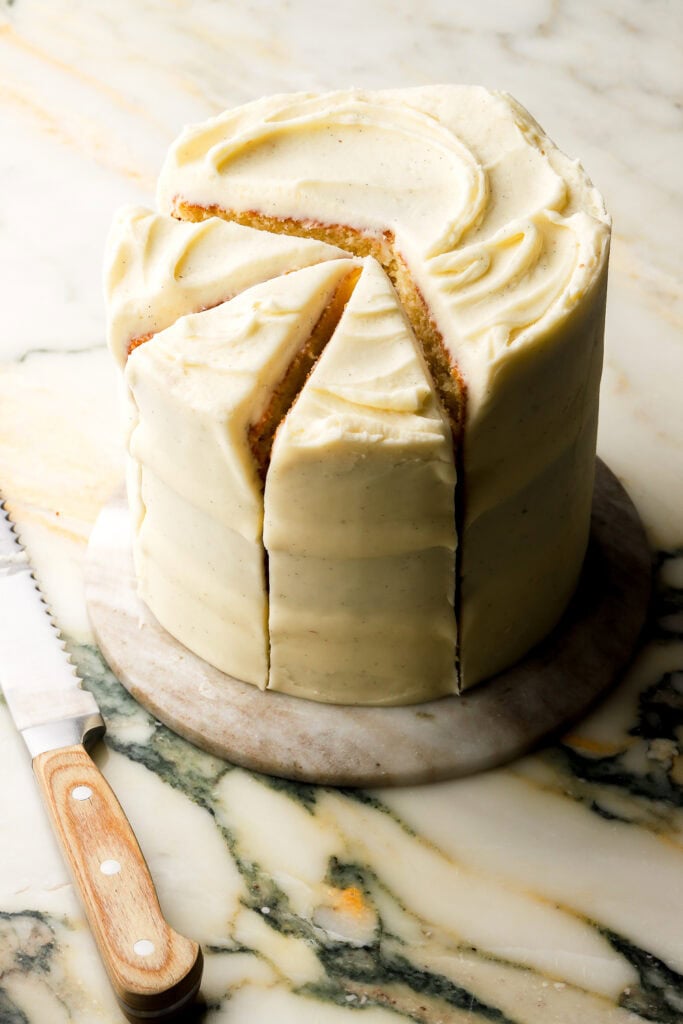
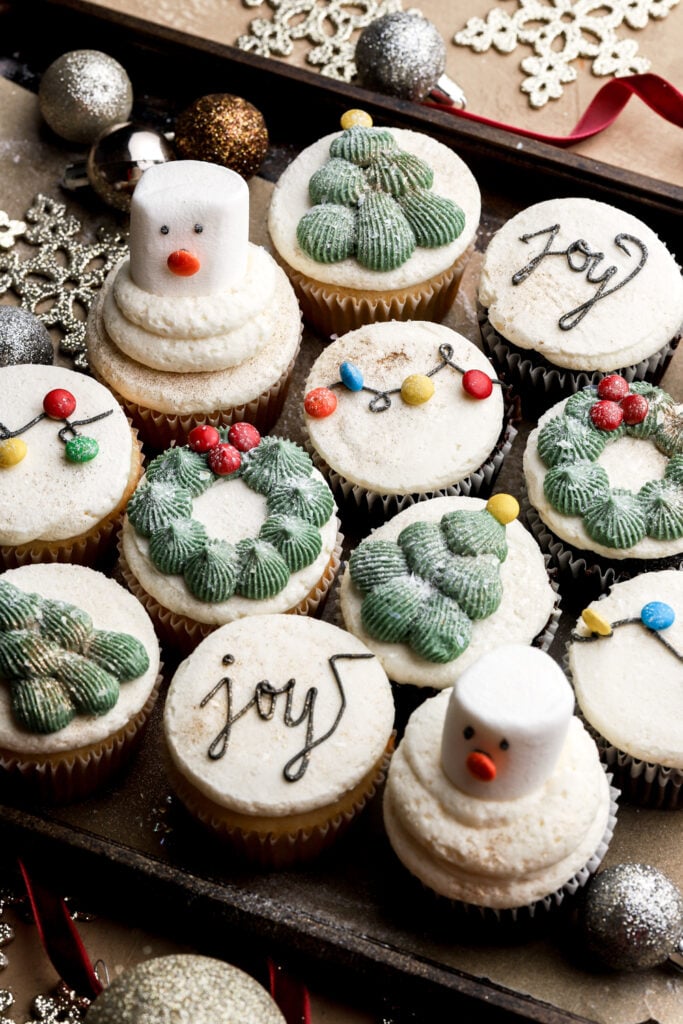
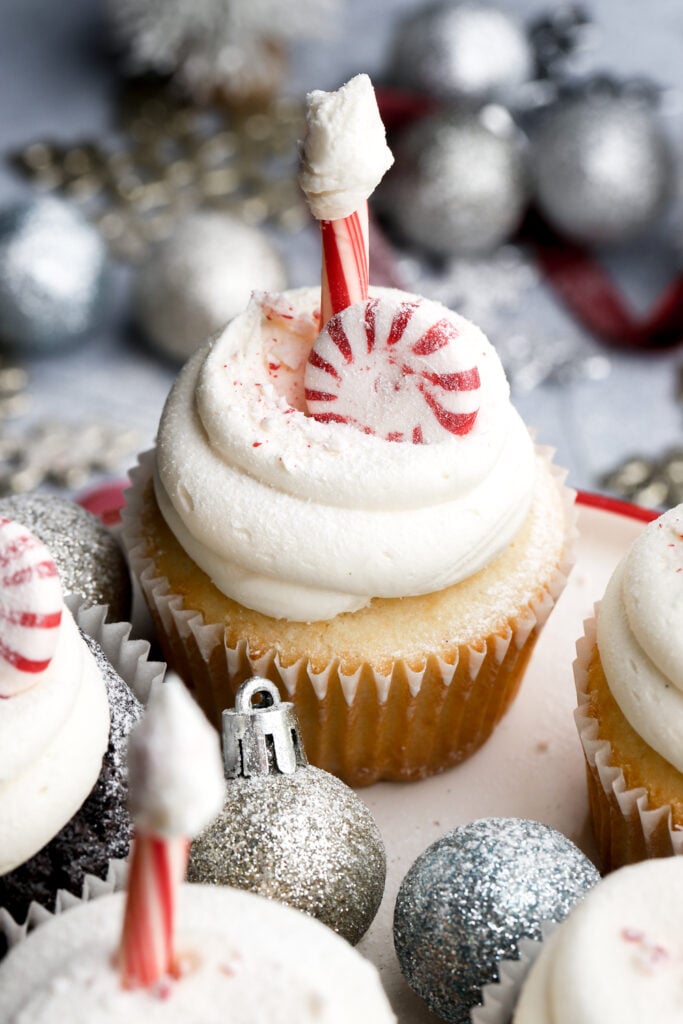
Some of my favorite recipes that use American buttercream are my Vanilla Cake, Mini Cupcakes, Christmas Cupcakes and Peppermint Cupcakes. It’s especially good with peppermint because I feel like you need that sweetness. Whenever I’ve added peppermint extract to other types of frosting, it can taste almost like toothpaste because it’s missing that sweetness.
How To Flavor American Buttercream
| Flavor | How to Add It |
|---|---|
| Vanilla | 2–3 tsp vanilla extract OR vanilla bean paste |
| Chocolate | 1/4 cup (20–25g) cocoa powder OR 3–4 oz (85–115g) melted chocolate (cooled) |
| Coffee | 1–2 tsp espresso powder dissolved in 1-2 Tbsp water OR 1–2 Tbsp brewed espresso |
| Citrus | 1–2 Tbsp zest + 1–2 tsp juice |
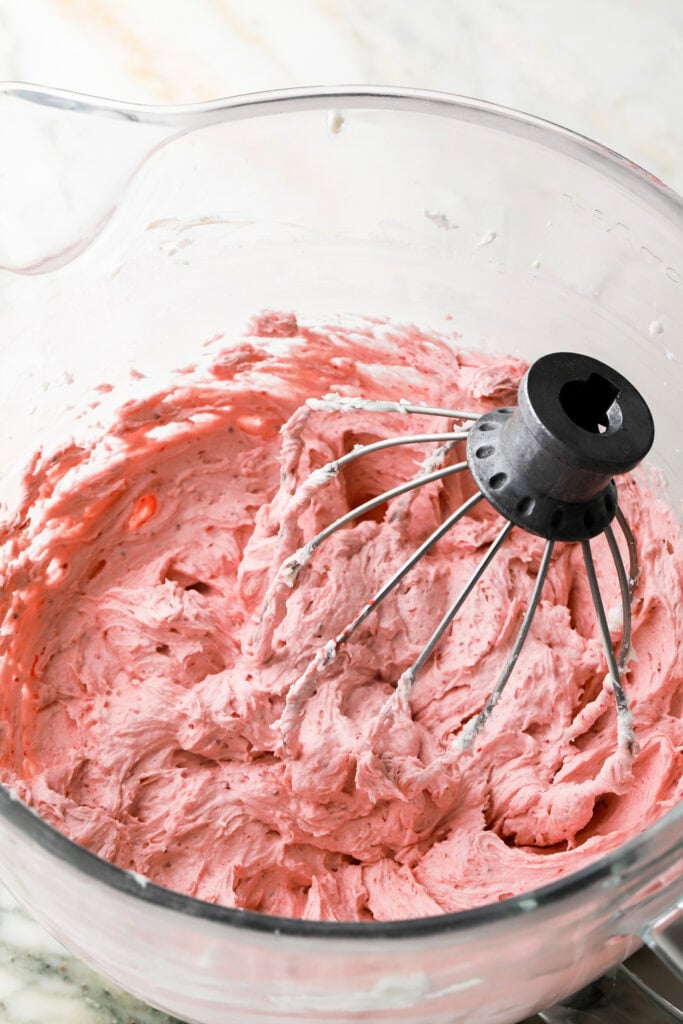
| Fruit | 2–4 Tbsp fruit reduction or jam OR 1/4 cup (15–20g) freeze-dried fruit powder |
| Cream Cheese | Replace 1/4–1/2 of the butter with cream cheese |
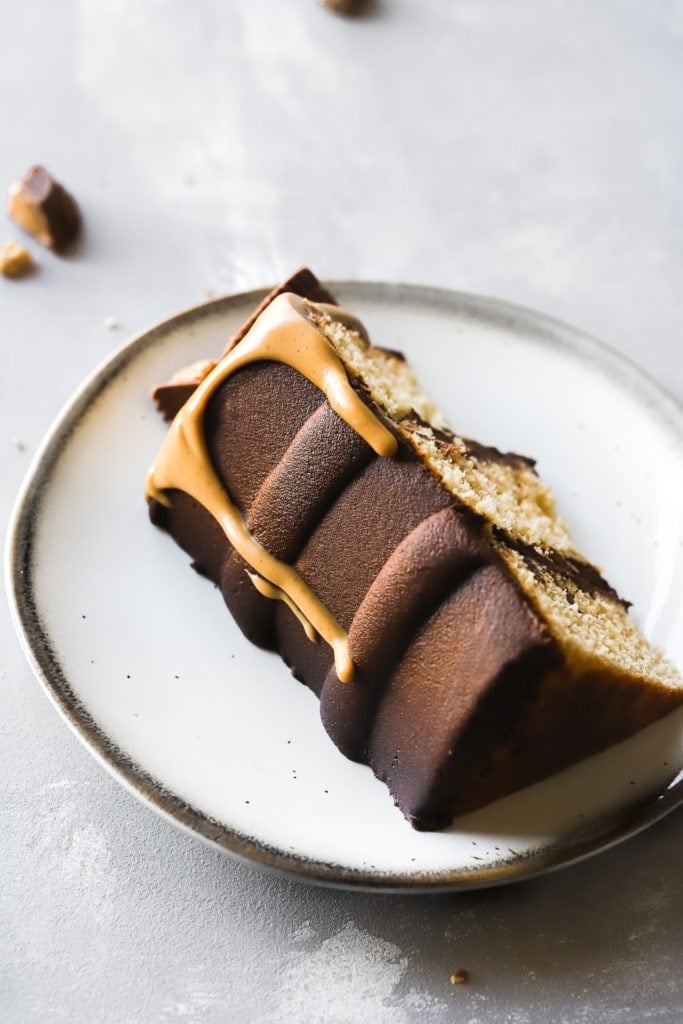
| Nut Butters or Spreads | 1/4–1/2 cup (60–120g) peanut butter, Nutella, pistachio paste, etc. |
| Extracts | 1/4–1 tsp (start small—very concentrated) |
Pro Tips
- To prevent clumps, sift the powdered sugar
- Use room temp butter ~65-70°F 18-21°C, not overly soft
- Add a pinch of sea salt every time
- Use cream instead of milk and don’t over-add liquid → it weakens structure
- For a lighter texture → whip longer than you think
Storage
Leftover buttercream can be stored at room temperature for 1-2 days, refrigerator for up to a week or frozen for up to 2 months. Make sure to put it in an airtight container so that it doesn’t set and get crusty on top.
You may also need to re-whip it when bringing it back to room temperature.
If you have questions, drop them down below. I’d really appreciate a 5-star rating or a review as well.
As always, have a blessed day and happy baking!
Love, B